


How AI Is Accelerating the Decline of Traditional App Development
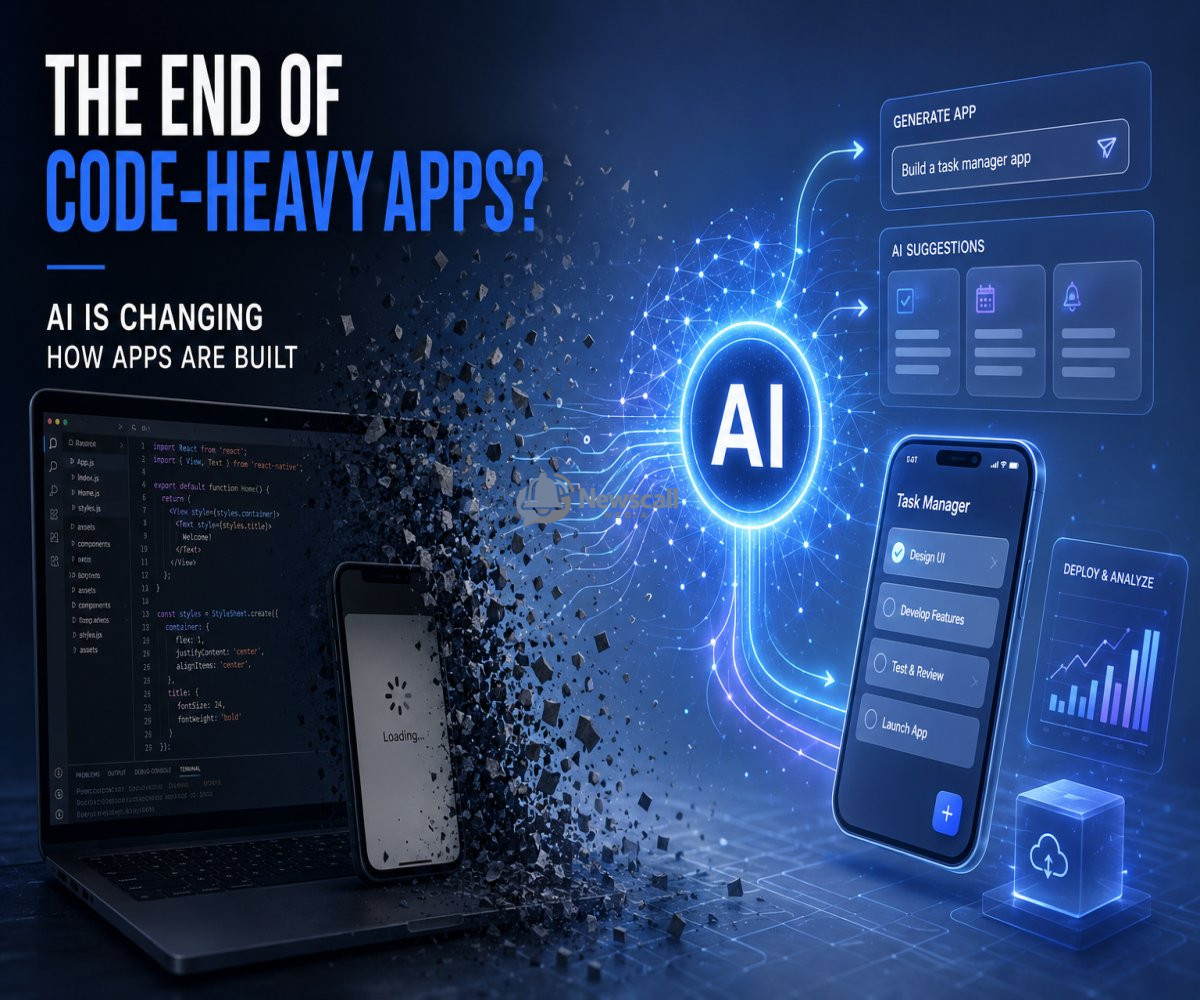
Artificial intelligence is rapidly changing how software applications are built, deployed, and maintained, reducing reliance on traditional development processes that once required large engineering teams and long production cycles.
Developers are increasingly using AI tools to generate code, debug applications, and automate repetitive engineering tasks. This has significantly lowered the barrier to entry for building software, enabling smaller teams—and in some cases individual founders—to create functional applications that previously required full development departments.
The impact is most visible in early-stage startups, where speed and iteration cycles matter more than team size. Instead of manually writing every component, founders are now leveraging AI systems to scaffold applications, suggest architectures, and implement features based on high-level prompts.
This is gradually redefining the meaning of app development. Rather than building software line by line, developers are shifting toward guiding systems that generate, refine, and optimize code in real time. The role of the engineer is evolving from direct implementation to oversight, system design, and validation.
Industry observers note that this transition is also influencing hiring priorities. Startups are placing greater emphasis on product thinking, system design, and AI literacy, while reducing dependence on traditional coding-heavy roles in early-stage teams.
At the same time, concerns remain around long-term maintainability and software quality. While AI can accelerate development, it may also introduce inconsistencies, hidden technical debt, and reduced transparency in complex systems if not carefully managed.
Despite these challenges, adoption continues to expand. Major platforms and infrastructure providers are integrating AI-assisted development tools directly into their workflows, signaling that this is becoming a structural shift rather than a temporary trend.
If the trajectory continues, traditional app development may not disappear, but it is likely to become a smaller part of a broader AI-driven creation process where human developers focus more on direction, architecture, and decision-making rather than manual coding.

Victor Oluebubechukwu Akuma.
Creative writer