

Starmer Faces Growing Pressure as Labour Figures Position for Leadership Battle
Starmer Faces Growing Pressure as Labour Figures Position for Leadership Battle
Fresh tensions within the UK’s ruling Labour Party are fuelling speculation about the future of Prime Minister Keir Starmer, even though no formal challenge has yet been launched against him.
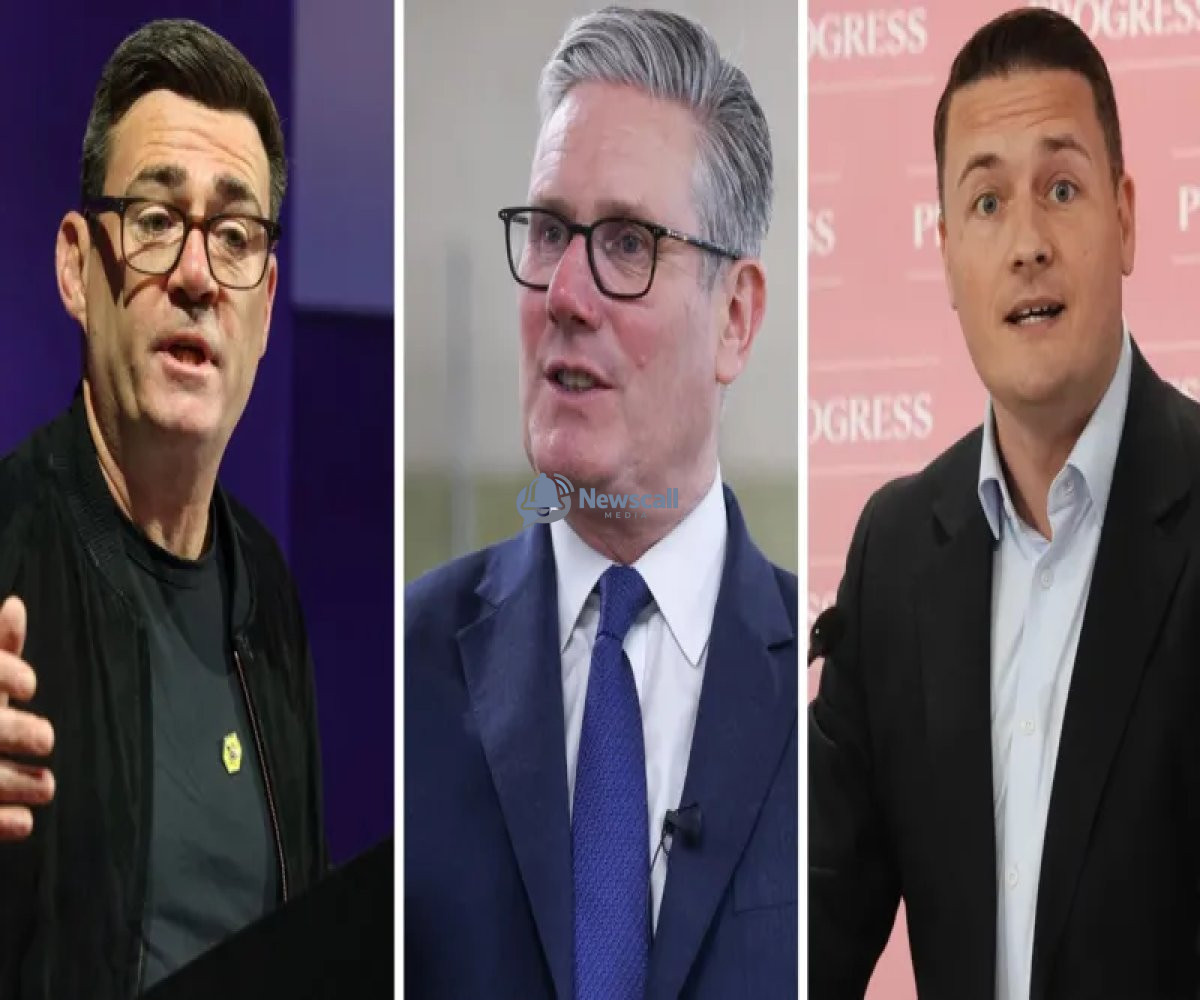
Behind the scenes, senior Labour figures are increasingly being viewed as possible successors should Starmer decide — or be forced — to step aside in the coming months. Much of the attention is now centred on Andy Burnham and former Health Secretary Wes Streeting, whose recent public comments have intensified discussions about Labour’s direction after a turbulent political week in Westminster.
While Starmer has publicly insisted he remains focused on governing, several Labour MPs are reportedly frustrated by the lack of clarity surrounding his long-term plans. Concerns within the party have grown amid fears that Labour could lose support to the rising influence of Reform UK in key working-class constituencies.
Burnham, currently Mayor of Greater Manchester, is expected to contest the upcoming Makerfield by-election — a race many inside Labour now see as politically crucial. Party strategists believe a strong victory there could significantly strengthen his standing as a future national leader.
The constituency, located near Wigan, St Helens and Leigh in north-west England, voted heavily in favour of Brexit during the 2016 referendum and recently showed strong support for Reform UK in local elections. That political reality appears to have shaped Burnham’s messaging.
Although Burnham previously suggested he hoped Britain would one day rejoin the European Union, he has recently softened that position, arguing that reopening the Brexit debate now would divide voters further. Instead, he has focused on rebuilding trust among disillusioned voters, particularly those drifting toward Reform UK.
Streeting, meanwhile, has taken a different approach. Freed from cabinet collective responsibility after leaving government, the former health secretary has spoken more openly about Brexit, calling it a “catastrophic mistake” and expressing hope that the UK could eventually rejoin the EU.
His remarks have reignited debate within Labour over Europe — an issue many senior figures hoped had been politically settled after years of division.
Some Labour ministers privately fear that revisiting Brexit risks alienating voters in former industrial strongholds that backed leaving the EU. Others argue the party must confront the economic realities of Brexit more honestly as Britain continues to face sluggish growth and trade challenges.
Economic policy is also becoming a major dividing line in the emerging leadership manoeuvring.
Burnham recently attempted to reassure financial markets by saying he would maintain Labour’s current fiscal rules if he became prime minister. The comments followed earlier criticism after he suggested some defence spending could be excluded from government borrowing limits.
That proposal sparked backlash from senior Labour figures, including Starmer allies, who feared it could undermine the party’s reputation for economic discipline ahead of the next general election.
At the same time, Streeting is quietly building support among Labour MPs and party members, many of whom see him as one of the party’s strongest communicators and a politician capable of appealing to younger and centrist voters.
The growing speculation reflects wider uncertainty within Labour despite the party being in government. After years of Conservative rule, Labour’s return to power under Starmer was expected to stabilise British politics. Instead, internal disagreements over economic policy, Brexit, and electoral strategy have exposed tensions between the party’s moderate leadership and factions pushing for a sharper political identity.
Burnham’s popularity in northern England has made him attractive to Labour members worried about losing traditional working-class support. His record as Greater Manchester mayor during the Covid-19 pandemic also boosted his national profile after clashes with the Conservative government over regional funding.
Streeting, by contrast, is seen as part of Labour’s younger modernising wing and has gained prominence for his media performances and outspoken views on public service reform.
Any leadership contest could also raise constitutional and political questions. Critics within and outside Labour argue that replacing a sitting prime minister without a general election risks accusations that a new leader lacks a direct public mandate.
For now, Starmer remains prime minister and no official leadership contest has been triggered. But the political positioning already underway inside Labour suggests preparations are quietly being made for a possible transition.
The upcoming Makerfield by-election could become a defining moment. A victory for Burnham may accelerate pressure for change inside Labour, while a defeat could deepen divisions and create a fresh crisis for the party.
As debates over Brexit, economic policy and Labour’s electoral future intensify, the struggle over who could eventually lead Britain next is no longer happening entirely in the shadows.

Nwekwe Esther Amarachukwu
Public speaker,Research-driven writer covering politics and public affairs, committed to accuracy, and meaningful public discourse.