

THE TORCH IS PASSED A Decade of JAMB, a Legacy of Contradictions, and the Man Who Must Do Better
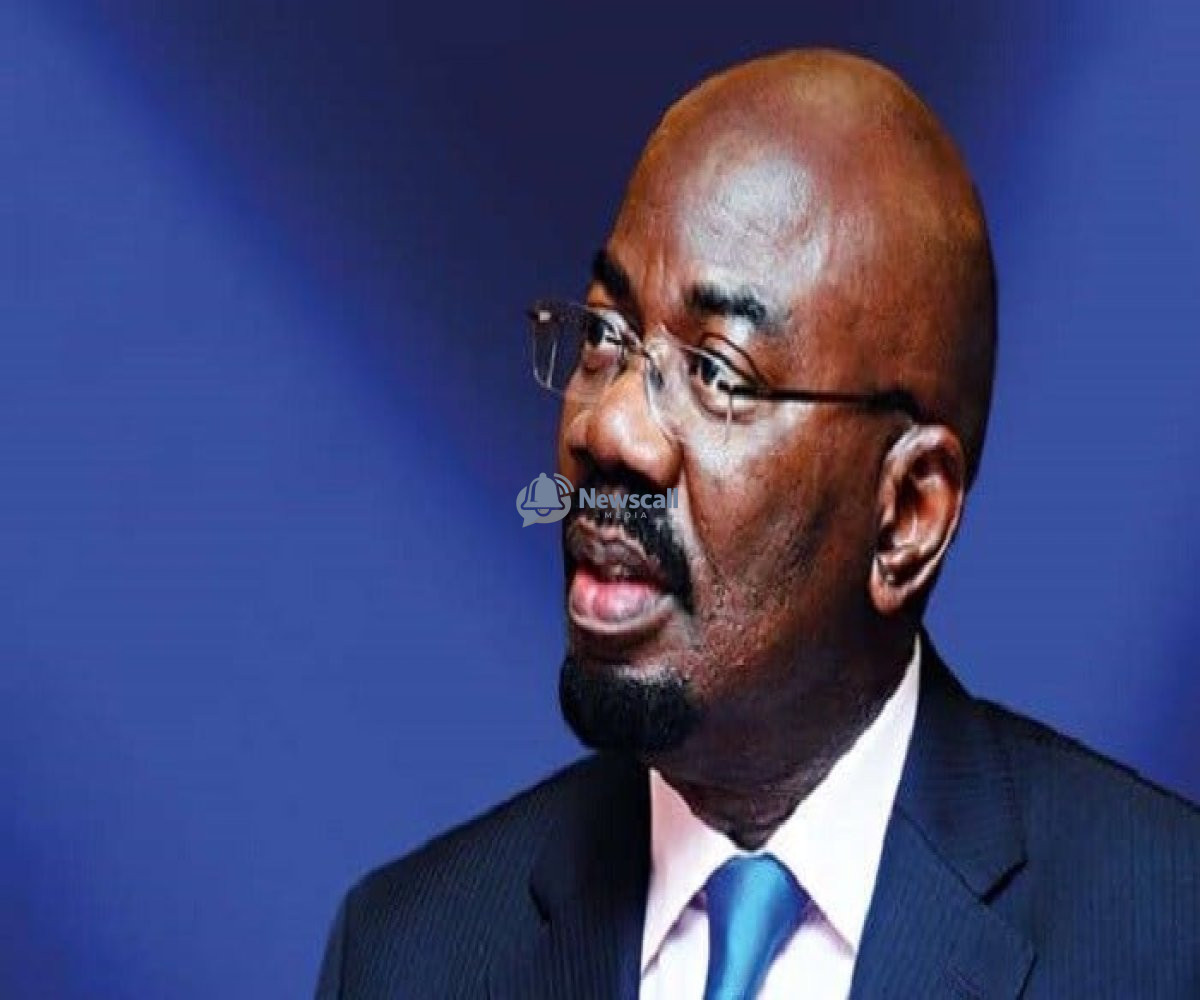
In the early hours of May 21, 2026, a name began circulating across Nigerian WhatsApp groups, Twitter threads, and student forums with the electric charge that only consequential news carries: Professor Is-haq Oloyede — the man who had commanded the Joint Admissions and Matriculation Board (JAMB) for a decade — had been replaced.
His successor: Professor Oluremi Raphael Aina, a digital engineer with a PhD from Loughborough University and a career spent at the intersection of technology, academia, and public governance.
For millions of Nigerian students, their families, and the educators who watch this system grind through another generation, this is not merely a personnel change. It is a moment of reckoning. And to understand what the new Registrar inherits — and what he must not repeat — we must be honest about what the old one left behind.
“A decade is long enough to transform an institution. It is also long enough to run out of excuses.”
——————————
PART ONE: THE MAN WHO SHAPED A DECADE
Who Is Professor Is-haq Oloyede?
Born on October 10, 1954, in Abeokuta, Ogun State, Professor Is-haq Olarewaju Oloyede is not a man easily summarised. His biography reads less like a career than a calling — a long, deliberate ascent rooted in faith, refined by scholarship, and placed in service of a country that needed someone to believe systems could be made to work.
He earned a Certificate in Arabic and Islamic Studies from the University of Ibadan before enrolling at the University of Ilorin — an institution that would become his professional home for decades. There, he distinguished himself, graduating with a First Class Honours degree in Arabic, then earning both his Master’s degree and PhD in Islamic Studies from the same university.
When he took the helm at JAMB, there was genuine optimism. Here was an intellectual. A man of principle. A reformer.
That optimism was not entirely wrong. But it was not entirely right, either
The Achievements — Real, and Not to Be Erased
Let the record show: Professor Oloyede transformed JAMB’s financial accountability. Billions of naira that had quietly vanished under previous administrations were remitted to the federal government under his watch. The board was digitised at a scale unimaginable to his predecessors. The infrastructure was modernised. The culture of petty corruption at examination centres was, in many documented cases, reduced.
These are genuine accomplishments. They must be acknowledged by any honest account of this era.
“A legacy is not built only on what you got right. It is also shaped by how you respond when things go wrong.”
But Nigeria’s education system does not need champions of remittances. It needs champions of its students. And on that measure — the only measure that ultimately matters — the Oloyede years produced some of the most painful chapters in the modern history of Nigerian student welfare.
THE 2025 CATASTROPHE: When JAMB Broke Nigeria’s Children
I. The Technical Failure
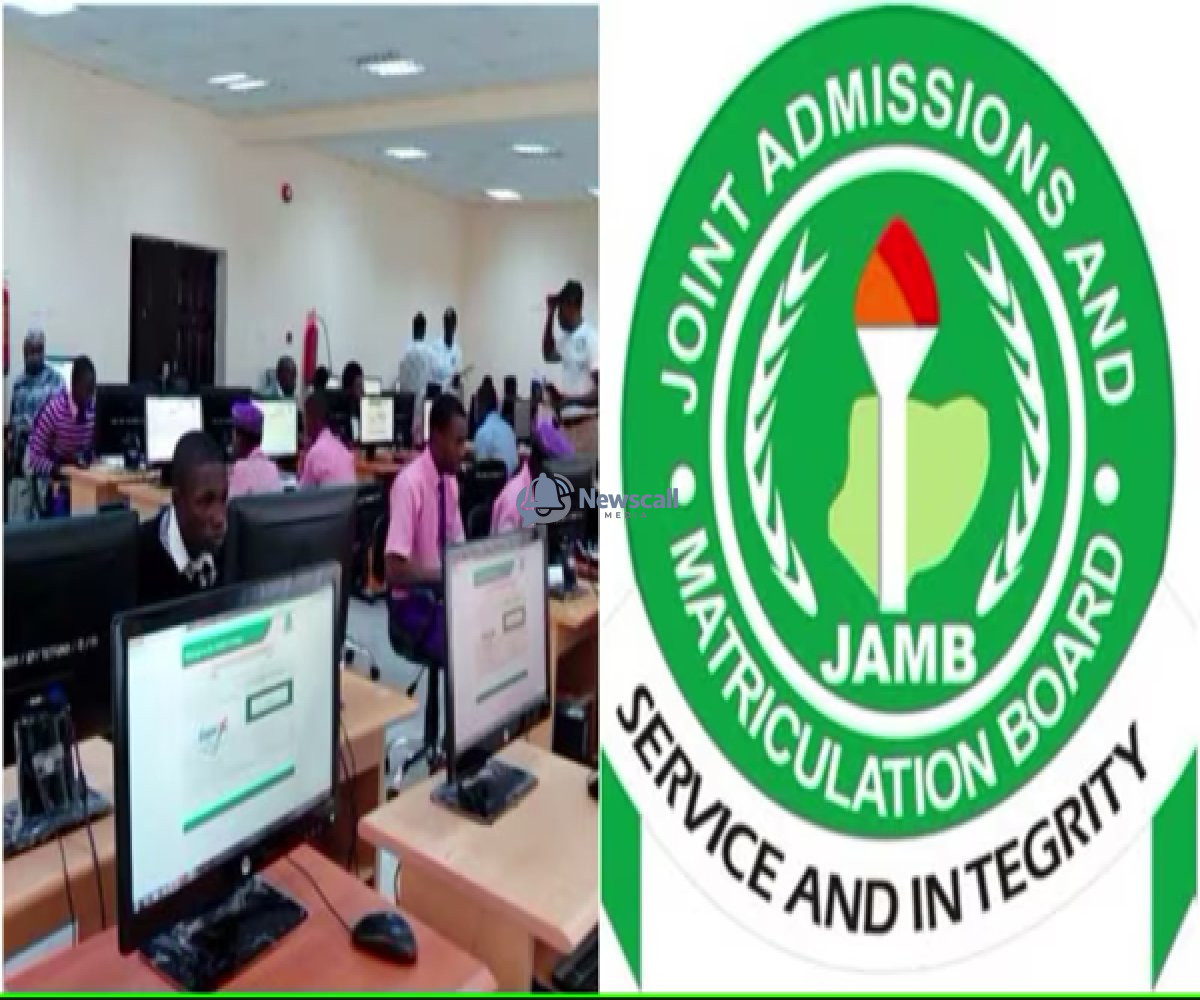
In 2025, JAMB’s computer-based testing infrastructure collapsed. Not for a classroom. Not for a town. For hundreds of thousands of candidates sitting across the country. Screens froze. Results evaporated. Students watched their futures dissolve into error messages and unanswered helpline calls.
This alone would have been serious. What followed made it unforgivable.
II. The Gaslighting
Rather than immediate transparency, JAMB’s response was to turn on its own candidates. Spokespeople took to social media with a staggering insinuation: that students had failed not because of a broken system, but because they spent too much time on TikTok. The subtext was deliberate — the children failed themselves. JAMB’s systems were pristine.
Reports emerged that influencers had been allegedly paid to amplify this narrative, to drown out the truth with noise. Meanwhile, families who had scraped together registration fees, transport money, and months of preparation were being told, in effect, that their sacrifice was the problem.
“The most damning thing about JAMB’s 2025 crisis was not the technical failure itself — it was the days of silence, denial, and deflection that followed.”
The gaslighting lasted days. And during those days, two students, it is reported, took their own lives. Whatever the precise circumstances of those deaths, the institutional context cannot be separated from the human cost. When a broken system responds to its own failure with cruelty rather than compassion, it does not merely inconvenience students. It breaks some of them.
III. The Apology That Arrived Too Late
An apology eventually came. Professor Oloyede appeared before cameras and acknowledged system failures. Some called this accountability.
It was not accountability. It was the minimum the law compelled, extracted not by conscience but by a legal challenge that had made the institutional position untenable. An apology delivered by lawsuit is surrender dressed up as humility.
And the footage of the Registrar — composed, some said visibly unburdened, during the announcement of fault — struck many Nigerians as grotesque. This was a man who, by any serious standard of institutional leadership, should have been handing in a resignation letter. Instead, he was framing the crisis as a demonstration of JAMB’s honesty.
THE STRUCTURAL ABSURDITY: A Tax on Dreams
To judge Oloyede fairly, one must also judge the institution he inherited — because some of JAMB’s most destructive features predate his tenure. The problem is that he had ten years to challenge them. And he did not.
Consider what a Nigerian eighteen-year-old must endure simply to enter university:
● WAEC or NECO Senior School Certificate Examinations
● The JAMB Unified Tertiary Matriculation Examination (UTME)
● Post-UTME screening tests set by individual universities
● In some cases, faculty-level or departmental assessments
Four separate examinations. No meaningful international comparator demands this of its young people. The burden falls heaviest on the children of ordinary families — those who cannot afford to repeat a year, who cannot absorb a missed cut-off mark.
And the cruelest mechanism of all? The UTME score expires after one year. Not two. Not three. One year. Miss your target by a single point. Suffer an administrative error. Fall ill on examination day. Any of these outcomes costs a student twelve months of their life — and they must pay the registration fee again to re-enter the same system that failed them.
“JAMB is not merely an examination board. It is an annual tax on the dreams of Nigerian youth — and the one-year expiry date is the mechanism by which that tax is collected.”
This writer recently accompanied a younger sibling to an examination centre. The mood among the waiting parents was not pride or anticipation. It was quiet desperation. A mother knelt in prayer outside the gate — not because her son was unprepared, but because she could not bear another year of fees, anxiety, and waiting in a system that shows no particular mercy to those it claims to serve.
Oloyede had the stature, the platform, and a full decade in which to challenge this design. That argument was never made loudly enough. The system endured. The suffering it causes endured with it
THE FINANCIAL CLOUD: Questions Without Answers
Beyond the examination crises, the final years of the Oloyede era were shadowed by allegations of financial impropriety that, as of his departure, remain unresolved.
Civil society groups and a former JAMB staff member raised serious claims between 2022 and 2024, including irregular staff recruitment, misuse of public funds, and allegations that government money was paid into private accounts. Nigeria’s Code of Conduct Bureau reportedly opened an investigation. A bureau source confirmed publicly that multiple infractions were under active review.
Among the specific allegations: that state coordinators received ₦2.2 million each, credited directly to private accounts for the purchase of office equipment — an arrangement that, if true, would contravene Section 713 of Nigeria’s Public Sector Financial Regulation Act (2009), which explicitly prohibits the payment of public money into private bank accounts.
The irony is sharp: a registrar celebrated for dramatically increasing JAMB’s remittances to government, simultaneously accused of routing public funds through personal channels. Whether proven or not, the cloud is significant. The investigations dragged on. His tenure ended. The questions remain.
THE VERDICT
Professor Is-haq Oloyede is not a villain. That would be too simple. He is something more complicated and, in some ways, more troubling: a capable administrator who did real good, who tolerated or presided over real harm, and who — when the defining test of his tenure arrived in 2025 — chose institutional self-protection over honest leadership.
The digital transformation of JAMB is a genuine achievement. The financial transparency he introduced, compared to what came before, is real. These things matter.
But they do not cancel the students who lost a year of their lives to a broken system and were told the failure was their own. They do not cancel the families praying outside examination centres. They do not cancel the reported deaths of young people broken by institutional cruelty dressed up as rigour. They do not cancel the financial allegations still circling his name like unanswered questions.
A man who presides over a system that devours the youths of Nigeria year after year — and who leaves that system structurally unchanged after ten years — has not finished the job. He has maintained it. In Nigeria, maintaining a broken system is its own kind of failure.
PART TWO: THE MAN WHO MUST DO BETTER
Who Is Professor Oluremi Raphael Aina?
Professor Aina arrives not from the humanities tradition of his predecessor, but from the world of engineering — and in an institution whose most visible recent failures have been technical, that matters.
His academic credentials are not decorative. He holds a Bachelor of Engineering in Computer Systems Engineering from the University of Kent, a grounding in the logic and hardware that underpins digital infrastructure. He then earned an MSc in Internet Computing and Network Security, followed by a PhD in Digital Signal Processing — both from Loughborough University in the United Kingdom. To bridge technical mastery with institutional leadership, he completed the Senior Management Programme at the Lagos Business School.
“A career that spans digital engineering, academic leadership, and national governance is not built by accident — it is built by design.”
His public service record spans ten years at NABTEB, service on the Independent Corrupt Practices and Other Related Offences Commission (ICPC), and advisory roles across multiple government ministries. He is, by any reasonable measure, prepared for the institutional complexity he inherits.
But preparation is not the same as readiness to reform. And reform — genuine, structural, courageous reform — is precisely what is required.
What Professor Aina Must Confront
The temptation for any new registrar will be to tinker at the edges — to upgrade server infrastructure, to sharpen the anti-fraud measures, to be seen to be doing things differently. These improvements are welcome. They are not sufficient.
The structural indignities of the current system — the four-layer examination gauntlet, the one-year score validity, the annual tax on Nigerian student aspiration — require a leader who is willing to say, publicly and persistently, that the structure itself is unjust. That a system designed to funnel millions of young Nigerians back through a fee-generating loop is not a meritocracy. It is a machinery.
Professor Aina has the technical credibility to understand exactly why JAMB’s systems failed in 2025. He has the engineering background to ensure it does not happen again. What Nigeria needs to know is whether he also has the moral and institutional courage to tell the truth when his systems do fail — without waiting for a lawsuit to compel him.
“The next Registrar of JAMB will be judged not by what he builds, but by how he responds when what he builds breaks.”
The torch has been passed. The institution that receives it is not broken beyond repair. But it is not healthy. And the millions of young Nigerians who will sit their examinations this year — and next year, and the year after — are not statistics. They are children. They deserve a system that treats them as such.

Abiodun Oluwafemi
Copywriting, brandnaming, research.