

Every Ordinary Window Could Soon Generate Electricity — A New Solar Glass Breakthrough May Redesign Entire Cities
A quiet but powerful shift is happening in the global energy and construction industry, and it is starting to attract serious attention from startups, investors, and architects.
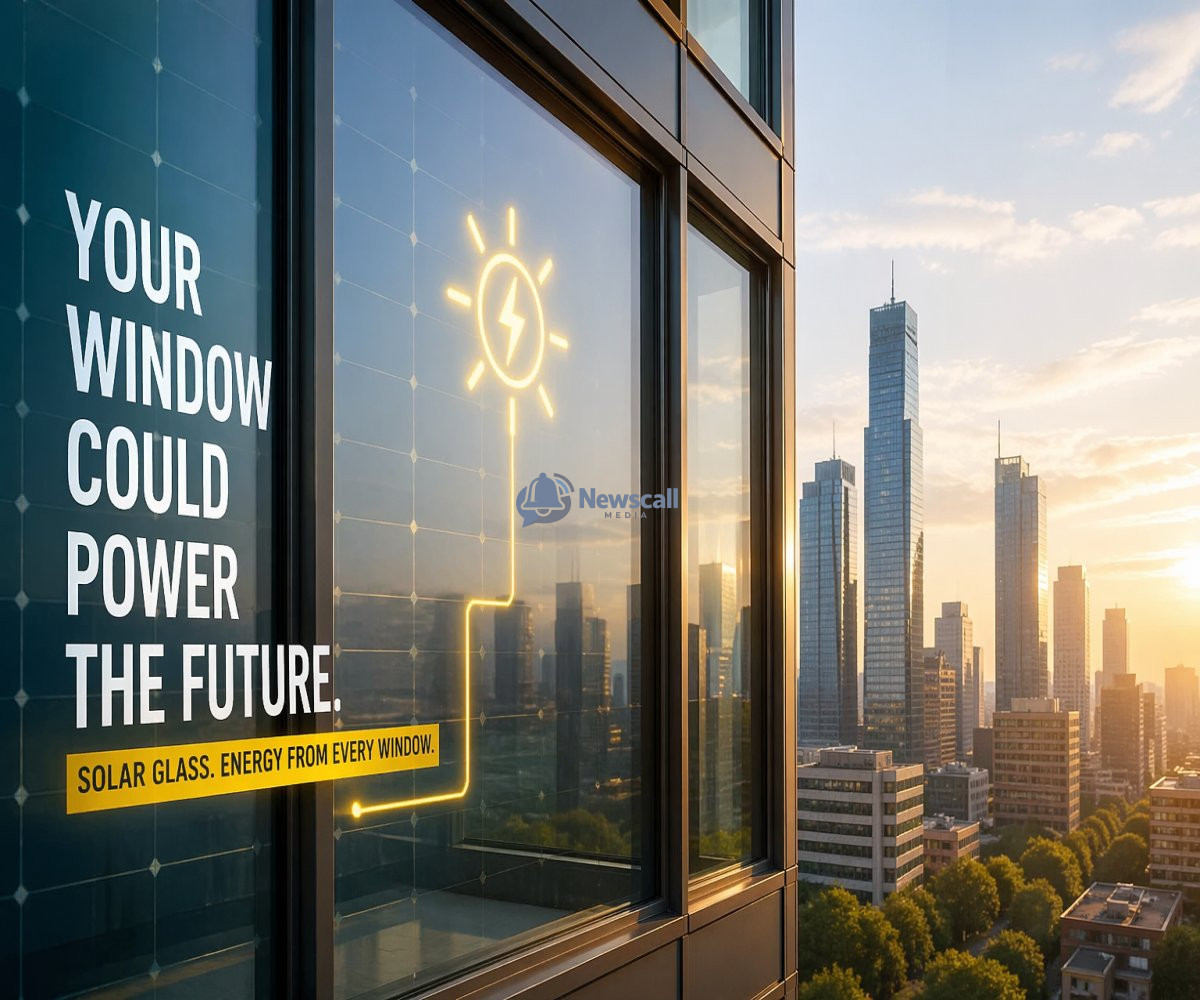
A new wave of clean energy innovation is pushing forward a technology known as solar glass transparent windows that can generate electricity while still looking completely normal.
Instead of relying only on rooftop solar panels or large solar farms, the idea is simple but radical: turn the entire surface of buildings into energy -producing infrastructure. In this future, skyscrapers, offices, malls, and even residential apartments could produce electricity directly from their windows.
The technology works by embedding ultra-thin photovoltaic layers inside glass panels. These layers capture parts of sunlight that are not visible to the human eye, while still allowing natural light to pass through. To an observer, the window looks like any other glass surface, but behind the scenes, it is quietly generating electrical power.
What makes this innovation especially important is its scale potential. Cities are filled with glass-covered buildings, especially in urban and developing environments where construction is rapidly expanding upward. If even a fraction of that glass becomes energy-producing, the total output could significantly reduce pressure on traditional electricity grids.
In recent years, particularly around 2025 and 2026, startups working in this space have moved from early stage experiments to realworld pilot installations. Some commercial buildings are now testing solar glass panels in controlled environments, marking one of the first steps toward practical adoption at scale.
However, the technology is still in its early commercial phase. Efficiency remains lower compared to traditional solar panels, meaning it cannot yet replace them entirely. Production costs are also high, which limits usage mostly to experimental buildings, luxury developments, and innovation-focused architecture projects.
Despite these limitations, interest continues to grow. Investors see long-term potential in the idea of cities that partially power themselves through their own structures. With global energy demand rising and urban populations expanding, the need for alternative, space-efficient energy solutions is becoming more urgent.
Supporters of solar glass believe it could eventually change how cities are designed. Instead of separating buildings and power infrastructure, future urban planning could merge the two — where energy generation is embedded directly into architecture itself.
In that scenario, buildings would no longer be seen only as energy consumers. They would also function as distributed power sources, contributing electricity back into local systems or at least offsetting a portion of their own usage.
The technology is still developing, but its direction is clear. What used to be just transparent material for light and aesthetics is slowly evolving into something more functional — a surface that could help power the cities of the future.
If current progress continues, the concept of a “power plant” may shift away from isolated facilities and quietly move into everyday structures that already exist all around us.

Victor Oluebubechukwu Akuma.
Creative writer