

Figure AI Founder Expands Beyond Robotics — What It Signals for the Future of AI Hardware
The robotics industry has been one of the most ambitious frontiers in modern technology, but also one of the hardest to scale. Now, a major shift is emerging from one of its most closely watched companies: Figure AI.
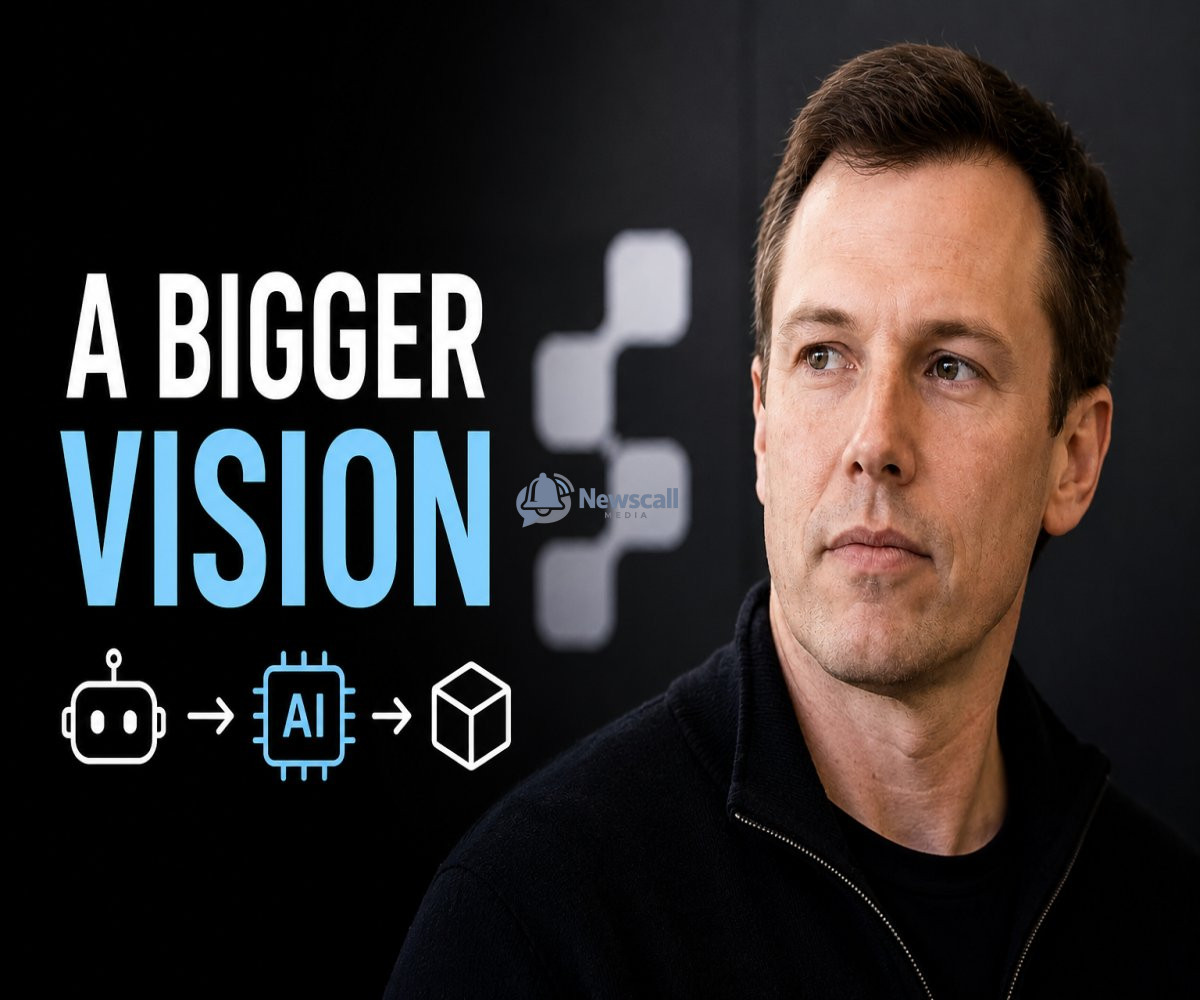
The company’s founder, Brett Adcock, is reportedly expanding his focus beyond robotics into a broader AI and hardware direction, signaling that the ambition is no longer just about building humanoid machines — but about owning the intelligence layer that powers them.
Figure AI initially positioned itself as a leader in humanoid robotics — building general-purpose robots designed to operate in human environments. The long-term vision was clear: machines that can perform physical tasks across warehouses, factories, and eventually homes.
But recent developments suggest a strategic expansion. Instead of focusing solely on robotics hardware, the company’s leadership is now leaning into a broader AI infrastructure direction — where robots are just one application of a much larger system.
This shift reflects a growing belief in Silicon Valley: the real value may not be in the robot itself, but in the intelligence that drives it.
At the center of this change is Brett Adcock, a serial founder known for building companies that sit at the intersection of AI and physical systems.
His move beyond robotics is being interpreted less as a departure from Figure AI, and more as an expansion of scope — from “building robots” to building platforms that can power multiple AI-driven systems, including robotics, automation tools, and possibly new hardware categories.
This development highlights a key trend in the AI industry: robotics is converging with general-purpose AI systems.
Instead of isolated machines designed for specific tasks, the direction is shifting toward unified intelligence models that can control multiple types of hardware, learn across environments, and adapt in real time without task-specific programming.
If successful, this approach could make robots less like specialized tools and more like flexible extensions of AI systems.
The expansion of focus also suggests something deeper: competition in robotics alone may not be enough.
Building humanoid robots is expensive, slow, and difficult to scale. But building the intelligence layer — the “brain” behind multiple systems — opens up a much larger market.
This is why many investors and engineers are now watching companies like Figure AI not just as robotics startups, but as potential AI platform companies.
If this strategy continues, we may see Figure AI evolving into a broader AI infrastructure company, increased focus on foundation models for robotics, deeper integration between AI software and physical machines, and a shift in how we define “robotics companies” entirely.
What started as a humanoid robotics race may be turning into something bigger — a race to build general intelligence that can operate in the physical world.

Victor Oluebubechukwu Akuma.
Creative writer