


A Future Without Batteries: Sunlight Turned Directly Into Fuel
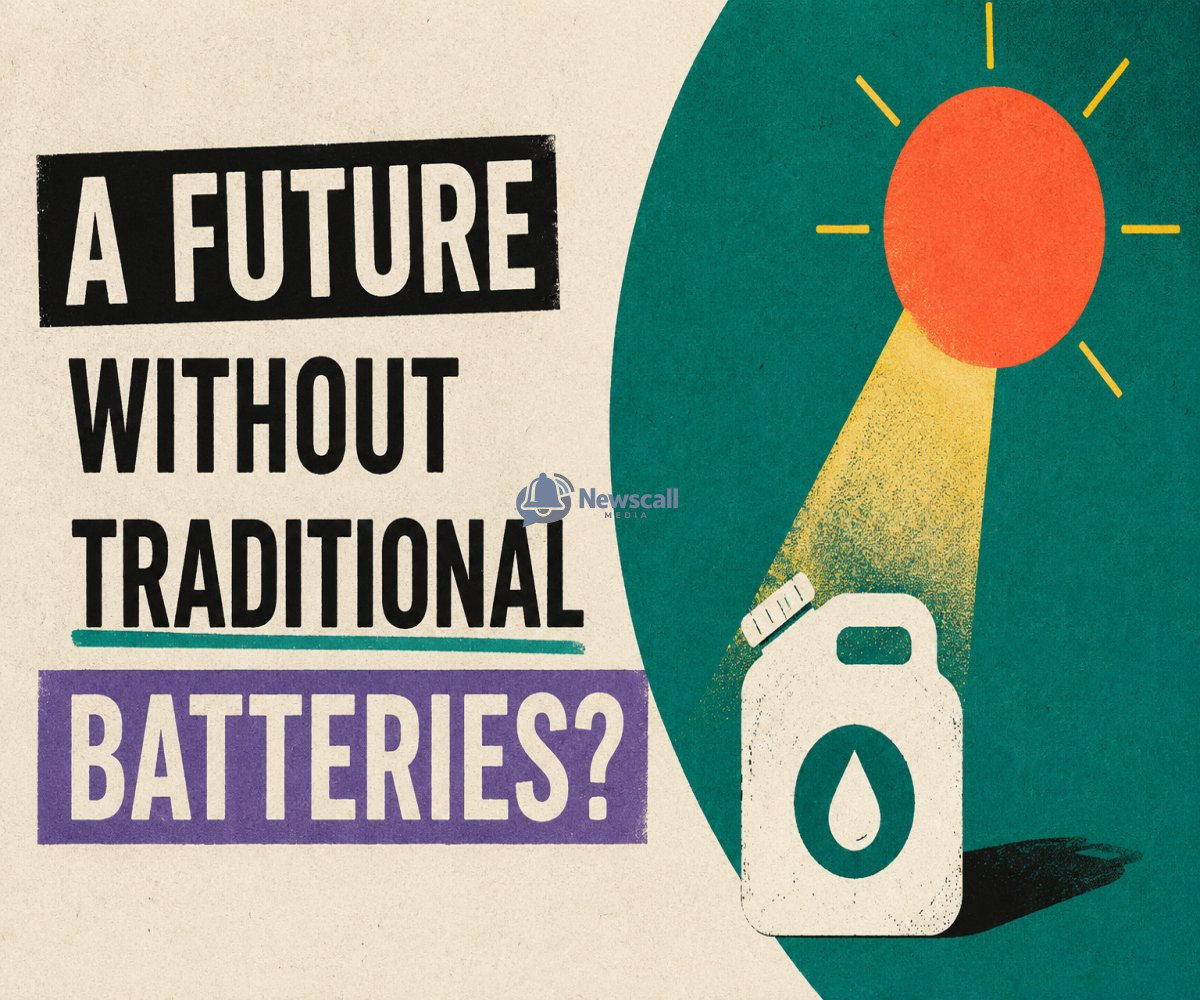
For over a century, human progress has depended on one quiet backbone: the battery. From phones to satellites, electric cars to rural power systems, stored electrical energy has shaped how we live and work. But a recent scientific breakthrough suggests we may be moving toward a very different kind of energy future—one where we don’t store electricity at all, but generate usable fuel directly from sunlight.
Researchers have unveiled a battery-free artificial photosynthesis system that converts sunlight into fuel more efficiently than earlier designs. Instead of relying on solar panels that generate electricity for later storage, this system mimics the natural process used by plants: capturing sunlight and turning it directly into chemical energy.
At its core, the idea is deceptively simple. Plants don’t “store electricity” when they perform photosynthesis—they convert sunlight, water, and carbon dioxide into energy-rich compounds. Scientists are now replicating that logic using engineered materials and catalytic systems that can produce usable fuels like hydrogen or other chemical energy carriers.
What makes this development particularly important is the removal of the battery entirely from the energy equation. Batteries have always been the weak link in renewable energy systems. They degrade over time, require rare materials, and introduce inefficiencies in storage and retrieval. A system that bypasses storage and directly produces fuel could eliminate many of these limitations.
Instead of charging and discharging cycles, future energy systems might operate more like continuous fuel generators—producing energy-rich substances whenever sunlight is available, and using or storing those fuels only when necessary. This shifts the concept of renewable energy from “power storage” to “on-demand fuel creation.”
The efficiency gains reported by researchers also hint at something even more significant: scalability. If systems like this can be produced at large scale, they could potentially power remote communities, industrial processes, and transportation networks without relying heavily on lithium-based batteries or traditional fossil fuels.
However, this is not yet a ready-to-deploy replacement for today’s energy infrastructure. Challenges remain in durability, cost, and real-world efficiency outside laboratory conditions. Like many breakthroughs in artificial photosynthesis, the path from prototype to widespread adoption is long and complex.
Still, the direction is clear. We are gradually moving from a world where energy must be stored in heavy, degradable batteries to one where energy can be continuously generated in chemical form from abundant sunlight. If this technology matures, the phrase “charging your device” might one day feel as outdated as “dialing a rotary phone.”
The idea of a future without traditional batteries is no longer pure speculation—it is becoming an engineering problem, and increasingly, a solvable one.

Victor Oluebubechukwu Akuma.
Creative writer