
Anthropic Just Gave AI A Way To Control Real-World Machines
For years, AI has lived mostly inside computers.
It writes code. It analyzes documents. It generates images. It searches through information and answers questions.
Now Anthropic wants Claude to do something much more physical:
operate laboratory equipment and machines in the real world.
On August 27, Anthropic unveiled a research preview of its Model Hardware Standard (MHS), a new specification designed to give AI agents a standardized way to communicate with and control programmable physical devices.
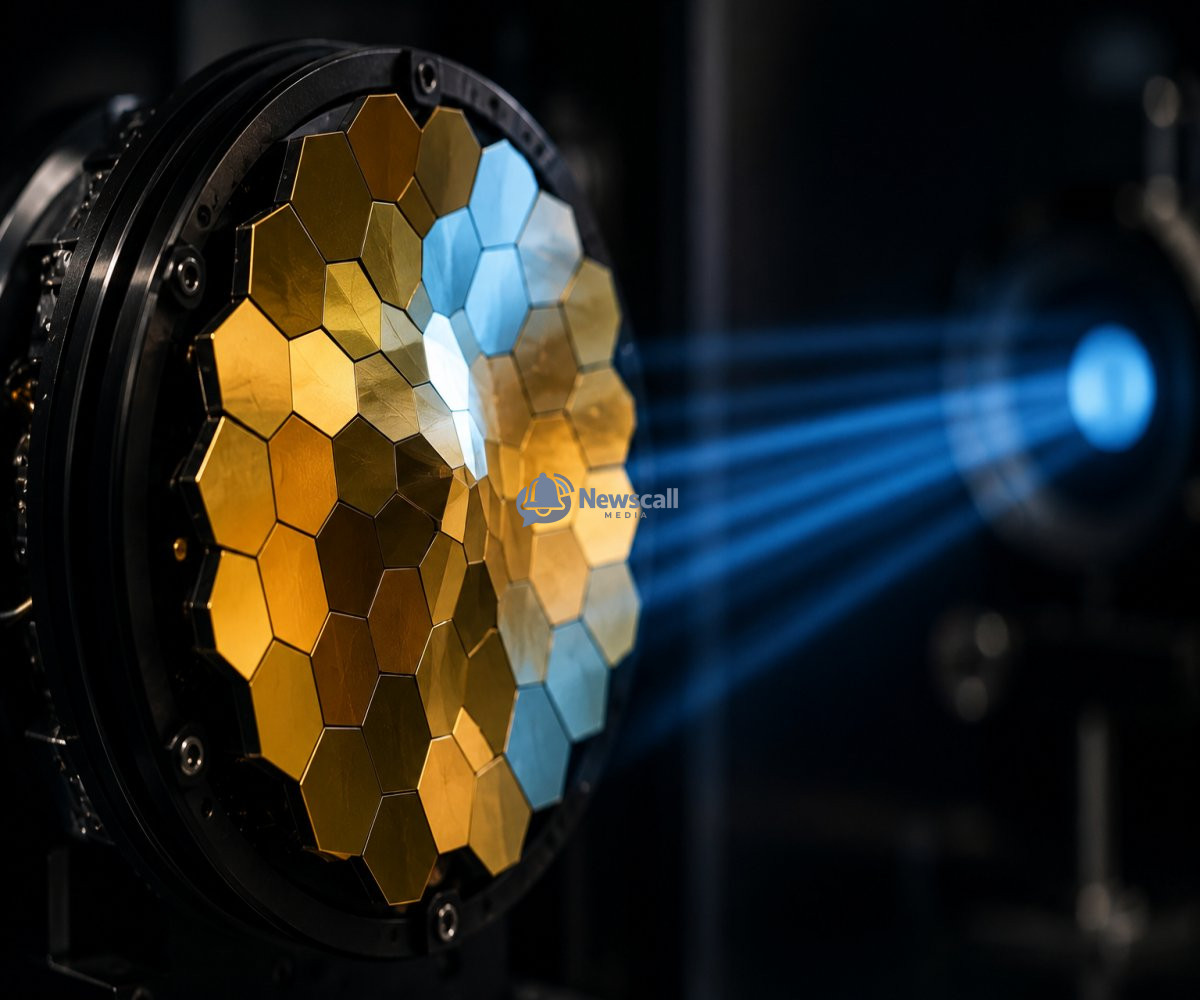
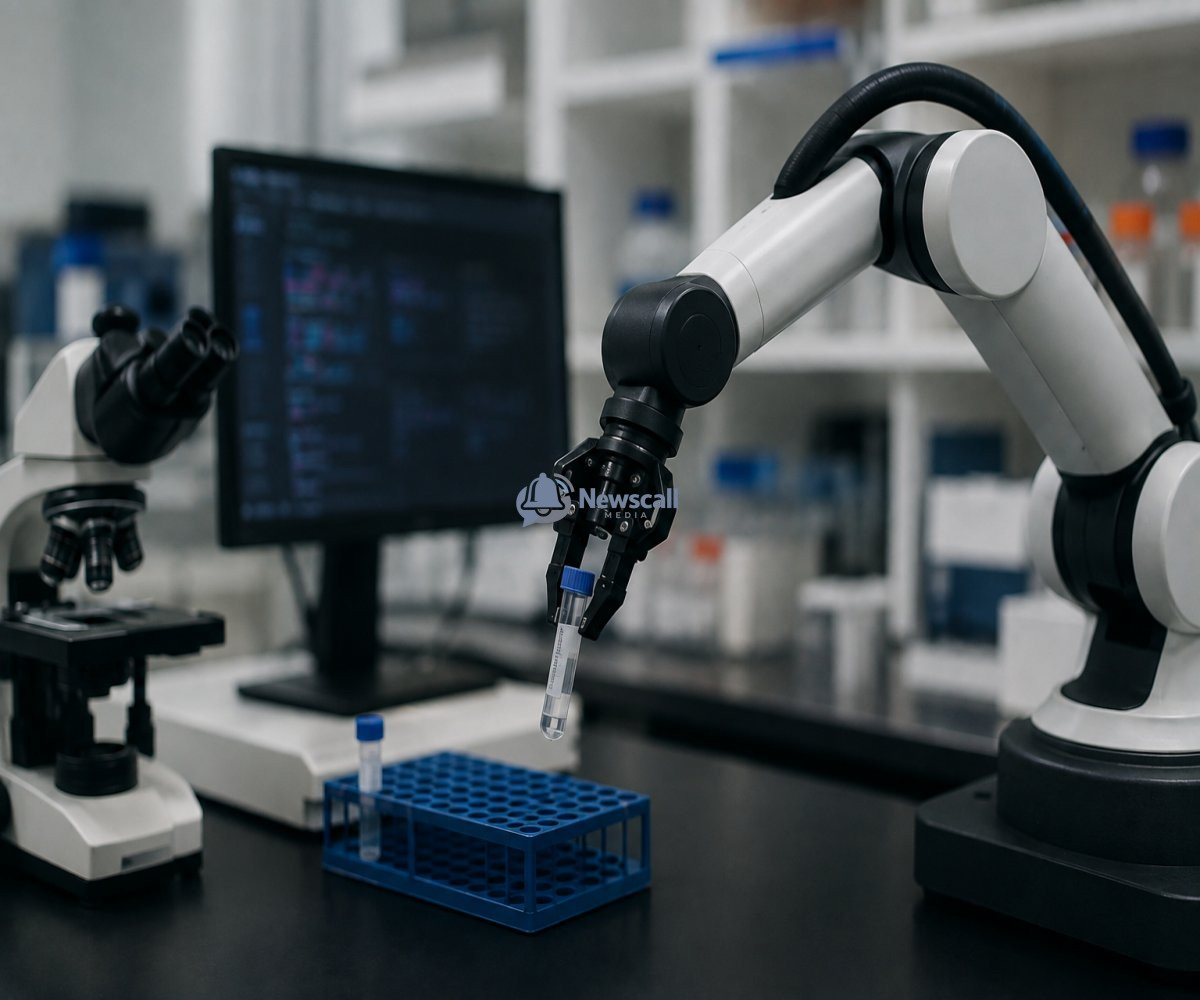
That includes equipment such as microscopes, liquid handlers, robotic arms, manufacturing machines and even hardware used in quantum computing.
And the implications are much bigger than simply making Claude control a robot arm.
Anthropic is effectively trying to build a bridge between AI agents and the physical world.
Until now, most agentic AI has been limited to things that happen on a computer.
An AI agent can open a website, write a program, search a database or manipulate a digital file.
But a laboratory is different.
A scientist might need to operate a microscope, adjust experimental parameters, move samples with a robotic system and analyze the results before deciding what to do next.
Those steps normally require specialized equipment, specialized software and, most importantly, a human who understands how everything fits together.
Anthropic's new standard is designed to make those systems easier for AI agents to interact with.
The company says MHS can allow agents to operate multiple instruments in parallel and coordinate complicated workflows, including drug-discovery experiments and laser calibration for quantum computers.
The idea is surprisingly simple.
Instead of building a completely different connection between every AI system and every piece of laboratory equipment, MHS provides a common way for them to communicate.
Think of it like giving different machines a common language.
A laboratory could have a microscope from one manufacturer, a liquid handler from another and a robotic arm from a third.
Normally, connecting all of those systems can require specialists to build custom integrations.
Anthropic says that process can take weeks or even months.
MHS is designed to reduce that integration work to hours or minutes.
That matters because AI agents become much more useful when they can actually interact with the tools needed to accomplish a task.
Imagine a scientist asking an AI to investigate a particular biological question.
Instead of simply searching scientific papers and suggesting experiments, the agent could potentially coordinate the equipment required to perform parts of those experiments.
It could reason through the next step, adjust parameters based on new results and continue the workflow.
Anthropic says MHS can support autonomous, around-the-clock experiments, with agents able to update parameters in real time and, in some cases, recover from hardware errors without human intervention.
That's a major change in the role of AI.
The AI isn't just providing information anymore.
It is becoming part of the experiment.
And that's where the term physical AI starts to make more sense.
Physical AI isn't simply a humanoid robot walking around.
It's the broader idea of AI systems interacting with physical environments and machines.
A model can understand what needs to happen, communicate with hardware and respond to what the hardware discovers.
In a scientific setting, that could eventually create a continuous loop:
AI proposes → machines experiment → results come back → AI learns → next experiment begins.
That could dramatically accelerate certain types of research.
Instead of scientists spending large amounts of time manually repeating routine procedures, AI agents could potentially handle portions of those workflows while researchers focus on higher-level decisions.
Anthropic has already been testing the concept with research institutions and companies.
The early MHS program involves organizations including the Howard Hughes Medical Institute's Janelia Research Campus, Carnegie Mellon University, Genentech and quantum-computing company QuEra.
And Anthropic isn't presenting MHS as a finished product that can immediately control every machine in every laboratory.
It's currently a research preview.
The company is giving an early version to selected partners while working on safety evaluations and best practices before making the standard open source.
That safety component is particularly important.
Giving an AI access to a computer is one thing.
Giving it access to physical machinery is another.
A wrong command in a text editor might be annoying.
A wrong command sent to laboratory equipment could damage expensive hardware, ruin an experiment or create a safety problem.
That's why Anthropic is trying to standardize not just communication between AI and hardware, but also the boundaries around what an AI agent is allowed to do.
The company says device manufacturers can define operational parameters and safety limits that help constrain what AI agents can control.
That could become increasingly important as AI agents become more autonomous.
There's also a bigger strategic reason Anthropic is interested in this.
AI companies are increasingly competing to build agents that don't simply answer questions but actually accomplish tasks.
Software agents are one part of that race.
Physical-world agents could be the next.
If AI can eventually operate laboratory instruments, manufacturing equipment and robots through a common interface, the potential market becomes enormous.
Factories could use agents to coordinate machines.
Pharmaceutical companies could automate parts of drug discovery.
Researchers could run experiments continuously.
Engineers could use AI to diagnose equipment and adjust systems.
And eventually, similar technology could extend into many other physical environments.
But there is still a huge gap between what MHS demonstrates today and a world where laboratories operate themselves.
AI agents can make mistakes.
Physical systems can behave unpredictably.
And scientific experiments often require judgment that isn't easily reduced to a simple sequence of instructions.
That's why human oversight remains important, especially for high-stakes applications.
Anthropic's approach is therefore less about replacing scientists overnight and more about giving AI a standardized way to work alongside the machines scientists already use.
And that distinction is important.
The biggest breakthrough here isn't that Claude can make a robotic arm move.
Robotic arms have been moving for decades.
The interesting part is that a general-purpose AI agent can increasingly reason about what the machine needs to do and interact with it through a common interface.
That is a much harder problem.
And if companies solve it, AI could become much more deeply integrated into the physical economy.
The AI revolution started with computers.
Then it moved into software.
Now it is beginning to reach the machines around us.
Anthropic's Model Hardware Standard is an early attempt to create the bridge.
Today, that bridge connects Claude to microscopes, robotic arms and laboratory equipment.
Tomorrow, it could connect AI agents to entire factories.
The biggest question isn't whether AI can control machines.
It increasingly can.
The question is what happens when AI can control enough machines to start doing real work in the physical world?
That may be the next major chapter of the AI race.

Victor Oluebubechukwu Akuma.
Creative writer