
Everything You Know About Color Is Wrong
Look around you.
The green leaves outside your window.
The blue sky.
A red apple.
A black keyboard.
A white sheet of paper.
They all seem to have one thing in common.
Color.
It feels obvious that these objects contain their colors. After all, the apple is red whether you look at it or not... right?
Surprisingly, modern physics says otherwise.
Objects don't actually store color inside themselves.
In fact, color doesn't exist inside objects at all.
What objects do possess are physical properties that determine how they interact with light. The colors you see are created inside your brain after light reaches your eyes.
To understand this, imagine standing in a completely dark room.
There's a red ball sitting on a table.
Is it still red?
Your instinct is probably to say yes.
But without light, there is no red.
There is no blue.
There is no green.
The ball still exists, but its color does not.
That's because color only appears when light interacts with an object.
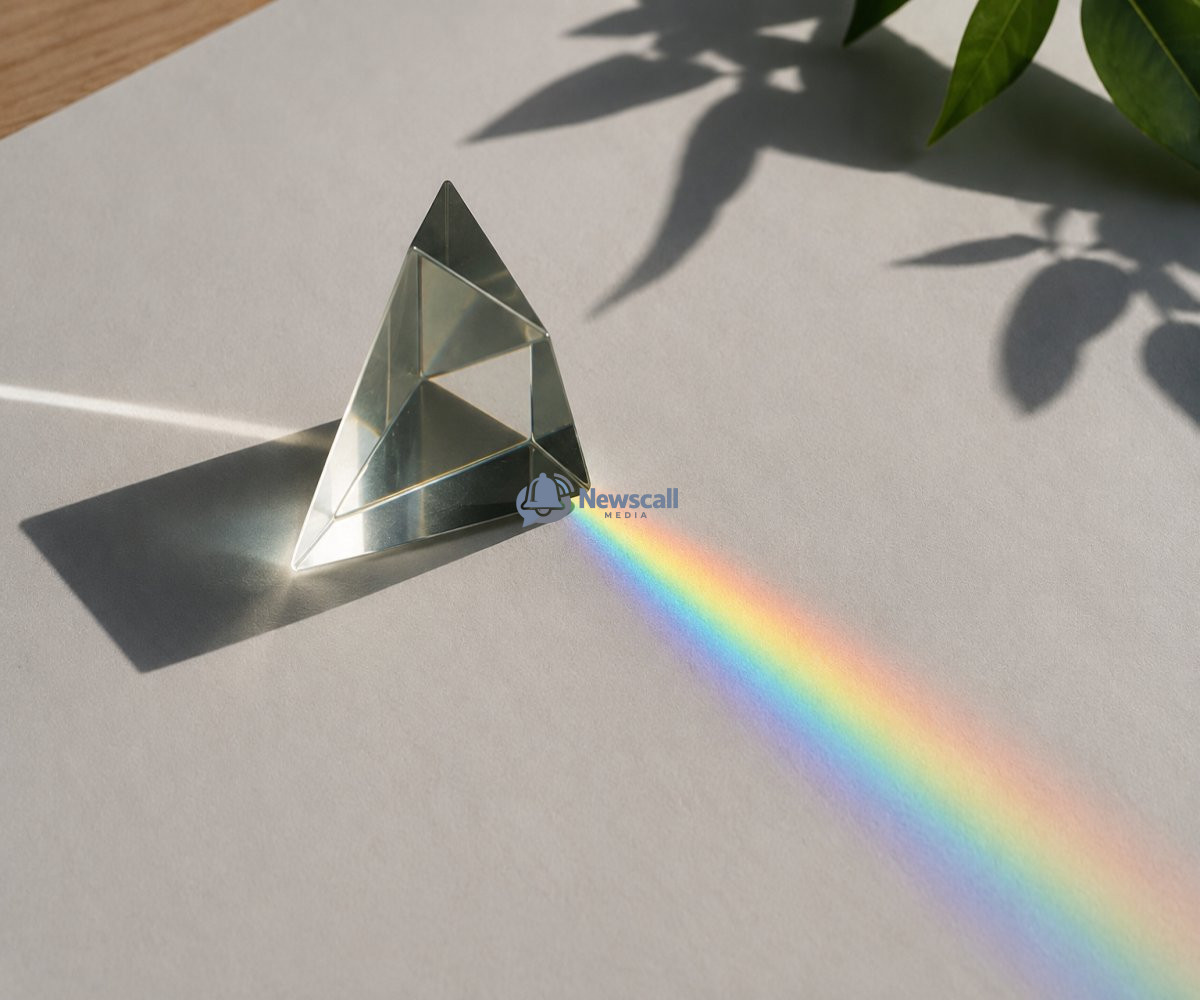
Sunlight may look white, but it actually contains every visible color combined.
When white light strikes an object, something remarkable happens.
Some wavelengths of light are absorbed.
Others are reflected.
A ripe tomato absorbs most wavelengths except those we perceive as red.
Those reflected red wavelengths travel into your eyes, where specialized cells in your retina detect them.
Your brain then performs an extraordinary task.
It converts those signals into the experience you call "red."
The tomato isn't producing redness.
It's simply reflecting certain wavelengths of light.
Your brain does the rest.
This explains why the same object can appear completely different under different lighting conditions.
A white shirt may look slightly blue outdoors, yellow under warm indoor lighting, and almost orange during sunset.
The shirt hasn't changed.
The light illuminating it has.
Your brain constantly adjusts its interpretation of color to account for changing environments.
This ability is known as color constancy, and it allows us to recognize familiar objects even as lighting conditions change dramatically throughout the day.
One of the most famous demonstrations of this occurred in 2015, when a photograph of a dress divided the internet.
Some people saw it as blue and black.
Others insisted it was white and gold.
Neither group was imagining things.
The photograph contained ambiguous lighting information, causing different brains to make different assumptions about the color of the surrounding light.
As a result, people genuinely experienced different colors while looking at the exact same image.
The dress became a global reminder that color is not simply a property of objects.
It is a perception created by the brain.
Even more fascinating is the fact that many animals experience colors humans cannot even imagine.
Bees can see ultraviolet patterns on flowers that guide them toward nectar.
Many birds perceive additional colors invisible to human eyes.
Mantis shrimp possess one of the most complex visual systems known, capable of detecting an extraordinary range of light wavelengths.
The world each of these animals experiences is fundamentally different from ours.
The flowers in your garden may appear ordinary to you.
To a bee, they contain glowing landing strips hidden in ultraviolet light.
If color truly existed inside objects, every species would see the same colors.
They don't.
The colors we experience depend entirely on the visual system interpreting incoming light.
Modern technology takes advantage of this principle every day.
Your phone screen doesn't contain millions of different colored paints.
Instead, it combines tiny red, green, and blue pixels at different brightness levels.
Your brain blends those three colors into millions of others.
Televisions, computer monitors, and digital billboards all rely on the same illusion.
The colors appear real because your visual system constructs them.
Scientists have also discovered that surrounding colors influence how we perceive an object.
Place the same gray square on a black background and then on a white background.
The gray appears different, even though its physical properties haven't changed.
Your brain interprets color relative to its surroundings rather than in isolation.
This is why artists, photographers, architects, and designers spend enormous effort understanding color relationships.
They're not just working with pigments.
They're working with human perception.
So, does this mean objects have no color at all?
Not exactly.
Objects have measurable physical properties that determine which wavelengths of light they reflect and absorb.
Those properties are real.
But the experience of "red," "blue," or "green" exists only after your brain transforms reflected light into conscious perception.
In other words, color is less a feature of the world and more a collaboration between light, matter, your eyes, and your brain.
It's one of the greatest illusions nature has ever created.
The next time someone points to a bright red flower or a deep blue ocean, remember this:
The flower isn't storing redness.
The ocean isn't filled with blueness.
Those colors come alive only when light meets your eyes—and your brain turns invisible wavelengths into the vibrant world you believe has always been there.

Victor Oluebubechukwu Akuma.
Creative writer