How Amazon Survived The Dot-Com Crash
In the late 1990s, the internet felt unstoppable.
New startups appeared almost every day.
Investors poured billions of dollars into online businesses.
Stock prices soared.
Founders became celebrities.
And many people believed the internet had rewritten the rules of business forever.
It didn't seem to matter whether a company was profitable.
It didn't even seem to matter whether it had a clear business model.
If a startup had a website and the words ".com" attached to its name, investors were often willing to throw money at it.
The excitement became so intense that it created one of the largest financial bubbles in history.
Today, we know it as the Dot-Com Bubble.
When that bubble finally burst, thousands of startups disappeared.
Billions of dollars vanished.
Careers ended.
Dreams collapsed.
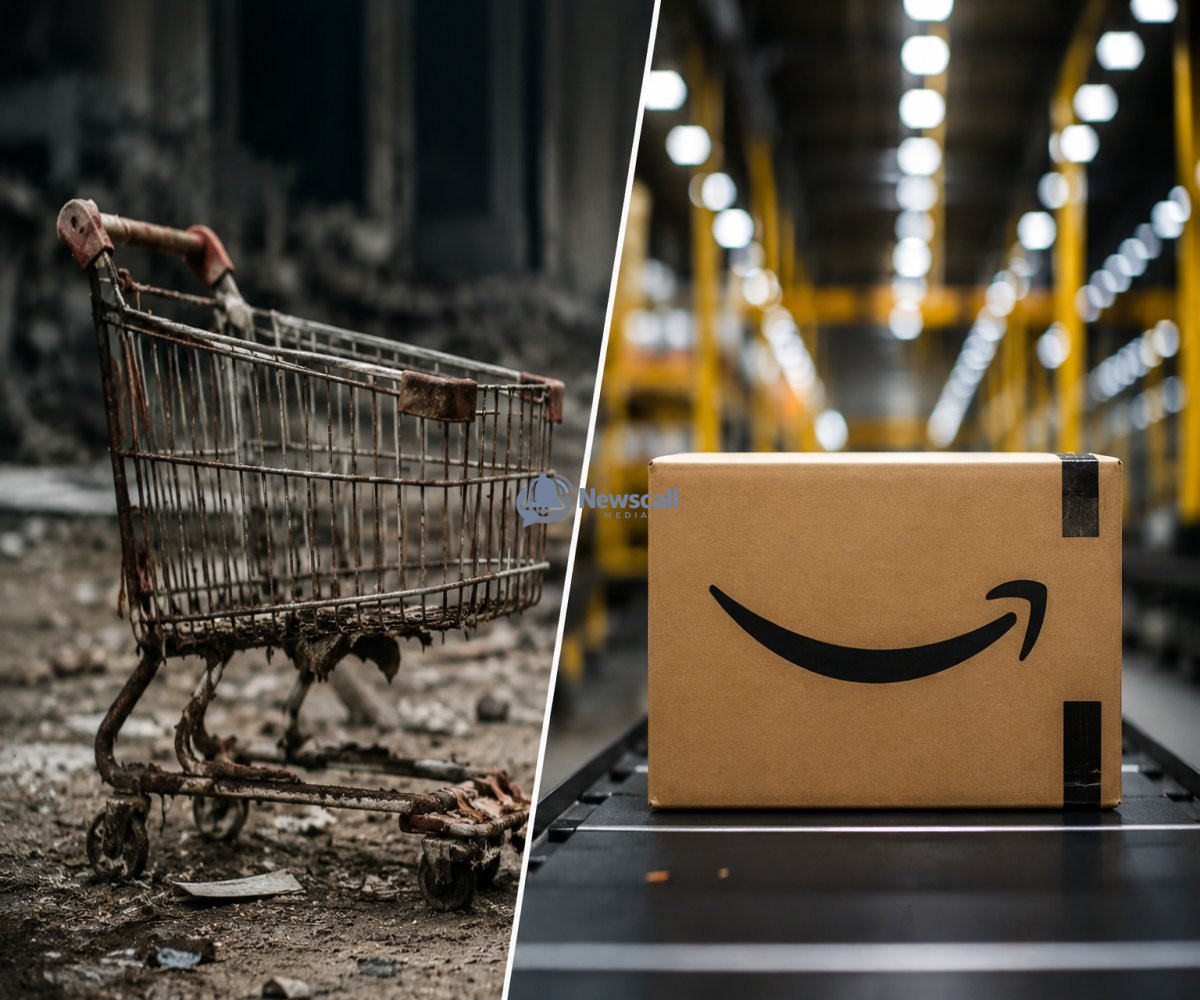
Yet amid the wreckage, one internet company managed not only to survive but eventually become one of the most powerful businesses the world has ever seen.
That company was Amazon.
Looking back today, it's easy to assume Amazon's success was inevitable.
After all, it dominates online shopping.
It operates one of the world's largest cloud computing businesses.
Its influence extends into entertainment, logistics, artificial intelligence, and countless other industries.
But at the height of the dot-com crash, many experts believed Amazon was doomed.
The company was losing money.
Its stock was collapsing.
And investors were losing faith in internet businesses.
So how did Amazon survive when thousands of startups didn't?
The answer begins with its founder.
In 1994, Jeff Bezos left a successful Wall Street career to launch an online bookstore.
The idea sounded strange at the time.
Most people still purchased books from physical stores.
Internet shopping was unfamiliar.
Many consumers didn't trust entering credit card information online.
Yet Bezos saw something others missed.
The internet was growing at an extraordinary rate.
He believed online commerce would eventually transform how people bought products.
Books became Amazon's starting point because they were ideal for online sales.
There were millions of titles available, far more than any physical bookstore could stock.
An online store could offer a selection unlike anything customers had seen before.
The idea worked.
Amazon grew rapidly.
Revenue increased year after year.
Investors became excited.
As internet stocks surged, Amazon became one of the symbols of the digital revolution.
Then came the problem.
Like many fast-growing startups, Amazon wasn't focused on short-term profits.
Instead, the company spent aggressively.
It invested in warehouses.
It built logistics systems.
It hired employees.
It expanded operations.
Critics argued that Amazon was spending too much money and losing too much cash.
For a while, investors didn't seem to care.
As long as internet stocks kept rising, growth was enough.
Then reality arrived.
In March 2000, the dot-com bubble began collapsing.
Investors suddenly realized that many internet companies had little chance of becoming profitable.
Stock prices crashed.
Funding disappeared.
Confidence evaporated.
The technology-heavy NASDAQ index lost trillions of dollars in value.
Some startups went bankrupt within months.
Others vanished almost overnight.
One of the most famous examples was Pets.com.
The company became known for its expensive advertising campaigns, including a popular sock puppet mascot.
Despite attracting attention, the business struggled to generate sustainable profits.
When investment money dried up, Pets.com quickly collapsed.
Many startups shared a similar fate.
They had built excitement.
They had attracted investors.
But they hadn't built strong businesses.
Amazon faced the same storm.
Its stock price fell more than 90 percent from its peak.
Investors questioned whether the company could survive.
Financial analysts criticized its losses.
Some predicted bankruptcy.
Others argued that online retail was simply a passing trend.
But Amazon had something many failed startups lacked.
Real customers.
People weren't visiting Amazon because of hype.
They were buying products.
Millions of customers were using the platform because it solved a genuine problem.
The company wasn't built solely on investor enthusiasm.
It was built on consumer demand.
That distinction became crucial.
While many startups depended heavily on outside funding, Amazon had already created a functioning business that generated substantial revenue.
The company still faced challenges, but it possessed a foundation that many competitors never developed.
Another reason Amazon survived was its willingness to think long term.
While competitors focused on boosting short-term stock prices, Bezos remained obsessed with building infrastructure.
Warehouses were expensive.
Distribution networks were expensive.
Technology systems were expensive.
Critics often viewed these investments as wasteful.
But Bezos saw them differently.
He believed they would eventually create a competitive advantage.
Years later, he would be proven right.
The infrastructure Amazon built during difficult times became one of its greatest strengths.
The company could process orders faster.
Deliver products more efficiently.
And serve customers at a scale competitors struggled to match.
The crash also revealed an important truth about business.
Technology alone isn't enough.
A company must create value.
Many dot-com startups assumed being online guaranteed success.
Amazon understood that technology was simply a tool.
The real objective was serving customers better.
This customer-first philosophy became one of the company's defining characteristics.
Bezos often emphasized long-term customer satisfaction over short-term profits.
Fast delivery.
Competitive pricing.
Convenience.
Selection.
These priorities helped Amazon build trust while other internet companies were losing it.
As competitors disappeared, Amazon gained opportunities.
The market became less crowded.
Customers had fewer alternatives.
The company emerged from the crash stronger than before.
Then came an even bigger breakthrough.
Amazon expanded beyond retail.
The company entered new markets and developed new services.
One of those services eventually became Amazon Web Services, commonly known as AWS.
Originally designed to support Amazon's own technological needs, AWS evolved into one of the world's most important cloud computing platforms.
Today, countless businesses rely on it.
Ironically, one of Amazon's greatest successes grew from investments many people once considered unnecessary.
The story of Amazon's survival offers a lesson that remains relevant for startups today.
Hype can attract attention.
Marketing can attract users.
Investment can fuel growth.
But none of those things guarantee survival.
When markets become difficult, fundamentals matter.
Real customers matter.
Real value matters.
Sustainable business models matter.
Thousands of startups learned this lesson during the dot-com crash.
Most learned it too late.
Amazon learned it just in time.
The company wasn't immune to the crisis.
Its stock collapsed.
Its future looked uncertain.
Its critics were loud.
But beneath the falling share price was something stronger.
A business solving real problems for real people.
That foundation allowed Amazon to survive one of the greatest startup collapses in history.
And in doing so, it transformed from a struggling online bookstore into one of the most influential companies the world has ever seen.

Victor Oluebubechukwu Akuma.
Creative writer