


How Ancient Cities Solved Problems Modern Cities Still Face
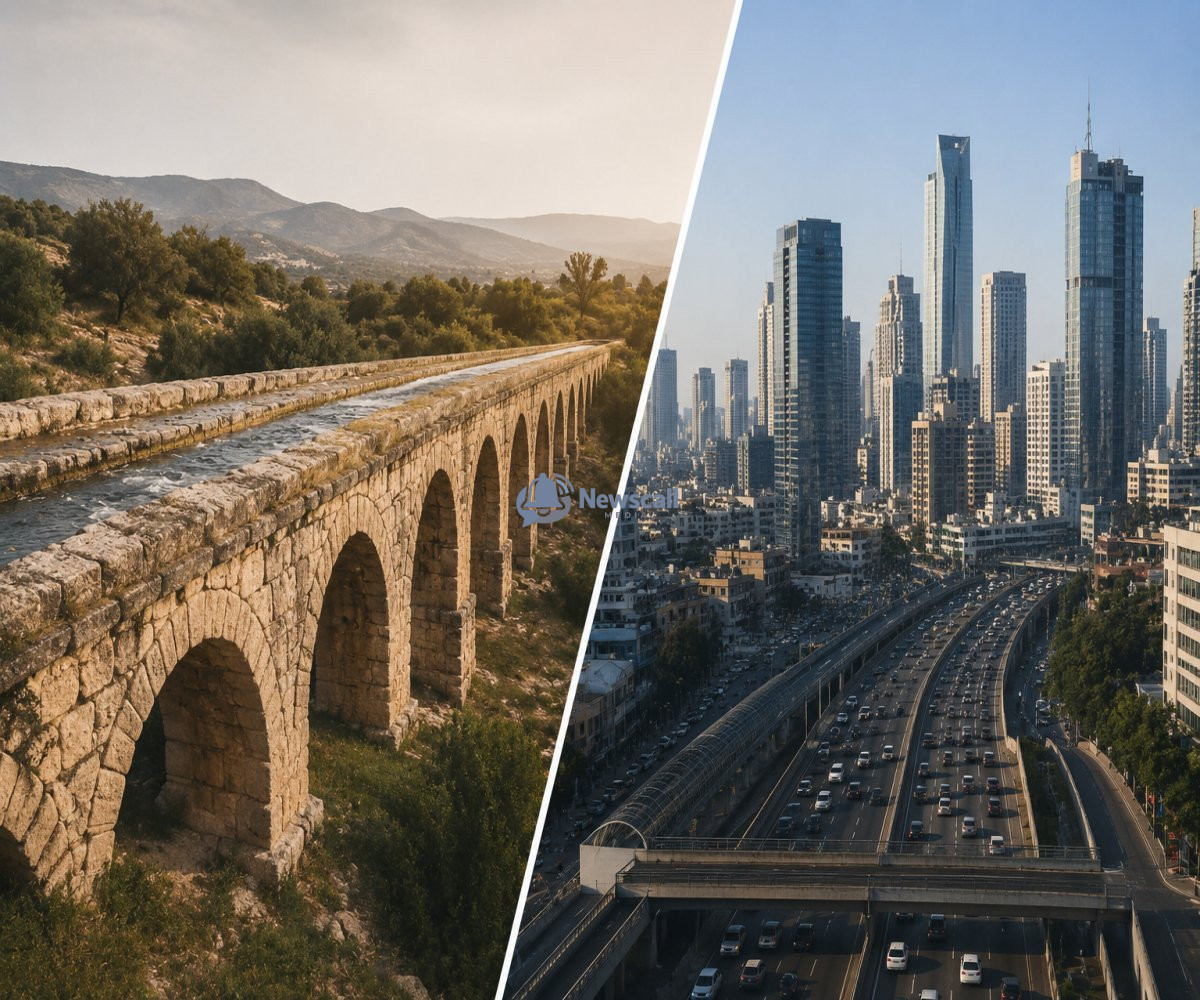
When people think about innovation, they usually look toward the future.
Smarter cities.
Artificial intelligence.
Autonomous vehicles.
Sustainable architecture.
Yet some of the most brilliant solutions to today's urban challenges were developed thousands of years ago.
Long before electricity, computers, or heavy machinery, ancient civilizations found ingenious ways to manage water, reduce heat, transport people, and keep growing populations healthy.
In many cases, modern engineers are rediscovering ideas that history had already perfected.
1. Beating the Heat Without Air Conditioning
Keeping cities cool is becoming one of the biggest challenges of the 21st century.
As temperatures rise, buildings consume enormous amounts of electricity for cooling.
Ancient architects faced the same problem—but without electricity.
In the Middle East and Persia, engineers designed windcatchers, tall towers that captured cool breezes and directed them into homes. Some were connected to underground water channels, allowing the incoming air to cool naturally before entering living spaces.
Thick stone walls, shaded courtyards, and narrow streets also helped reduce temperatures by blocking direct sunlight.
Today, architects are studying these same principles to create buildings that require far less energy.
2. Managing Water in Dry Lands
Supplying clean water remains one of the greatest urban challenges.
Thousands of years ago, civilizations solved this using remarkably advanced engineering.
The Romans built aqueducts capable of transporting fresh water over dozens of kilometers using nothing more than gravity and carefully calculated slopes.
In Persia, underground tunnels called qanats carried groundwater from mountains to towns while protecting it from evaporation beneath the hot desert.
Many of these systems operated continuously for centuries with minimal maintenance.
Modern cities continue to use the same engineering principle: move water efficiently while minimizing energy consumption.
3. Streets Designed for People
Many modern cities struggle with traffic congestion.
Ironically, ancient cities weren't designed around vehicles at all.
They were designed around people.
Markets, homes, workplaces, and public spaces were located within walking distance of one another.
Daily necessities were rarely far from where people lived.
Today, urban planners call this concept the "15-minute city"—a planning philosophy that aims to place essential services within a short walk or bicycle ride.
It's often presented as an innovative idea.
In reality, ancient cities had been practicing it for centuries.
4. Natural Drainage That Prevented Flooding
Heavy rainfall causes billions of dollars in flood damage every year.
Ancient engineers understood that removing water quickly was essential for healthy cities.
The cities of the Indus Valley Civilization, including Mohenjo-daro, featured remarkably sophisticated drainage systems more than 4,000 years ago.
Covered drains ran beneath streets, many homes were connected directly to the drainage network, and inspection openings allowed maintenance crews to clean the system.
For its time, it was one of the most advanced urban sanitation systems ever built.
Many modern drainage networks still rely on the same fundamental ideas.
5. Public Spaces That Strengthened Communities
Ancient cities weren't built only for efficiency.
They were built for people.
Greek agoras and Roman forums served as marketplaces, gathering spaces, government centers, and social hubs.
These open spaces encouraged trade, discussion, and civic participation.
Today, city planners recognize that parks, plazas, and public squares improve mental health, strengthen local economies, and create more vibrant communities.
Sometimes the oldest ideas remain the best.
6. Building Cities That Lasted for Centuries
Many modern buildings are designed with lifespans measured in decades.
Some ancient structures have survived for thousands of years.
The Romans achieved this partly through remarkable materials engineering.
Their concrete continues to fascinate scientists because it has shown an extraordinary ability to resist cracking and even strengthen over time in certain marine environments.
Researchers are studying its composition in hopes of creating more durable and sustainable construction materials for the future.
7. Designing With Nature Instead of Fighting It
Perhaps the greatest lesson ancient cities teach us is that successful engineering often works with nature rather than against it.
Buildings were positioned to capture sunlight in winter and shade during summer.
Water followed natural slopes.
Construction materials came from local environments.
Cities adapted to their climate instead of trying to overpower it.
Modern sustainable architecture is increasingly embracing the same philosophy.
Innovation isn't always about inventing something completely new.
Sometimes it's about rediscovering ideas that were forgotten.
The challenges facing today's cities—heat, water shortages, flooding, traffic, sustainability, and population growth—may seem uniquely modern.
But history tells a different story.
Generations of engineers solved many of these problems long before modern technology existed.
Their tools were simpler.
Their resources were fewer.
Yet their solutions continue to inspire the cities of tomorrow.
The future of urban innovation may not lie solely in smarter technology.
It may also lie in remembering the wisdom hidden beneath the streets of the past.
Hashtags:
#Innovation #Engineering #UrbanPlanning #AncientEngineering #Architecture #CivilEngineering #History #Infrastructure #Sustainability #SmartCities #STEM #Technology #InnovationStories #Knowledge #MindCommunity

Victor Oluebubechukwu Akuma.
Creative writer