


Logistics Startups Are Cutting City Delivery Times in Half Using Smarter Warehouses
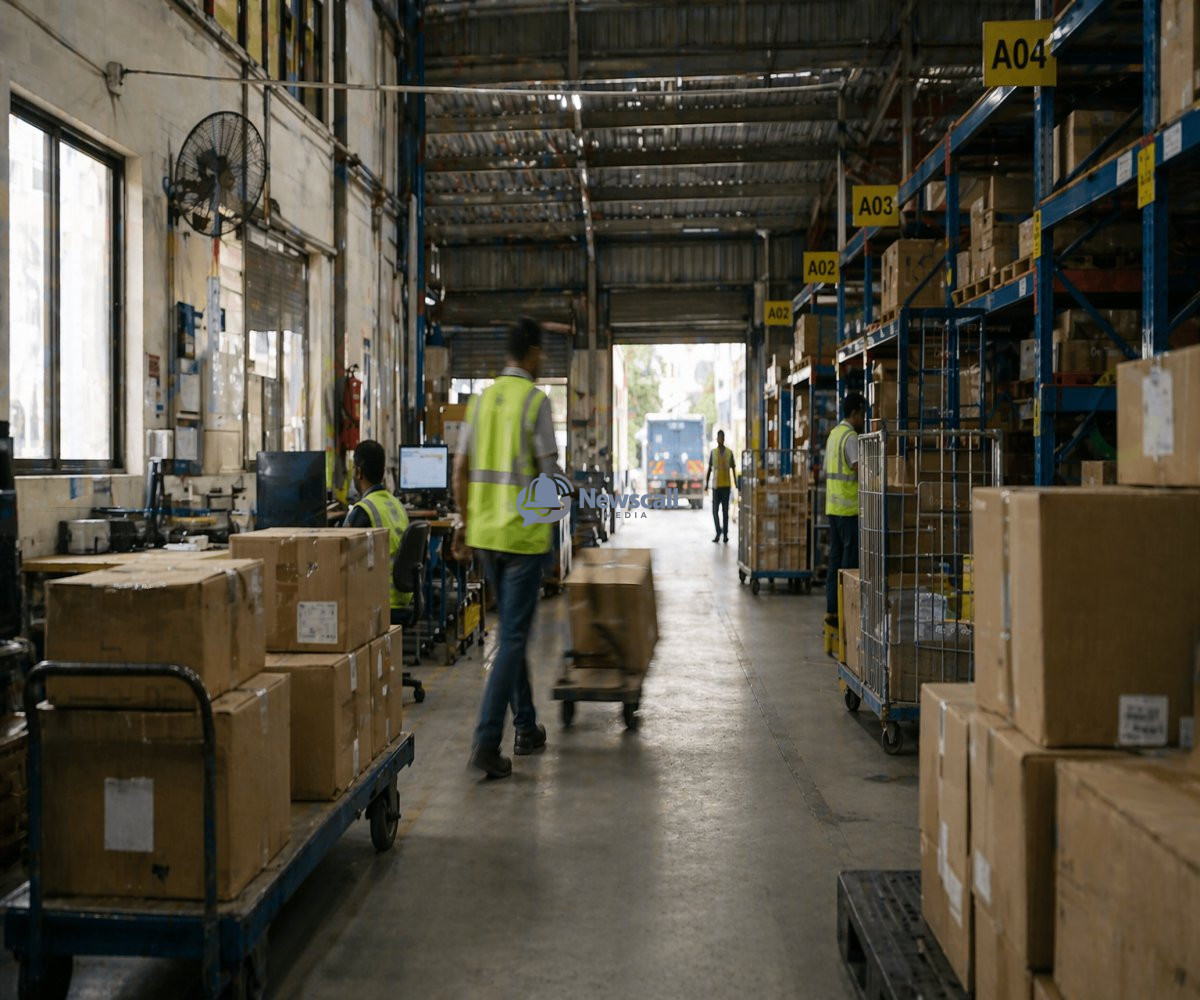
In many crowded cities, delivery delays have long been accepted as part of everyday life. Packages move slowly through traffic, but an even bigger delay has always been happening out of sight — inside warehouses.
That is beginning to change.
A growing number of logistics startups are redesigning warehouse operations to drastically reduce the time it takes for goods to move from storage to delivery. Instead of traditional systems where items are stored, searched for, and manually sorted, newer models are built around speed and constant flow.
In these upgraded facilities, products are no longer treated as static inventory. They are arranged based on demand patterns, delivery routes, and frequency of orders. This allows high-demand items to stay closer to dispatch points, reducing the time spent locating and packing goods.
One logistics operator described the shift this way:
“The warehouse is no longer a place where goods sit. It’s a place where they pass through as quickly as possible.”
Another major change is the rise of smaller fulfillment hubs placed closer to residential and commercial areas. These micro-centers reduce the distance between storage and customers, which helps shorten last-mile delivery times significantly.
Some startups are also restructuring internal layouts so that sorting and dispatching happen simultaneously rather than in separate stages. This reduces idle time and improves the speed of outbound shipments.
Industry analysts say these combined changes are already cutting delivery times by as much as half in some urban regions, especially where traffic congestion previously made fast delivery difficult.
A logistics consultant noted:
“The biggest breakthrough isn’t just faster transport — it’s eliminating delays before the package even leaves the warehouse.”
Traditional logistics companies are now under pressure to modernize their systems, as older warehouse models struggle to match the efficiency of these newer, flow-based operations.
Beyond faster deliveries, this shift is gradually changing how urban supply chains are designed. Warehouses are becoming more responsive and predictive, adjusting operations based on real-time demand rather than fixed schedules.
If the trend continues, same-day delivery could become the baseline in many cities, with logistics speed determined more by system design than physical distance.

Victor Oluebubechukwu Akuma.
Creative writer