
Machines That Repair Themselves: The Next Industrial Revolution
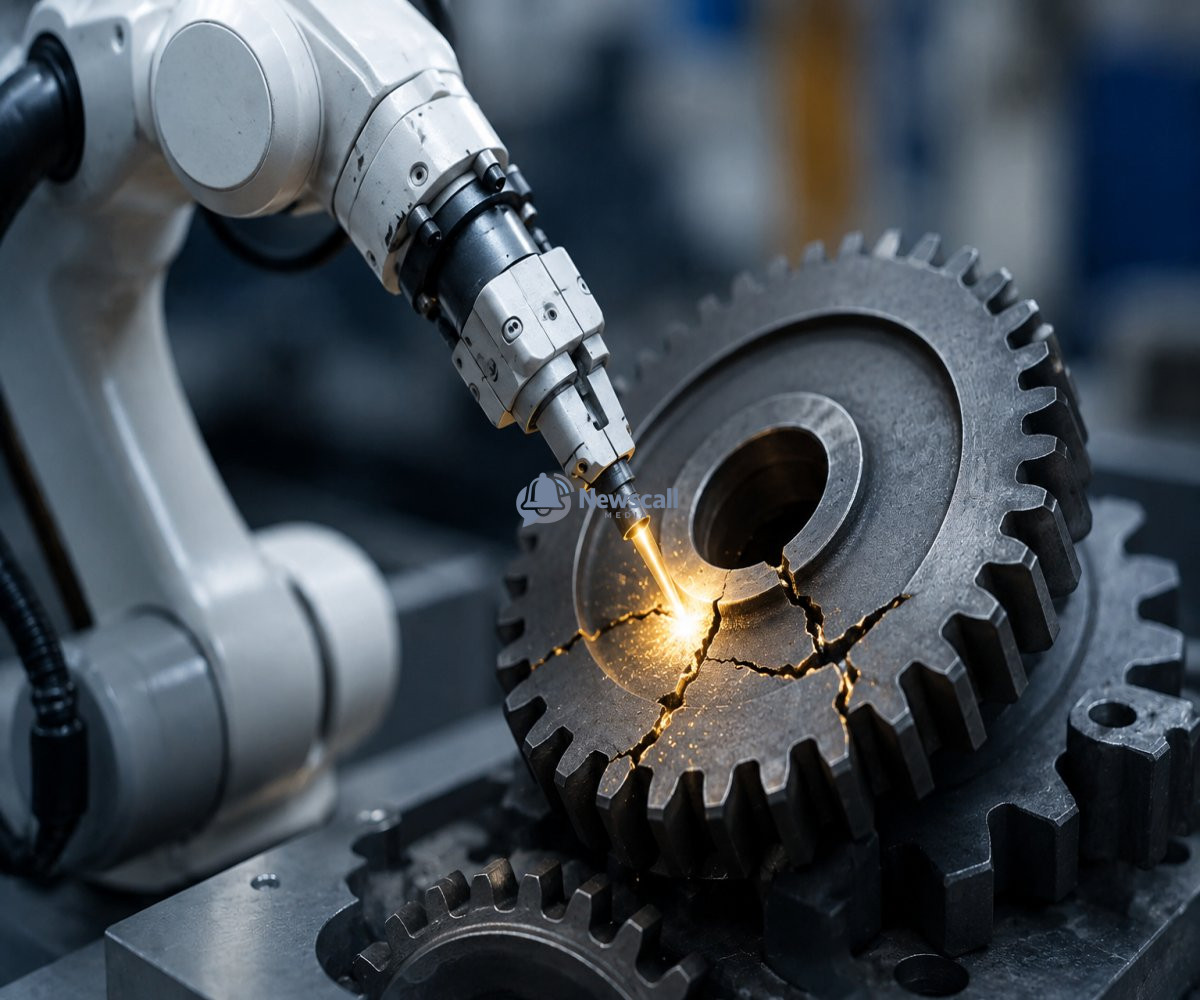
For most of human history, machines have had one major weakness.
They break.
Whether it's a car engine, a factory robot, an aircraft component, or a smartphone battery, every machine eventually suffers wear and tear. When that happens, repairs require time, money, and human intervention.
But what if machines could repair themselves?
What once sounded like science fiction is becoming one of the most fascinating areas of modern innovation. Researchers and engineers around the world are developing materials, systems, and technologies capable of detecting damage and restoring functionality without external assistance.
The implications could be enormous.
Imagine a bridge that automatically repairs tiny cracks before they become dangerous. Imagine aircraft materials that heal microscopic damage during flight. Imagine factory equipment that identifies internal wear and fixes minor issues before production is interrupted.
The goal is simple: reduce downtime, increase lifespan, and improve reliability.
Nature has been doing this for millions of years.
Human skin heals after a cut. Bones repair themselves after fractures. Plants recover from damage caused by weather and animals. These natural processes have inspired scientists to create synthetic materials that mimic the ability to heal.
Some self-healing materials contain microscopic capsules filled with repair agents. When a crack forms, these capsules break open and release substances that seal the damage. Other materials use chemical reactions that reconnect damaged structures automatically.
Researchers are even exploring metals capable of recovering from certain types of stress and fatigue.
While these technologies are still developing, progress has been surprisingly rapid.
The manufacturing industry stands to benefit significantly. Unexpected equipment failures can cost companies millions of dollars in lost productivity. Self-repairing systems could identify problems early and resolve minor issues before they escalate into costly breakdowns.
The transportation sector is equally interested.
Modern vehicles contain thousands of components that experience constant stress. Future cars, trains, ships, and aircraft may incorporate materials designed to extend operational life while reducing maintenance requirements.
Infrastructure presents another compelling opportunity.
Roads, pipelines, bridges, and buildings require continuous maintenance. Self-healing construction materials could dramatically reduce repair costs while improving safety and durability. Cities of the future may rely on infrastructure that actively maintains itself.
The rise of artificial intelligence is accelerating these possibilities.
Advanced sensors can continuously monitor equipment, detect abnormalities, and predict failures before they occur. Combined with self-repairing technologies, machines may eventually become capable of both identifying and addressing problems autonomously.
Instead of waiting for something to fail, systems could respond proactively.
This shift represents more than a technological improvement.
It represents a fundamental change in how machines are designed.
For generations, engineers have focused on building stronger and more durable systems. The next step may be creating systems that adapt, recover, and improve over time.
Challenges remain, of course.
Many self-healing technologies are still expensive to produce. Some are effective only under specific conditions, while others remain limited to laboratory environments. Widespread adoption will require further research, lower costs, and large-scale testing.
Yet the direction is clear.
The idea of a machine that repairs itself is no longer confined to futuristic concepts. It is becoming an engineering objective.
History is filled with innovations that initially seemed impossible. Powered flight, personal computers, smartphones, and electric vehicles all faced skepticism before transforming the world.
Self-healing machines may follow a similar path.
The next industrial revolution may not be defined by machines that work harder.
It may be defined by machines that know how to heal themselves.
And when that future arrives, breakdowns could become far less common than they are today.

Victor Oluebubechukwu Akuma.
Creative writer