

Microsoft Wants Its Sales Teams to Sell Against OpenAI and Anthropic. Here's Why That Changes the AI Race

For the past few years, Microsoft and OpenAI have been almost inseparable in the public's mind.
Microsoft invested billions into the company behind ChatGPT, integrated its technology across products like Copilot, Azure, and Microsoft 365, and positioned itself as one of the biggest winners of the artificial intelligence revolution.
But the relationship between partner and competitor is becoming increasingly blurred.
According to recent reports, Microsoft has begun training its sales teams to position the company's AI offerings against competitors—including OpenAI and Anthropic—when speaking with enterprise customers. Rather than simply promoting Microsoft's products, sales representatives are reportedly being encouraged to explain why Microsoft's AI ecosystem may be a better long-term choice for businesses than relying on competing models.
It's a subtle shift in strategy, but one that says a great deal about where the AI industry is heading.
The early race for artificial intelligence was largely about building the smartest models. Companies competed to create chatbots that could write better, reason faster, and answer more complex questions than their rivals.
That race is far from over, but the battleground has expanded.
Today, businesses aren't just buying AI models. They're investing in complete ecosystems that include cloud infrastructure, cybersecurity, productivity software, data management, and long-term technical support.
In that environment, having a powerful language model is only part of the equation.
Microsoft appears determined to convince businesses that it offers far more than just access to AI.
Reports suggest the company is encouraging its sales teams to emphasize strengths such as lower operational costs, enterprise-grade security, seamless integration across Microsoft's software portfolio, and the convenience of managing AI within an existing Microsoft environment.
For many large organizations, those arguments may carry just as much weight as benchmark scores or chatbot capabilities.
The timing is also significant.
Although Microsoft remains one of OpenAI's biggest investors, it has spent the past year accelerating the development of its own family of AI models. Reports indicate that some Microsoft products have already begun relying more heavily on internally developed models for certain tasks, reducing dependence on external providers.
That's an important signal.
It suggests Microsoft is preparing for a future where it isn't simply the company bringing OpenAI's technology to customers. It wants to be recognized as an AI leader in its own right.
This isn't necessarily a sign that Microsoft's relationship with OpenAI is ending. Technology companies frequently cooperate in one area while competing fiercely in another.
Apple builds products using components supplied by Samsung, even as the two compete in the smartphone market.
Google develops applications for Apple's devices while competing against Apple's own services.
The technology industry has always been comfortable with these complex relationships.
Artificial intelligence appears to be following the same pattern.
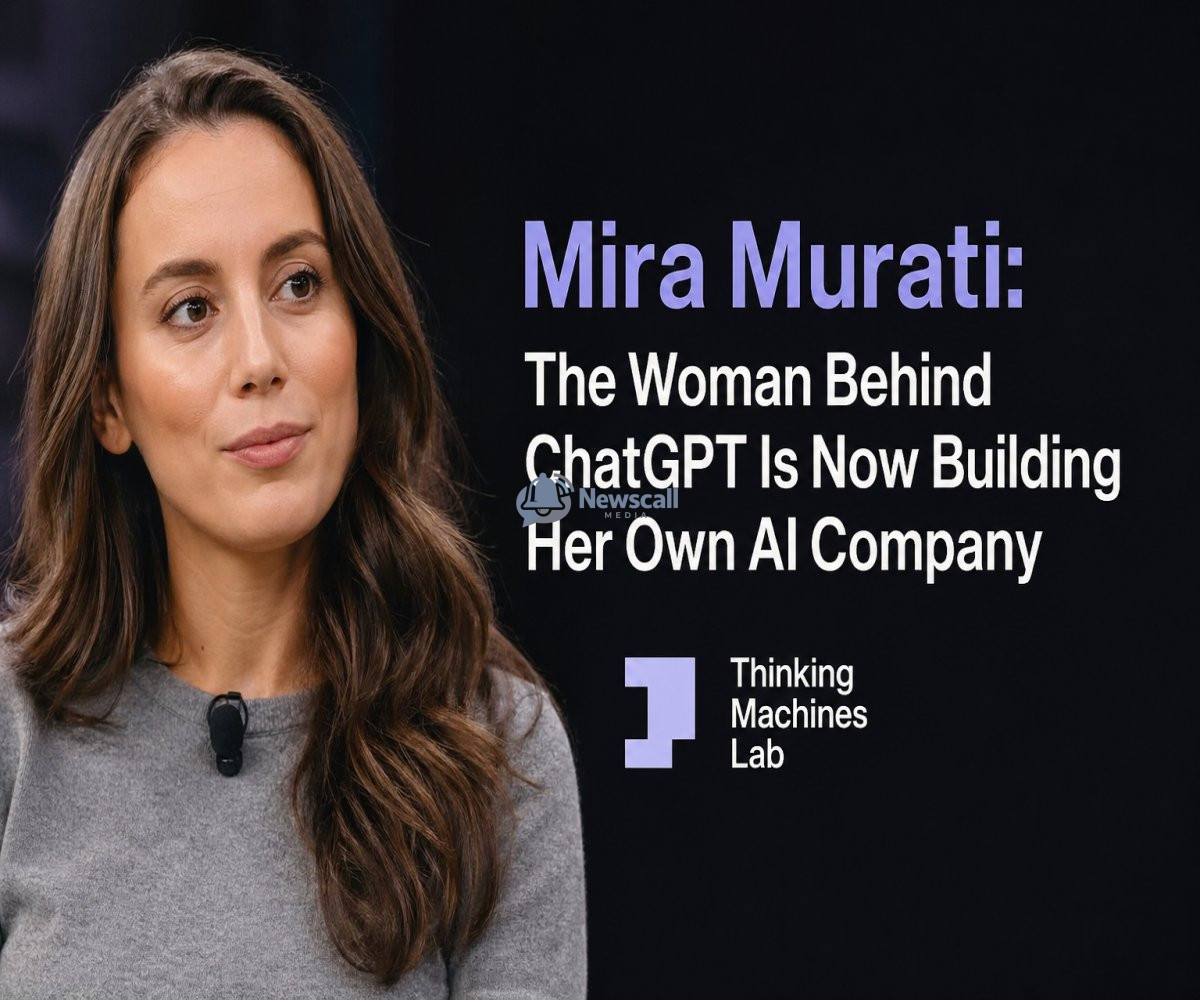
Anthropic also finds itself in the middle of this increasingly competitive landscape. Backed by major technology companies and widely recognized for its Claude family of models, Anthropic has become one of the strongest alternatives to OpenAI for enterprise customers.
As more businesses evaluate AI solutions, Microsoft clearly wants to ensure those conversations happen on its terms.
Rather than allowing customers to compare individual models alone, the company appears to be steering attention toward the broader platform surrounding those models.
That strategy reflects a larger shift taking place across the AI industry.
For many organizations, the biggest question is no longer which chatbot writes the best response.
It's which platform can integrate with existing workflows, protect sensitive information, scale across thousands of employees, comply with industry regulations, and remain cost-effective over the coming years.
Those questions often matter more than small differences in model performance.
If the reports are accurate, Microsoft's sales strategy acknowledges that reality.
The company isn't just competing on intelligence anymore.
It's competing on infrastructure.
On security.
On cost.
On convenience.
And on the promise that businesses can build their future AI operations inside a single, connected ecosystem.
Whether that approach succeeds remains to be seen, but one thing is becoming increasingly clear.
The AI race is entering a new chapter.
The companies with the most capable models will certainly remain important, but the next wave of competition may be decided by something much larger than the models themselves.
It may be decided by who builds the ecosystem that businesses trust enough to build their future upon.

Victor Oluebubechukwu Akuma.
Creative writer