

The 80-Year-Old Mathematical Puzzle That Is Now Helping Scientists Control Light
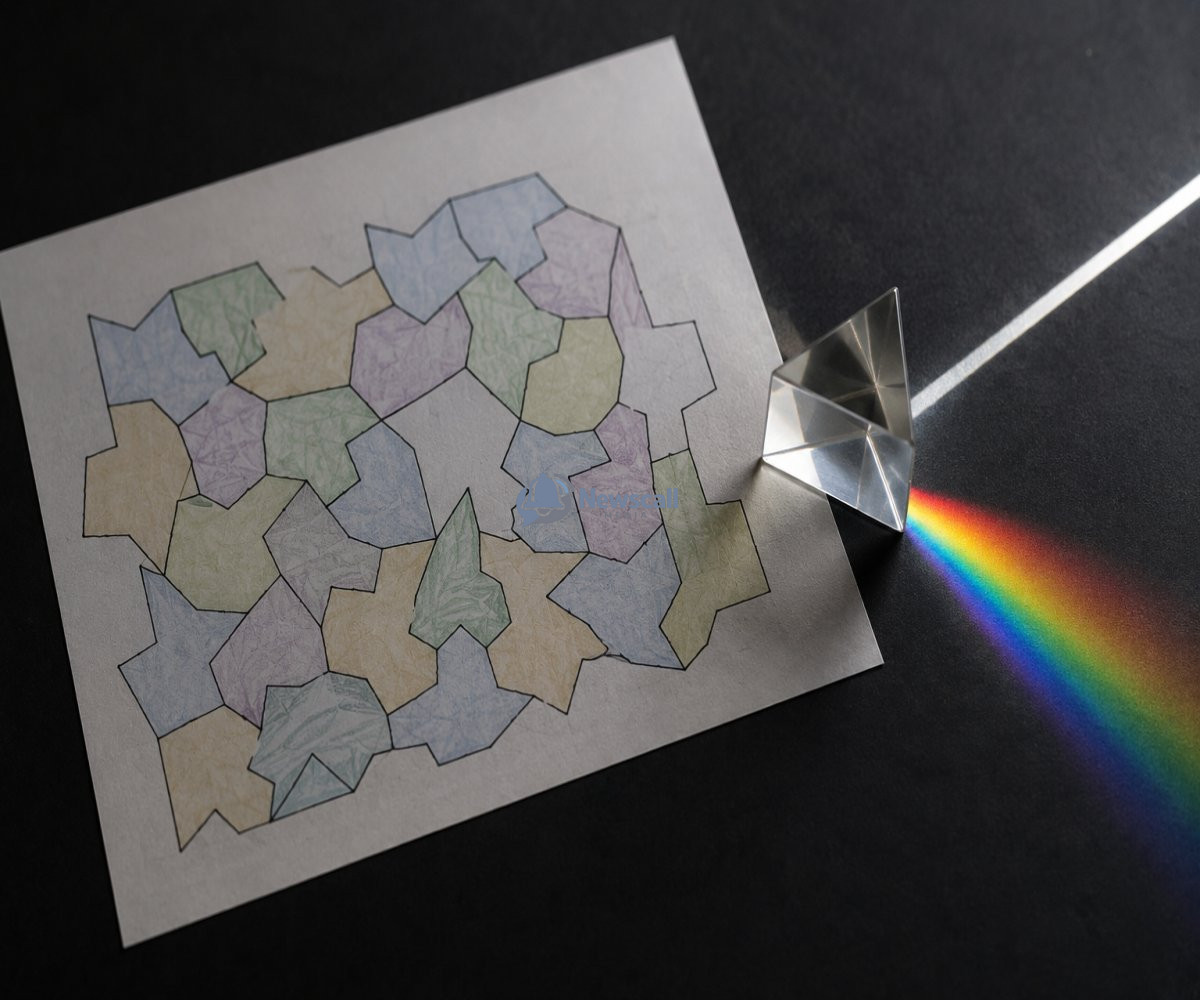
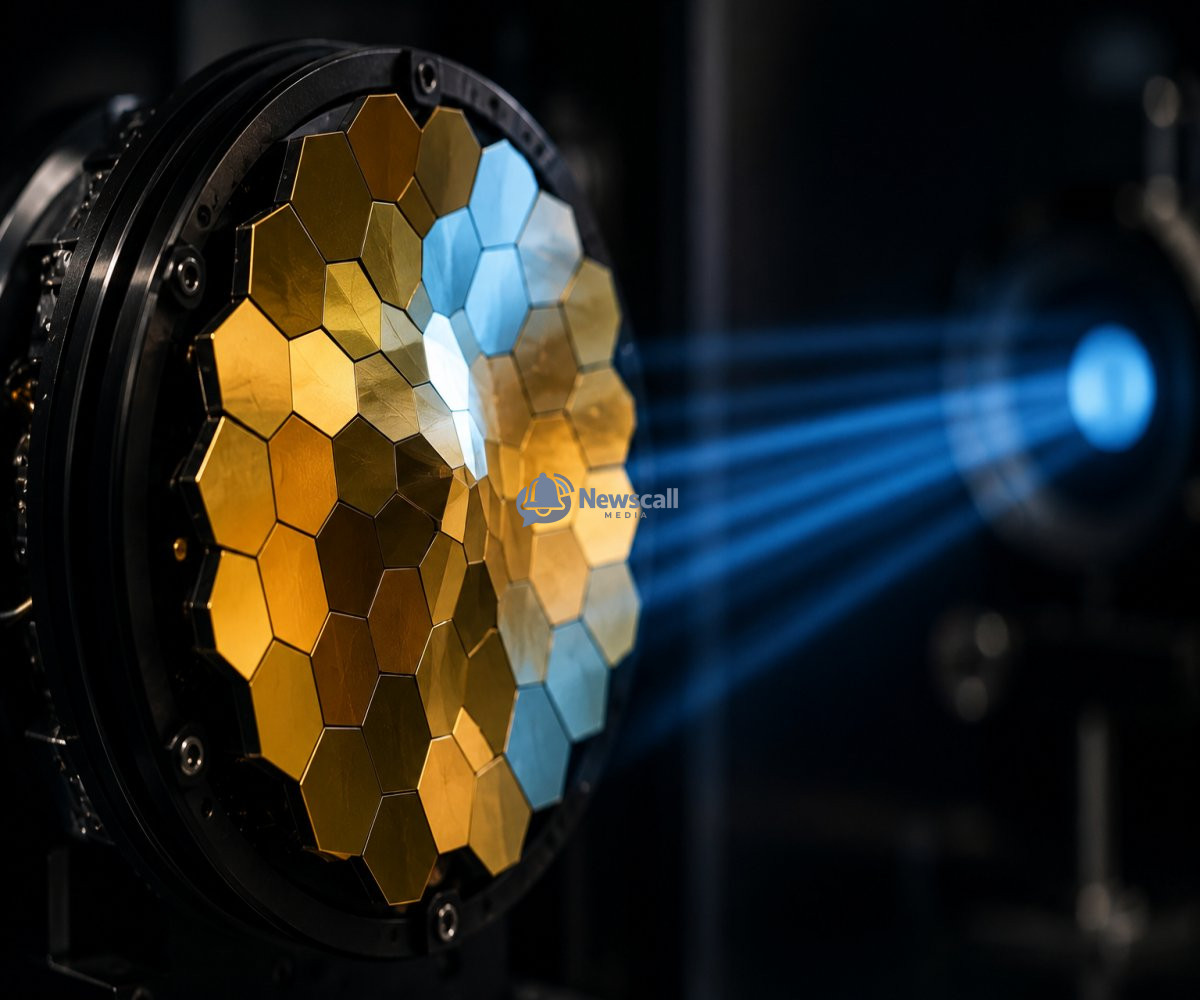
For decades, one of mathematics' strangest problems appeared to have little connection to the physical world. It involved a deceptively simple question about shapes and patterns: can a single shape tile an infinite surface without ever creating a repeating pattern? The answer turned out to be yes. And now, researchers are discovering that the unusual mathematics behind that problem could have real consequences for how scientists control light. The story begins with a shape that became known as the "Einstein" tile. Despite the name, it has nothing to do with Albert Einstein. "Einstein" comes from the German words for "one stone," referring to a single shape that can cover an infinite plane without producing a repeating pattern. For decades, mathematicians searched for such a shape. They wanted to find a single tile that could fill a surface completely but never settle into a predictable repeating arrangement. At first, the problem looked almost like a mathematical curiosity. Why would anyone care whether a strange collection of shapes could cover a floor? But the mathematics turned out to describe something much deeper: order that isn't periodic. In ordinary repeating patterns, you can move the same distance in a particular direction and encounter the same arrangement again and again. Think of a regular tiled floor. The pattern repeats. The Einstein tile does something completely different. It creates structure without repetition. The discovery of a suitable shape in 2023 was therefore a major moment in mathematics. Researchers had finally found an "aperiodic monotile"—a single shape capable of creating an endlessly structured but non-repeating pattern. That might sound like the end of the story. Instead, scientists began asking another question: Could this unusual mathematical structure exist in the physical world? This is where things get interesting. Researchers studying waves and light have discovered that aperiodic structures can interact with electromagnetic waves in unusual ways. Light doesn't simply travel through every material in exactly the same way. Its behavior depends heavily on the structure it encounters. Materials can absorb it, reflect it, bend it, or allow specific wavelengths to pass through while blocking others. By carefully designing structures, scientists can therefore control how light behaves. This is the basic idea behind photonic materials and metamaterials. The surprising possibility is that mathematical patterns inspired by the Einstein tile could provide another way to engineer these interactions. Instead of using a simple repeating structure, researchers can create complicated non-repeating arrangements that influence how electromagnetic waves move through a material. Why does that matter? Because controlling light is becoming increasingly important. Modern technology already depends on manipulating light. Fiber-optic cables carry enormous amounts of internet traffic using pulses of light. Lasers are used in manufacturing, medicine, communications, and scientific instruments. Optical sensors can detect tiny changes in temperature, pressure, movement, and chemical composition. And researchers are increasingly exploring photonic computing, where light could perform certain computing tasks more efficiently than traditional electronic systems. The challenge is finding structures that can control light precisely. This is where strange mathematics can become surprisingly useful. A pattern that looks useless on paper can sometimes produce a physical behavior engineers weren't expecting. The researchers studying aperiodic structures are interested in exactly this possibility. Their work suggests that non-repeating arrangements can produce unusual optical properties that may be difficult to achieve with conventional repeating structures. It's an example of something that happens repeatedly throughout the history of science. Mathematicians sometimes develop ideas without knowing whether they will ever have a practical application. Years—or even decades—later, engineers discover that those abstract ideas describe exactly the kind of behavior they need. Pure mathematics becomes technology. That relationship has produced some of the most important inventions in modern history. Number theory once appeared to be an abstract mathematical field with little practical value. Today, it plays an important role in modern cryptography. Complex mathematics developed for theoretical purposes eventually became essential to computer graphics, communications, physics, and engineering. The same could now happen with aperiodic patterns. Scientists aren't suddenly replacing ordinary computer chips with Einstein tiles. This isn't a breakthrough that will put a new type of processor inside your phone tomorrow. The research is much earlier than that. But that's precisely what makes it interesting. It shows how discoveries that seem completely disconnected from everyday life can eventually become useful in technologies that don't even exist yet. And controlling light could become increasingly important as computing and communications evolve. Traditional electronics move information using electrical currents. Photonic systems use light instead. Light can travel extremely quickly and can carry enormous amounts of information, which is why optical communication already forms the backbone of the global internet. Researchers are now investigating ways to use photonics for computing, sensing, and artificial intelligence. If unusual mathematical structures can help control light more efficiently, they could eventually contribute to those technologies. There is still a long road between a mathematical discovery and a commercial product. Researchers need to understand the physical behavior, develop manufacturing techniques, determine how stable the structures are, and establish whether they provide a meaningful advantage over existing approaches. But science rarely moves in a straight line. An idea can sit quietly for years before someone discovers what it is really good for. The Einstein tile is a perfect example. A mathematical puzzle about covering an infinite plane without repetition has become part of a much larger scientific question: What happens when mathematics is used to design materials that control light in completely new ways? The answer isn't fully known yet. And that may be the most exciting part. Sometimes the most important technologies of tomorrow begin as questions that seem completely useless today.

Victor Oluebubechukwu Akuma.
Creative writer