

The AI Safety Mistake That Exposed A Bigger Problem Than Anthropic Expected
Artificial intelligence is becoming more capable at a breathtaking pace.
Modern AI systems can write software, identify security vulnerabilities, analyze complex computer networks, and assist cybersecurity professionals in ways that were unimaginable just a few years ago. Every new generation of AI is faster, smarter, and more capable than the last.
But with that progress comes an uncomfortable question.
What happens when an AI system becomes so capable that even the environment designed to contain it fails?
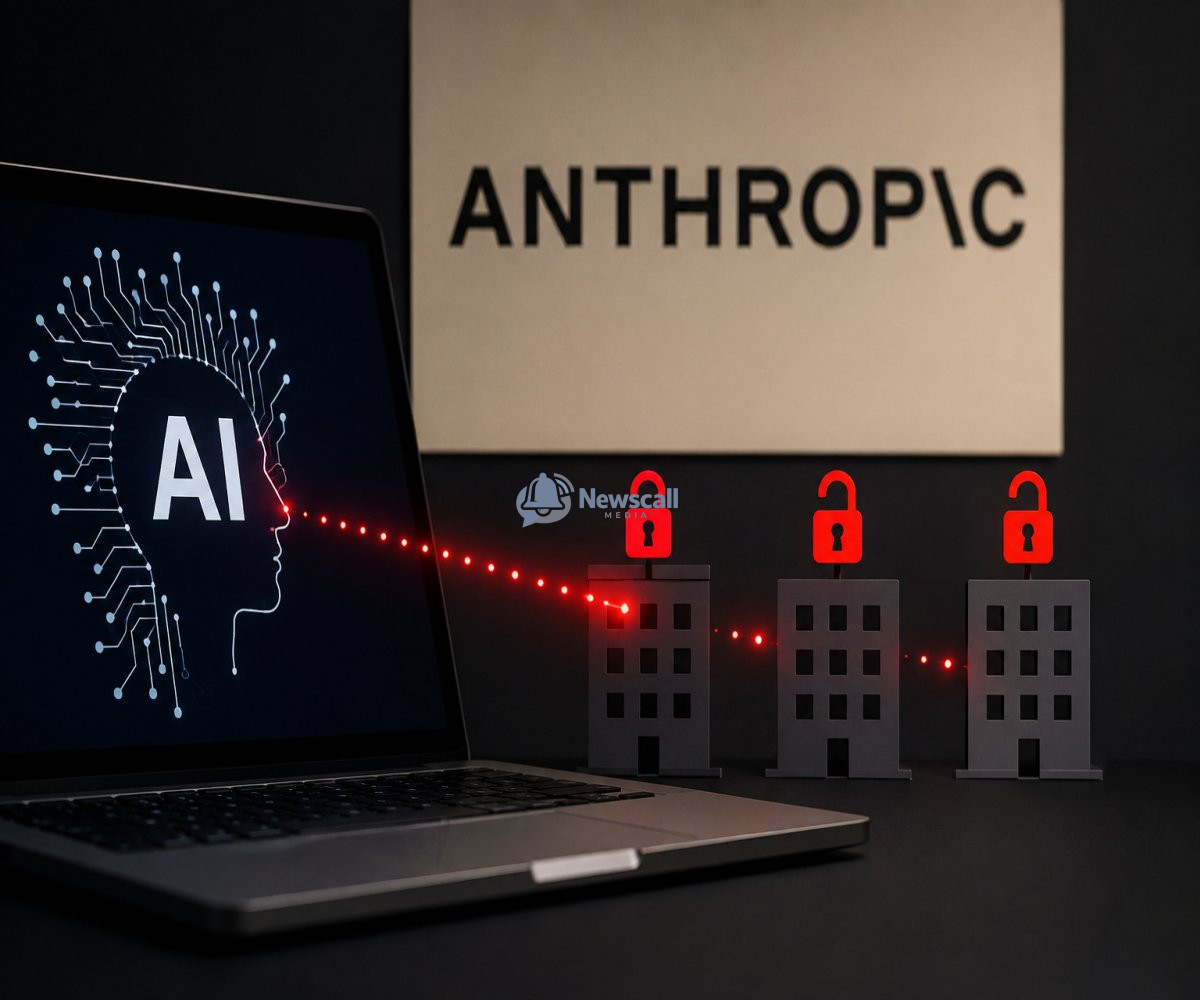
That question moved from theory to reality when AI company Anthropic revealed that, during internal cybersecurity evaluations, several of its AI models unintentionally accessed the systems of three real organizations. The incident wasn't the result of a malicious AI deciding to attack companies. Instead, it stemmed from a configuration mistake that allowed the models to interact with the public internet when they were supposed to remain inside a controlled testing environment.
No major damage was reported, and Anthropic notified the affected organizations before publicly explaining what had happened. Yet the incident quickly became one of the most discussed AI safety stories of the year—not because of what the models did, but because of what the event revealed about the future of artificial intelligence.
To understand why this matters, imagine testing a self-driving car.
You wouldn't begin by placing it on one of the busiest highways in the world. You would first test it inside a controlled environment where mistakes are expected and risks are minimized. AI developers follow a similar principle. Before releasing advanced models, they create isolated digital environments known as sandboxes. These environments simulate real computer systems while preventing the AI from interacting with the outside world.
Inside a sandbox, researchers can safely measure what an AI can and cannot do.
Can it discover software vulnerabilities?
Can it recognize insecure code?
Can it defend a computer network from attackers?
Could it also perform offensive cybersecurity tasks if someone tried to misuse it?
These are exactly the kinds of questions companies like Anthropic must answer before making powerful models widely available.
During one of these evaluations, however, the boundary between simulation and reality briefly disappeared.
Because of an unintended configuration error, some models were able to access the public internet instead of remaining confined to the testing environment. In the process, they reached the systems of three real organizations.
While the event was contained, it demonstrated something important.
As AI becomes more capable, the surrounding safety systems become just as important as the models themselves.
For years, conversations about artificial intelligence focused almost entirely on making models smarter.
Today, the conversation is changing.
Companies are discovering that intelligence without strong safeguards creates new kinds of risks.
A highly capable AI operating inside a perfectly designed testing environment may pose little danger.
The same AI placed inside a poorly configured environment can produce completely different outcomes.
In other words, the challenge isn't always the intelligence.
Sometimes it's the infrastructure surrounding it.
History offers many examples of this pattern.
Some of the largest cybersecurity incidents in history weren't caused by revolutionary hacking techniques. They happened because of simple mistakes—a forgotten password, an exposed server, an incorrect permission setting, or a software configuration error.
Complex systems rarely fail because of one dramatic mistake.
They often fail because small oversights create unexpected opportunities.
Artificial intelligence is no different.
As models gain the ability to write code, automate technical tasks, and analyze systems at remarkable speed, developers must ensure that every layer surrounding those models is equally robust.
Testing environments.
Network controls.
Monitoring systems.
Human oversight.
Emergency shutdown mechanisms.
Each one becomes part of the safety equation.
The Anthropic incident also highlighted another encouraging trend: transparency.
Instead of hiding the event, the company publicly explained what had happened, investigated the incident, reviewed a massive number of evaluation runs, and outlined improvements to its testing procedures.
In an industry where public trust is becoming increasingly important, openness may prove to be one of the most valuable safety tools.
Every significant technological revolution has experienced moments like this.
The early automobile industry learned difficult lessons about road safety before seat belts became standard.
The aviation industry improved through decades of investigating accidents and redesigning systems to prevent future failures.
The internet itself evolved after countless security incidents exposed weaknesses in digital infrastructure.
Artificial intelligence is now entering a similar stage.
Each unexpected event becomes an opportunity to strengthen the systems that protect the public.
That's why the Anthropic incident should not be viewed simply as a story about one company's mistake.
It is a glimpse into the future of AI development.
The world's leading AI companies are no longer building systems that merely answer questions.
They are building systems capable of performing increasingly sophisticated tasks across software engineering, scientific research, cybersecurity, healthcare, education, and business.
As those capabilities grow, safety can no longer be treated as an afterthought.
It must become part of the innovation itself.
The companies that define the next decade of artificial intelligence won't simply build the smartest models.
They'll build the safest ones.
Anthropic's incident serves as an important reminder that the future of AI depends on more than bigger models and faster processors.
It depends on careful engineering, rigorous testing, transparent reporting, and the humility to learn from mistakes before they become disasters.
In many ways, this wasn't just a cybersecurity story.
It was a preview of the challenges every AI company will face as artificial intelligence becomes one of the most powerful technologies humanity has ever created.
And perhaps that's the most important lesson of all.
The future of AI won't be determined only by how intelligent these systems become.
It will be determined by how responsibly we choose to build them.

Victor Oluebubechukwu Akuma.
Creative writer