

The Billion-Mosquito Strategy: Google's Expanding Mosquito-Control Experiment
Google is best known for search engines, smartphones, artificial intelligence, and cloud computing. Yet one of its most ambitious projects has little to do with software.
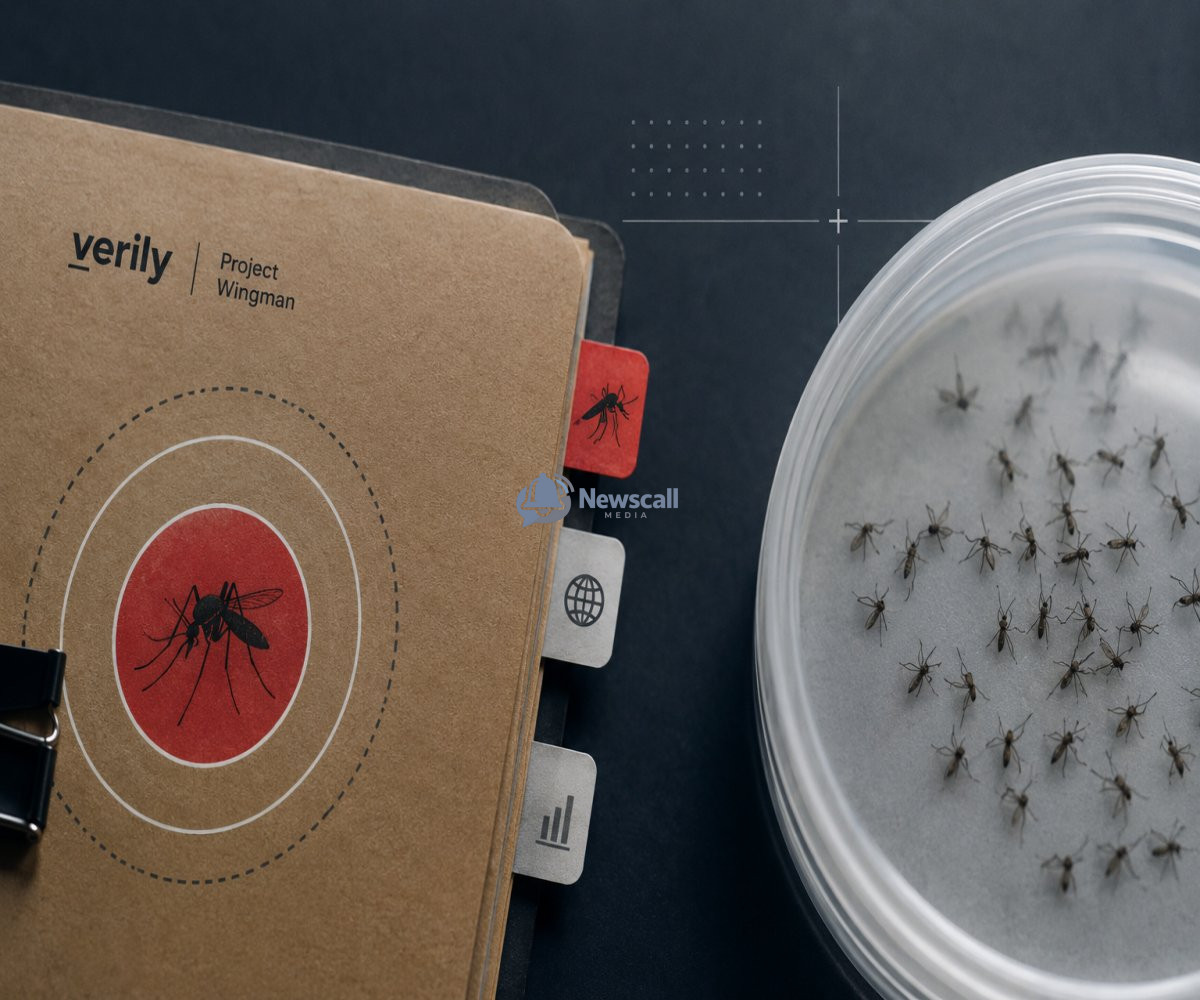
Through Verily, a life sciences company owned by Alphabet, Google is pursuing an unconventional strategy aimed at reducing mosquito-borne diseases by releasing millions of specially prepared mosquitoes into the environment.
The initiative has recently attracted renewed attention after Verily sought regulatory approval to expand mosquito releases in parts of California and Florida. If approved, the program would become one of the largest mosquito-control deployments ever undertaken in the United States.
At the center of the project is a naturally occurring bacterium known as Wolbachia.
Male mosquitoes infected with Wolbachia are released into targeted areas. When they mate with wild female mosquitoes, the resulting eggs fail to hatch, causing mosquito populations to decline over time. Because only male mosquitoes are released, they do not bite humans or transmit diseases.
The concept may sound unusual, but it is supported by years of scientific research and field testing.
Verily's previous mosquito-control trials reported significant reductions in local mosquito populations. Similar Wolbachia-based programs have also been deployed in countries including Singapore, Australia, and Brazil, where public health authorities have explored new methods of controlling disease-carrying mosquito species.
The project represents a growing trend in which technology companies are moving beyond digital services and applying advanced science to real-world challenges.
For decades, disease control relied heavily on pesticides, insecticides, and habitat management. While these approaches remain important, researchers are increasingly exploring biological solutions that target mosquito populations more precisely and with potentially fewer environmental side effects.
Google's involvement highlights how innovation is expanding into areas traditionally associated with healthcare, biotechnology, and environmental science.
The company's role is not simply financial. Verily has developed automated mosquito-rearing systems, data collection technologies, and monitoring platforms designed to support large-scale deployments. In many ways, the project combines biological science with the same emphasis on scale and operational efficiency that has defined much of the technology industry.
The proposal has also generated debate.
Supporters argue that mosquito-borne diseases continue to threaten millions of people globally and that innovative approaches are necessary to improve public health outcomes. Critics, however, emphasize the need for careful regulatory oversight, ecological assessment, and long-term monitoring before large-scale implementation.
These discussions reflect a broader challenge facing emerging technologies. The potential benefits can be substantial, but public trust often depends on transparency and rigorous scientific evaluation.
Regardless of the outcome of the current regulatory review, the project demonstrates how far technology companies have expanded beyond their traditional boundaries.
A company that once transformed how people search for information is now participating in efforts to reshape disease control strategies.
And while artificial intelligence may dominate technology headlines, one of Google's most unusual innovations may ultimately involve something far smaller: mosquitoes.

Victor Oluebubechukwu Akuma.
Creative writer