

The Loneliest Job in the World? What No One Tells You About Being a Founder

There’s a popular myth in startup culture: that being a founder is exciting, fast-paced, and full of big moments—funding rounds, product launches, and success stories that look good on social media.
But behind that highlight reel is something far less glamorous. For many founders, the job isn’t just hard—it’s deeply isolating.
Not because they are physically alone. But because very few people can actually share the weight they carry.
“You’re surrounded by people… yet still alone”
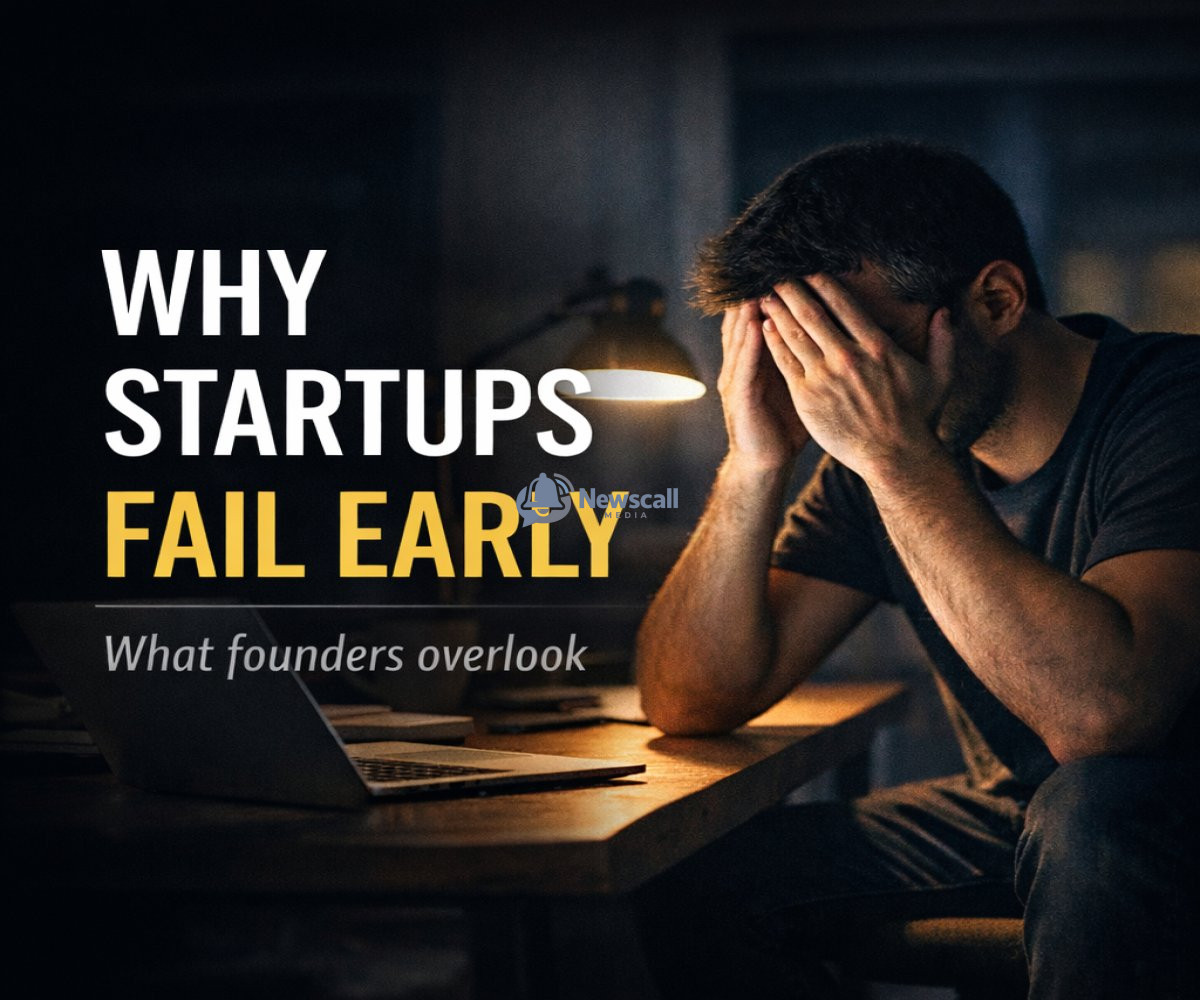
Startup life creates a strange contradiction. Founders often have co-founders, teams, investors, and users around them. But they’re also the only ones who see everything at once: the financial pressure, the product uncertainty, the hiring risks, and the long-term survival of the company.
As one analysis of founder experience puts it, the role naturally places you “at the intersection of every tension in your company,” making isolation almost structural rather than emotional.
Even when things look successful from the outside, the internal experience can feel like carrying a private burden no one else fully understands.
“Success doesn’t cancel loneliness—it can deepen it”
This isn’t just theory. Some of the world’s most well-known founders have admitted it openly.
Airbnb co-founder Brian Chesky has reflected on how no one prepared him for how lonely leadership could feel, even after building a global company. His experience has been cited as part of a broader pattern where founders reach success only to realize it doesn’t automatically bring emotional connection.
Similarly, other tech leaders have described the “top floor isolation” of leadership—where decision-making becomes so concentrated that few people can truly relate to what you’re dealing with.
Even in high-profile cases, success often amplifies distance rather than shrinking it.
The psychological weight no one talks about.
Founder loneliness isn’t just emotional—it shapes decisions.
Research and industry discussions show that isolation can distort judgment: hiring decisions become more cautious, feedback loops shrink, and founders may lean too heavily on the loudest voices instead of the most accurate ones.
In extreme cases, founders begin to self-censor—not because they lack support, but because they feel they can’t afford to appear uncertain.
As one founder wrote, the reality is that “you cannot bear your soul to the people you work with,” because the role demands constant confidence, even when none exists internally.
Why being a founder feels so isolating
Several factors make the role uniquely lonely:
Decision pressure: Most decisions ultimately land on one person.
Emotional filtering: Founders often feel they must project certainty at all times.
Social distance: Friends outside the startup world may not relate to the pressure.
Internal competition of priorities: Everything feels urgent, leaving little space for connection.
One writer described it as building “a plane while it is already flying”—a constant state of improvisation under pressure.
“Everyone says they feel it—but few admit it early”
A recurring theme among founders is that loneliness is universal, but rarely spoken about early.
Wil Schroter, founder of Startups.com, observed that even in a hyper-connected world, many founders report increasing isolation rather than less of it, especially as remote work and fast scaling reduce natural human interaction.
The irony is that founders often only admit it after the fact—when burnout, failure, or exit forces reflection.
So what does this really mean?
Being a founder is not just about building companies. It’s about carrying responsibility that doesn’t distribute evenly to anyone else.
That’s what makes it “lonely.”
Not the absence of people—but the absence of shared understanding.
And that’s the part no pitch deck, motivational quote, or startup highlight usually shows.
The hidden truth
The job of a founder is often sold as freedom.
But many who live it describe something closer to constant responsibility without emotional relief.
And yet, most still stay in it—not because it stops being lonely, but because the vision on the other side still feels worth it.
Because for all its weight, being a founder is also one of the few roles where your decisions can reshape reality itself.
And that’s exactly why it comes with a cost most people don’t see.

Victor Oluebubechukwu Akuma.
Creative writer