

The New Creator Economy Problem: AI Content Saturation
The internet used to have a simple rule: if someone created it, it was real. A photo meant someone was there. A video meant something actually happened. A post meant a person sat down and wrote it.
That boundary is starting to blur.
Not because people stopped creating—but because machines learned how to create too well.
Today, artificial intelligence can write articles, design visuals, generate videos, mimic voices, and even imitate personal storytelling styles with surprising accuracy. In many cases, you can no longer tell whether something was made by a human—or assembled by a system trained on billions of human examples.
And that raises a quiet but uncomfortable question:
If content can be generated in seconds, what exactly still counts as “real”?
There was no single moment when things changed. It happened gradually.
First, AI was a tool—used to assist creators. Then it became a shortcut. Now, in many spaces online, it is becoming the default production engine.
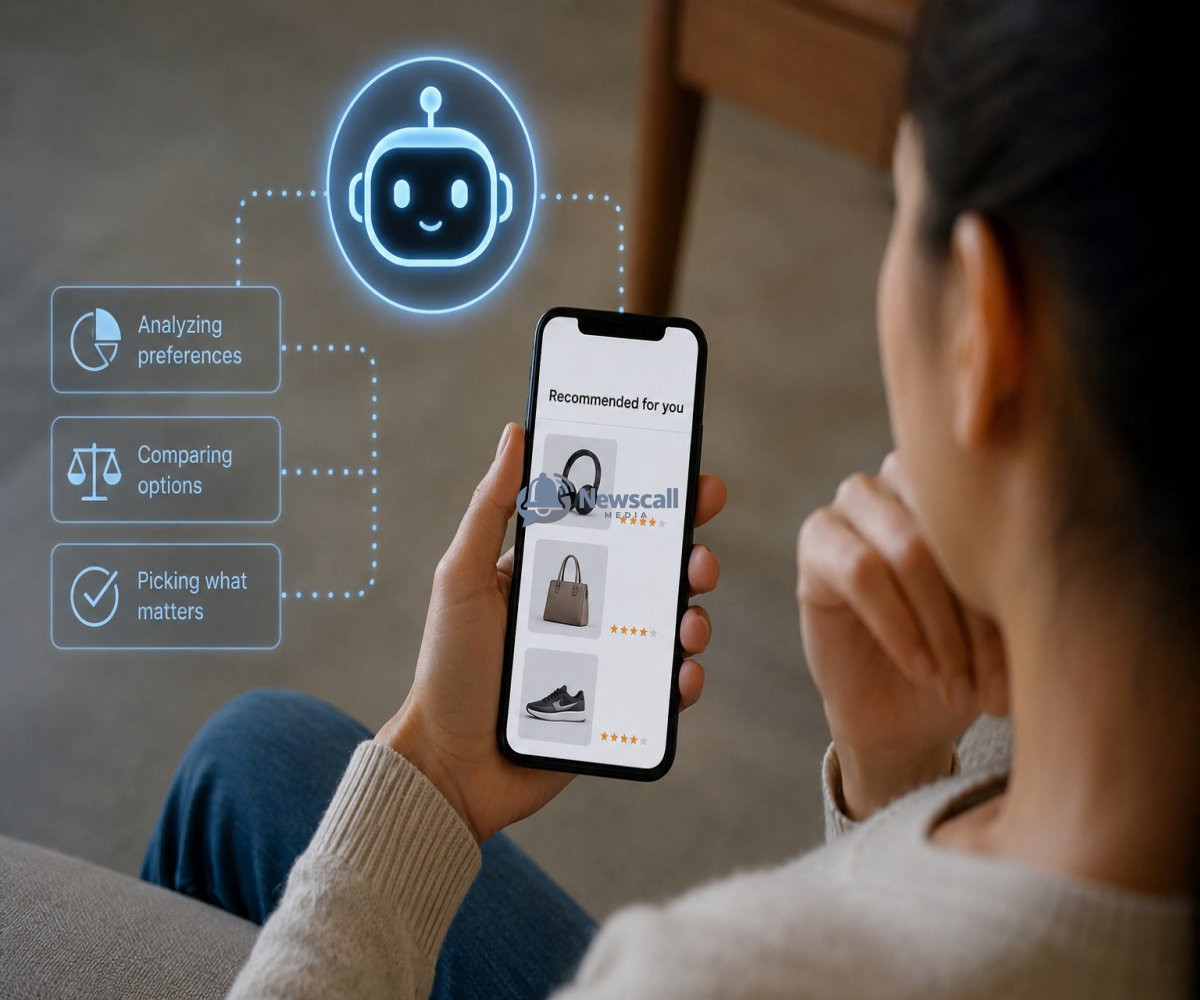
Social media posts, blog articles, marketing visuals, product descriptions, even short-form videos—large portions of what circulates online can now be generated, edited, or heavily shaped by AI systems.
The result is not just increased volume, but something more subtle: identity blur.
Content no longer clearly reflects who made it. Instead, it reflects what prompt produced it.
People often assume the concern is deepfakes or obviously artificial media. But the real shift is quieter.
It’s the content that looks normal.
A motivational post that feels human.
A product review that sounds lived-in.
A short video that mimics emotion just well enough to pass.
Nothing is clearly fake—but nothing is fully traceable either.
And when everything blends into the same polished surface, audiences begin to rely less on what they see and more on what they feel they can trust.
That trust is becoming the real scarcity online.
Creators are increasingly competing with AI-generated variations of their own ideas, automated content systems, and algorithm-optimized posts designed to imitate human tone at scale.
In this environment, originality is no longer just about creativity. It’s about proof of presence—something that signals a real human behind the work in a way machines can’t fully replicate.
For users, the shift is more psychological than technical.
Scrolling through feeds no longer guarantees authenticity. Even well-made content now carries a silent question in the background:
Was this made by someone… or generated by something?
Over time, that uncertainty changes how people engage. Not necessarily by rejecting content, but by trusting it less automatically. Attention becomes more selective. Skepticism becomes a default setting.
And that changes the internet in a deeper way than most realize.
We are entering a phase where “real” may no longer mean how something was made, but what it represents in context.
Was there human intention behind it?
Was there lived experience involved?
Was it shaped by a person, even if assisted by AI?
Or was it fully generated with no human grounding at all?
The definition is shifting from production to presence.
We may not be heading toward a world where everything is fake.
We may be heading toward a world where everything is technically real, but not equally human.
And in that world, the question stops being whether content is AI-generated…
It becomes:
Does it still feel like someone was actually there behind it?

Victor Oluebubechukwu Akuma.
Creative writer