
The Startup That Wants to Replace Passwords Forever
Think about how many passwords you have.
Your email.
Your bank account.
Your social media.
Your shopping apps.
Your work accounts.
Now ask yourself another question.
How many of those passwords can you actually remember?
For most people, the answer is "not many."
That's why millions reuse the same password across multiple websites.
Unfortunately, that's also one of the biggest cybersecurity mistakes anyone can make.
If hackers discover one password, they often try it on dozens of other accounts.
Sometimes, it works.
That's why passwords have become one of the weakest links in digital security.
Now, a new generation of startups believes it's time to eliminate them altogether.
Instead of asking people to remember complicated combinations of letters, numbers, and symbols, these companies are building a future where your identity becomes your password.
How?
Through a technology known as passkeys.
Unlike traditional passwords, passkeys rely on cryptography.
When you create an account, your device generates two digital keys.
One stays securely on your phone, laptop, or tablet.
The other is stored by the website or app you're using.
When you sign in, the two keys communicate to verify your identity.
No password is transmitted.
Nothing can be stolen from a fake login page.
And because every account has its own unique keys, a security breach on one website doesn't automatically put your other accounts at risk.
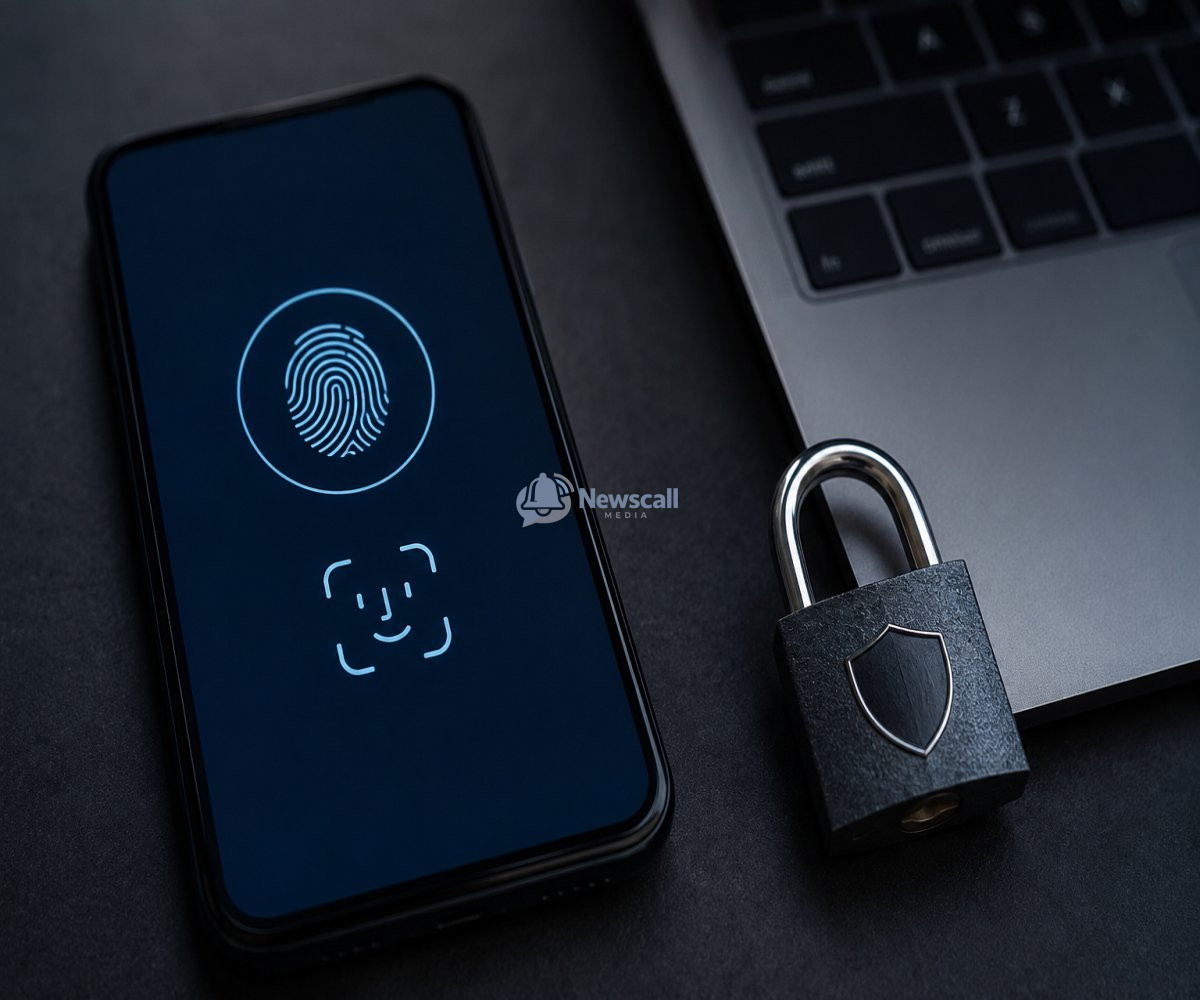
Instead of typing a password, you simply unlock your device using your fingerprint, your face, or your phone's PIN.
The process is faster.
It's easier.
And in many cases, it's significantly more secure.
Several startups are helping businesses adopt this technology, while major technology companies like Apple, Google, and Microsoft have already begun supporting passkeys across their devices and services.
Their goal is simple.
Make passwords a thing of the past.
The timing couldn't be better.
Cybercrime continues to grow every year.
Phishing attacks trick millions of people into revealing passwords.
Data breaches expose billions of login credentials.
Companies spend enormous amounts of money trying to protect customer accounts.
Removing passwords altogether could eliminate many of these problems before they even happen.
Of course, replacing passwords won't happen overnight.
Billions of websites still rely on traditional login systems.
Many businesses need time to upgrade their security infrastructure.
Users also need to become familiar with new ways of signing in.
But the transition has already begun.
Every time you unlock your phone with your fingerprint or face, you're experiencing the same idea that could soon replace passwords across the internet.
The shift is similar to what happened with physical keys.
For centuries, people carried metal keys everywhere.
Today, many hotels, offices, and even homes use smartphones, smart cards, or biometric authentication instead.
Digital security is following the same path.
The companies building passwordless technology aren't simply making logging in more convenient.
They're trying to solve one of the internet's oldest problems.
How do you prove you're really you?
The answer may no longer be something you remember.
It may be something you are.
Perhaps that's why investors and technology companies are betting heavily on passwordless authentication.
Because the future of online security may not involve creating stronger passwords.
It may involve eliminating them entirely.
One day, typing a password could feel as outdated as connecting to the internet with dial-up.
And when that day comes, we'll look back and wonder why we relied on passwords for so long.

Victor Oluebubechukwu Akuma.
Creative writer