

The Technology Nigeria Wants to Build, Not Just Use
For years, Nigeria's technology story has largely been about software.
Fintech startups transformed payments. E-commerce platforms connected businesses and consumers. Digital services created new opportunities for millions of people.
But a new chapter may be beginning.
This time, the focus is not on apps or platforms.
It is on manufacturing.
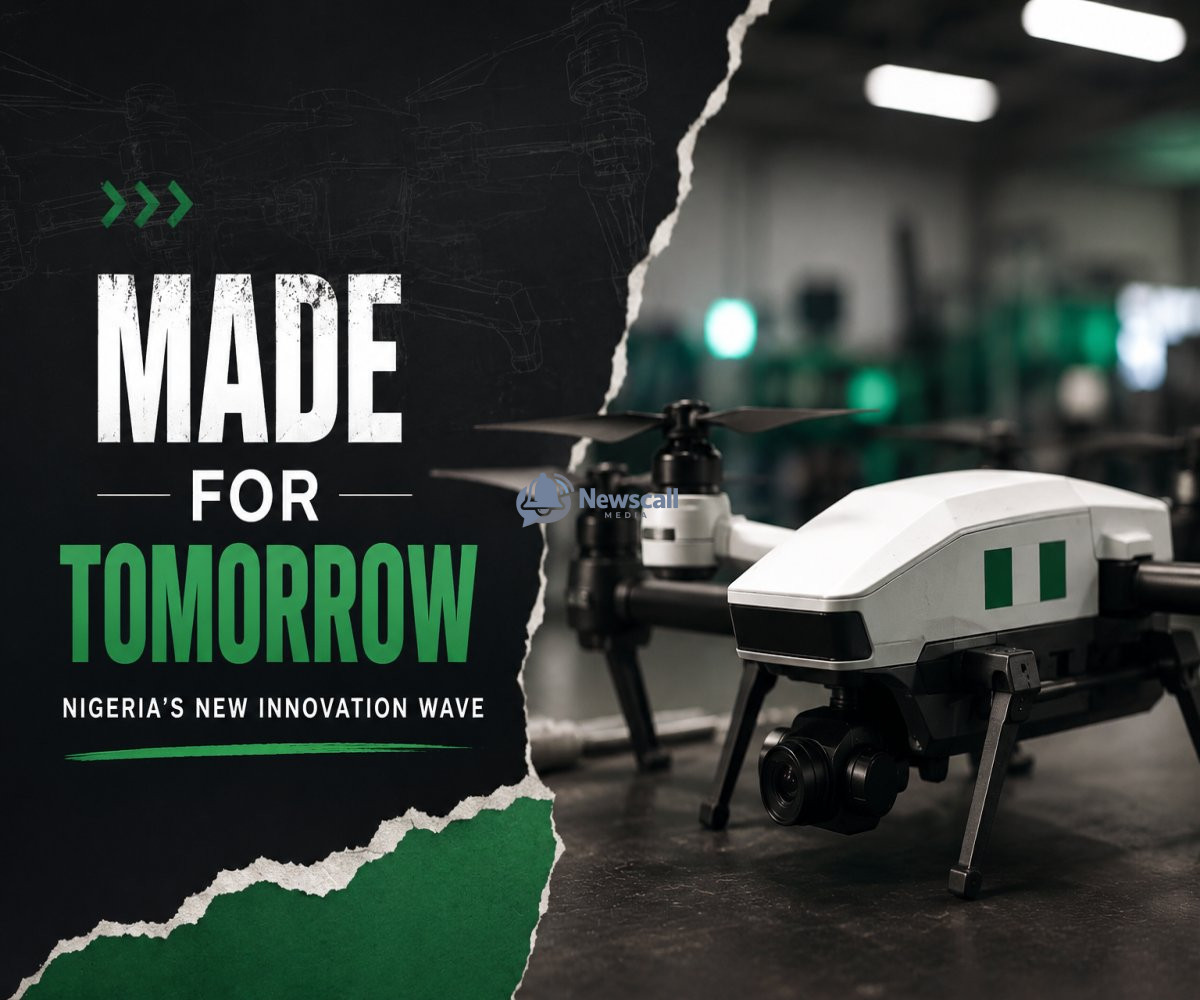
Recent reports that a Nigerian company has built what is being described as Africa's largest drone production facility have drawn attention to an emerging trend within the country's innovation ecosystem. Rather than simply importing advanced technologies, some Nigerian companies are now attempting to design, build, and manufacture them locally.
The shift is significant.
For decades, many developing economies have participated in the global technology industry primarily as consumers. The devices, equipment, and hardware powering modern life were often designed and manufactured elsewhere.
Nigeria's growing interest in drone production suggests a different ambition.
The goal is no longer just to use technology.
It is to build it.
Drones have become one of the most important technologies of the modern economy. They are used in agriculture, infrastructure inspection, logistics, environmental monitoring, disaster response, and security operations.
As artificial intelligence continues to advance, drones are becoming increasingly autonomous and capable of handling more complex tasks.
This growing demand has created a rapidly expanding global market.
For Nigeria, participation in that market represents more than a business opportunity. It offers a chance to develop local engineering expertise, strengthen manufacturing capabilities, and create high-value jobs in emerging industries.
The broader implication is perhaps even more important.
Successful technology ecosystems are often built on more than software alone. They require infrastructure, research, manufacturing capacity, and technical talent capable of developing physical products.
Countries that control both software and hardware tend to capture a larger share of economic value.
That reality is encouraging a growing number of African entrepreneurs to look beyond traditional startup sectors.
Across the continent, innovators are exploring opportunities in robotics, electric vehicles, renewable energy, aerospace technology, and advanced manufacturing.
The emergence of large-scale drone production in Nigeria reflects that wider movement.
Challenges remain. Manufacturing is capital intensive, supply chains are complex, and competition from established international companies is fierce.
Yet the willingness to enter these industries marks an important shift in mindset.
It signals confidence.
It reflects a belief that African companies can participate not only in the consumption of advanced technologies but also in their creation.
The story is ultimately bigger than drones.
It is about the evolution of Nigeria's innovation economy.
For years, the country's technology sector proved it could build successful digital businesses.
The next challenge may be proving that it can build the technologies themselves.
And that transition could define the next era of Nigerian innovation.

Victor Oluebubechukwu Akuma.
Creative writer