
The Tiny Computer Hidden Inside Your SIM Card
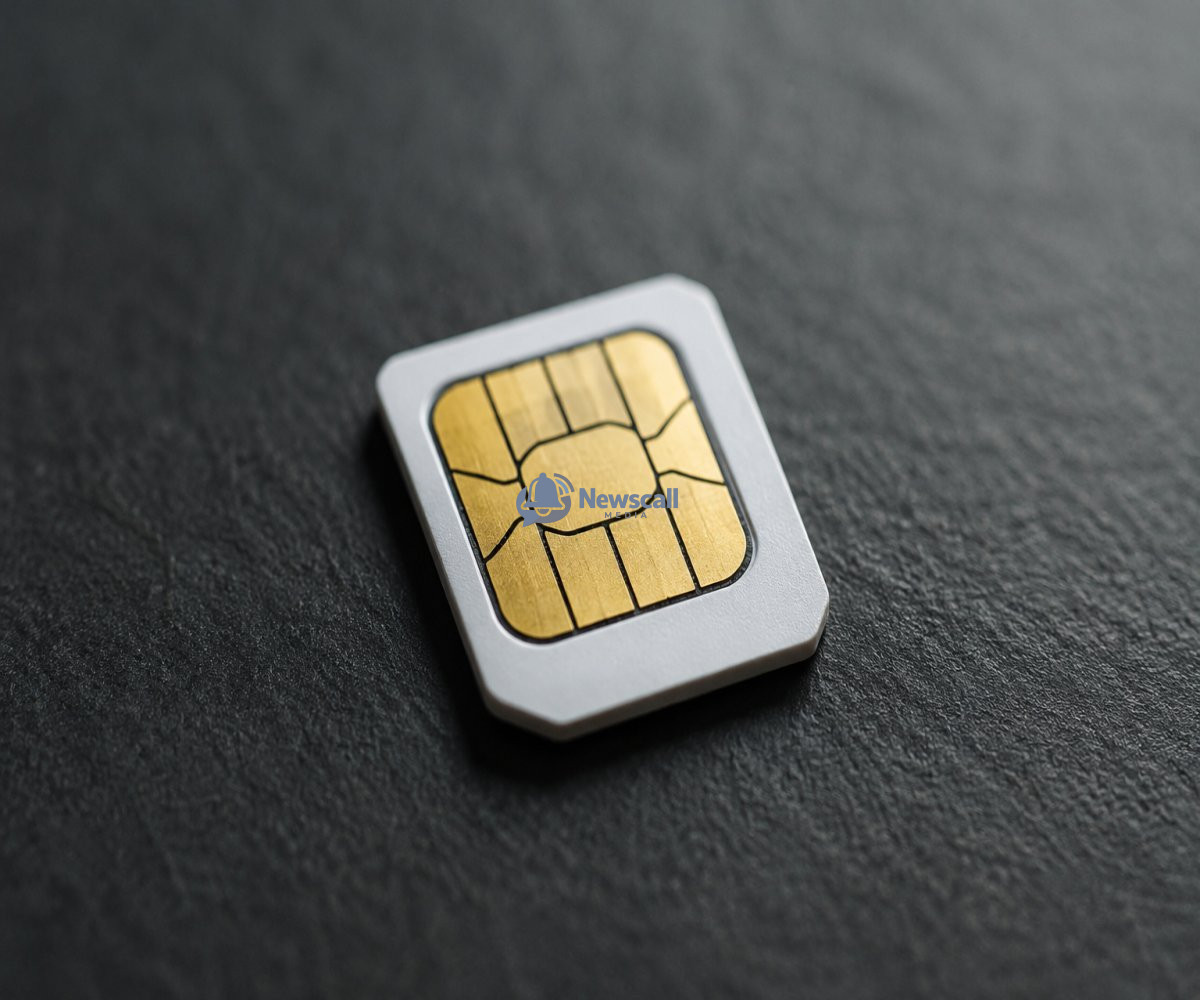
Every day, billions of people unlock their phones without giving a second thought to one of the smallest pieces of technology they own.
The SIM card.
Most people think it's just a tiny plastic chip that stores a phone number.
In reality, it's far more powerful than that.
Hidden inside every SIM card is a miniature computer.
It's so small that it fits on your fingertip.
Yet it performs some of the most important tasks that make modern mobile communication possible.
Without it, making calls, sending text messages, or connecting to your mobile network would be far more complicated.
So, what exactly is inside a SIM card?
At the heart of every SIM is a microprocessor.
Just like the processor inside your smartphone or laptop, this tiny chip can process information.
It also contains its own memory, operating system, and security features.
In other words, a SIM card isn't just storage.
It's a computer designed for one very specific job.
Its primary responsibility is proving your identity to your mobile network.
When you turn on your phone, the SIM card communicates with nearby cell towers.
It securely tells the network who you are and confirms that you're an authorized customer.
Only then can your phone access calls, text messages, and mobile data.
This entire process happens in just a few seconds.
One of the most important things stored inside the SIM card is something called the International Mobile Subscriber Identity, or IMSI.
Think of it as your mobile identity.
Every SIM card has its own unique IMSI, allowing the network to recognize your account anywhere it operates.
The SIM also stores secret encryption keys.
These keys act like digital passwords.
They help encrypt communication between your phone and the network, making it much harder for others to intercept your calls or data.
Without these security features, mobile communication would be far less secure.
Over the years, SIM cards have become smaller and smarter.
The original SIM cards were about the size of a credit card.
Then came Mini SIMs.
Micro SIMs.
Nano SIMs.
Today, many smartphones don't even require a physical SIM at all.
Instead, they use an eSIM—an embedded SIM built directly into the device.
An eSIM performs the same job but can be activated digitally without inserting a physical card.
It's another example of how technology continues to shrink while becoming more powerful.
Despite their size, SIM cards are incredibly durable.
They're designed to survive years of daily use, frequent temperature changes, and countless connections to mobile networks around the world.
Every time you travel abroad and connect to a different carrier through roaming, your SIM card is quietly handling much of the authentication behind the scenes.
Its importance extends beyond smartphones.
SIM technology is now found in smartwatches, cars, security systems, payment terminals, and millions of Internet of Things (IoT) devices.
Anything that needs a secure connection to a mobile network can benefit from the tiny computer inside a SIM.
Perhaps the most remarkable thing about the SIM card is how invisible its work has become.
You never see it communicating with towers.
You never notice it verifying your identity.
You never watch it encrypt your connection.
It simply works.
Every day.
Every call.
Every text.
Every internet session.
The greatest technologies are often the ones we stop noticing.
They become so reliable that they disappear into everyday life.
The SIM card is one of those technologies.
A tiny computer hidden inside your phone, quietly connecting you to the rest of the world every single second.
Sometimes, the smallest inventions carry the biggest responsibilities.

Victor Oluebubechukwu Akuma.
Creative writer