


Understanding Stocks Through Elon Musk's Trillion-Dollar Journey
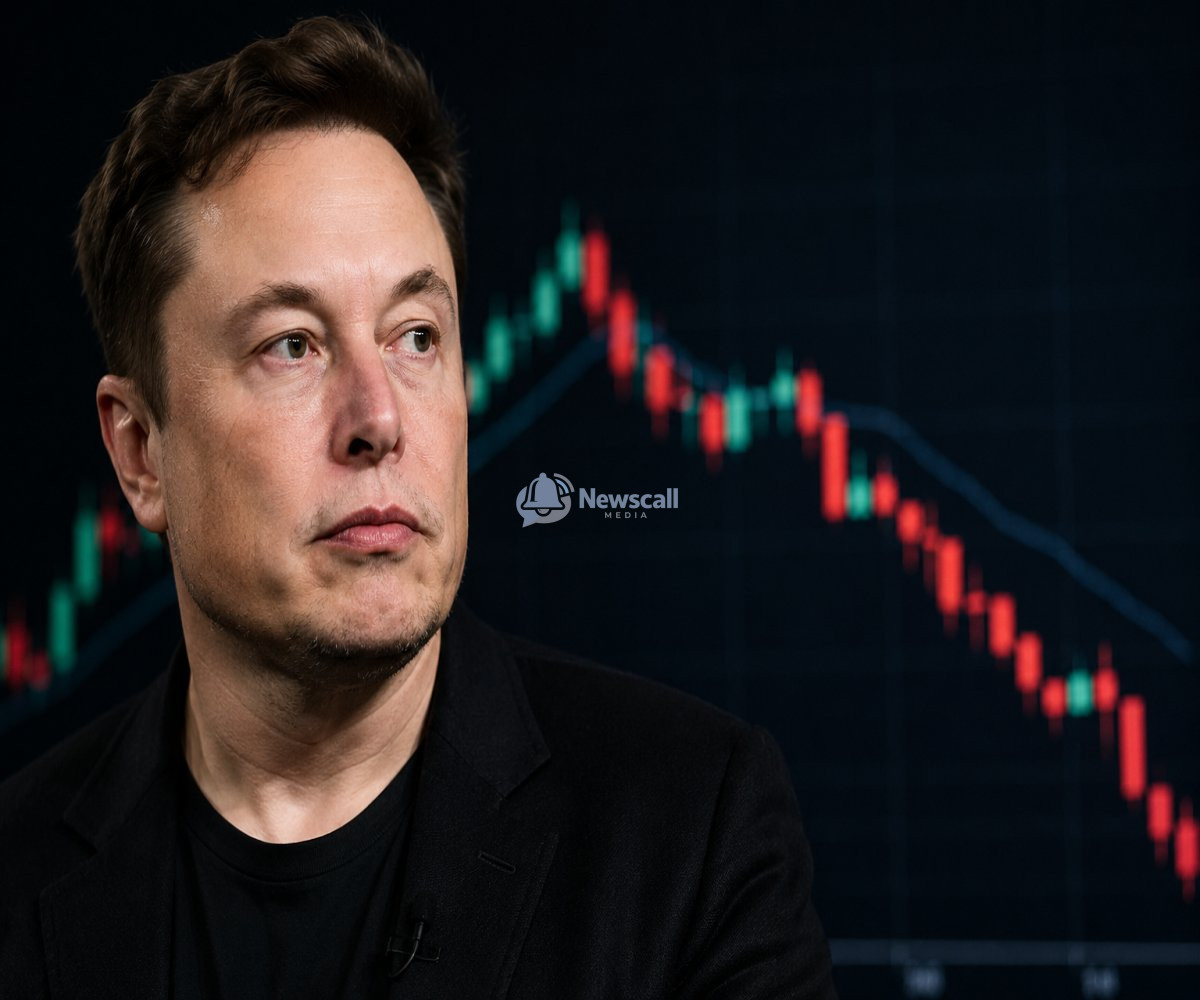
When Elon Musk briefly became the world's first trillionaire, headlines around the globe celebrated a historic financial milestone.
Then something unexpected happened.
Just days later, he lost the title.
To many people, the story seemed confusing.
How can someone gain hundreds of billions of dollars and then lose them almost as quickly? Did he spend the money? Did he donate it? Did it disappear?
The answer reveals one of the most important lessons about stocks and wealth.
Most billionaires don't keep their fortunes in bank accounts.
Their wealth is largely tied to ownership.
In Elon Musk's case, much of his fortune comes from the shares he owns in companies such as Tesla and SpaceX. These shares represent ownership stakes in those businesses.
To understand this, imagine a company is divided into one million pieces.
Each piece is called a share or stock.
When people buy those shares, they become partial owners of the company. If investors believe the company will become more valuable in the future, demand for the shares increases. As demand rises, the share price rises as well.
When the share price increases, the value of an owner's stake increases.
No cash needs to move.
No products need to be sold.
No money needs to be transferred into a bank account.
The value simply changes because investors are willing to pay more for those shares.
This is exactly how Elon Musk's net worth climbed above one trillion dollars.
A significant factor was the extraordinary valuation of SpaceX, combined with the value of Tesla and his other holdings. As investors became more optimistic about the future of these companies, their estimated value increased dramatically.
Since Musk owns large portions of these businesses, his personal net worth rose alongside them.
But stock markets do not move in only one direction.
When investors become less optimistic, share prices can fall.
Sometimes the decline is triggered by company performance.
Sometimes it is driven by broader economic conditions.
Sometimes it is simply a change in market sentiment.
Whatever the reason, falling stock prices reduce the value of ownership stakes.
That is what happened after Musk crossed the trillion-dollar milestone.
As valuations pulled back and investors reassessed market expectations, the value of key holdings declined. Since most of his wealth existed on paper through stock ownership, his estimated net worth fell as well.
The important thing to understand is that losing hundreds of billions of dollars does not necessarily mean the money physically existed in cash.
This is often called paper wealth.
If a person owns shares worth $100 billion today and those shares rise to $120 billion tomorrow, they have technically gained $20 billion in net worth.
However, that gain remains largely theoretical unless shares are sold.
The same principle works in reverse.
If the value drops back to $100 billion, the person has not necessarily spent $20 billion. The market simply values their ownership differently.
This concept surprises many people because stock-based wealth behaves differently from ordinary income.
Most people earn money through salaries or business revenue. Billionaires who own major companies often see their fortunes fluctuate based on investor confidence, company performance, and market expectations.
Their wealth can change by billions of dollars in a single day.
In some cases, hundreds of billions.
Elon Musk's trillion-dollar journey demonstrates this reality perfectly.
His rise showed the immense power of ownership.
His decline showed the equally powerful influence of market sentiment.
Together, they provide a simple lesson about stocks.
A stock is more than a number on a trading screen.
It is ownership.
And when the value of ownership changes, fortunes can be created or erased at astonishing speed.
The story is not really about becoming a trillionaire.
It is about understanding how modern wealth works.
In today's economy, some of the largest fortunes on Earth are built not on cash, but on ownership stakes whose value rises and falls with the confidence of millions of investors.
That is why the world's first trillionaire could lose the title without spending a single dollar.
And that is why understanding stocks has never been more important.

Victor Oluebubechukwu Akuma.
Creative writer