


What If Wildfires Could Be Detected Within Minutes?
Wildfires have become one of the fastest-growing environmental threats of the modern era.
From North America to Australia, Southern Europe to parts of Africa, fires are becoming larger, more destructive, and increasingly difficult to control. Entire communities have been forced to evacuate, billions of dollars in damage have been recorded, and millions of hectares of land have been lost.
The challenge is not simply fighting wildfires.
It is finding them before they spread.
Once a fire grows beyond a certain point, containing it becomes significantly more difficult. Strong winds, dry vegetation, and extreme temperatures can transform a small flame into a massive disaster within hours.
That reality has sparked a global race among researchers, engineers, and startups.
Their goal is simple but ambitious: detect wildfires before humans can.
For generations, wildfire detection depended largely on human observation. Rangers, local residents, pilots, and emergency services often served as the first line of defense. While effective in many cases, these methods have limitations.
A fire can start in a remote location.
It can burn unnoticed for valuable minutes or even hours.
By the time smoke becomes visible, the situation may already be escalating.
Modern technology is changing that equation.
A new generation of startups is developing systems designed to identify fires at their earliest stages. Instead of relying solely on people, these systems use networks of sensors, cameras, satellites, drones, and artificial intelligence.
Many of these technologies operate around the clock.
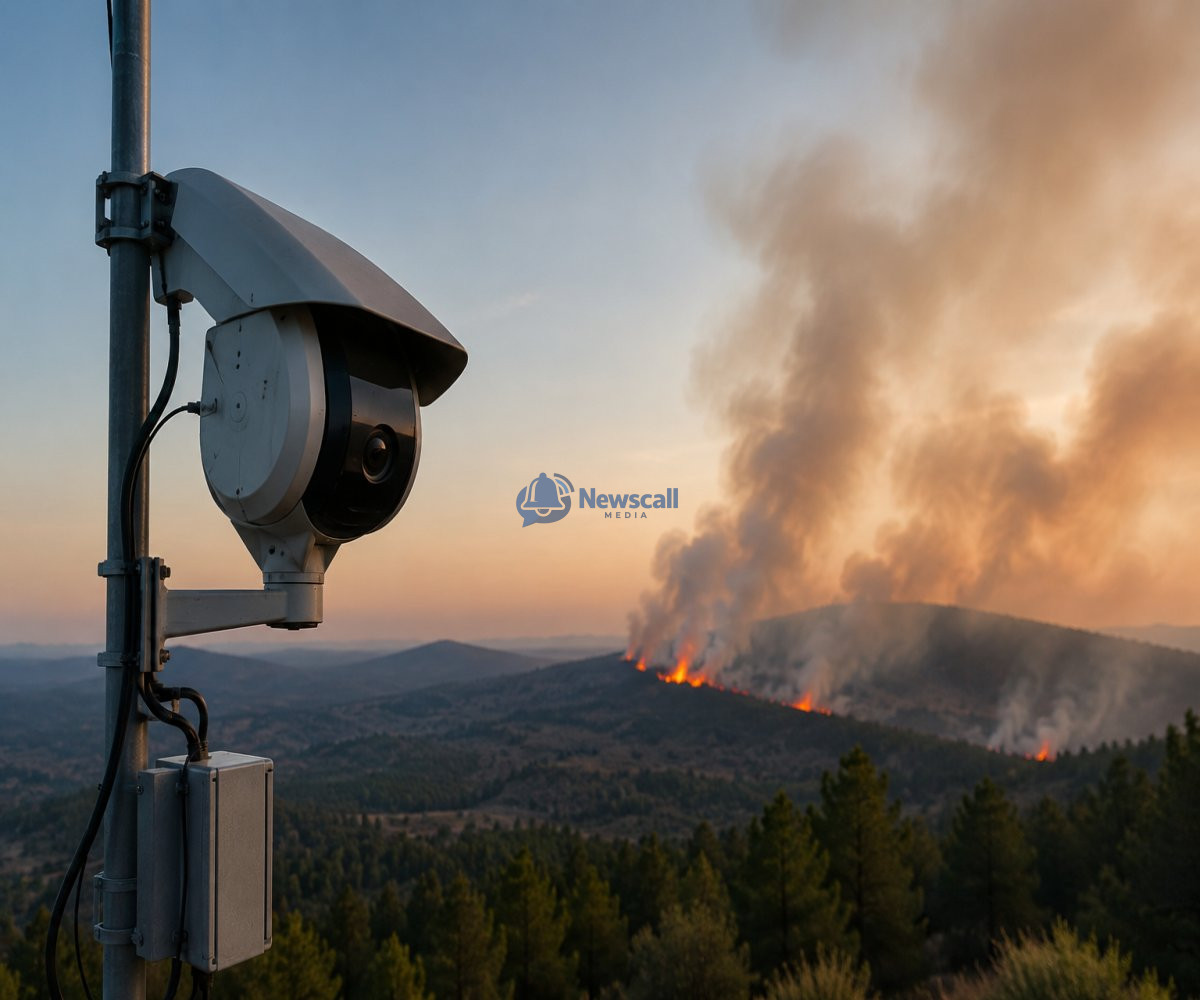
Advanced camera systems positioned on towers can scan vast areas of forest continuously. Artificial intelligence analyzes the images in real time, searching for subtle signs of smoke that may be invisible to the human eye.
When a potential threat is detected, alerts can be sent immediately to emergency responders.
Some startups are taking a different approach.
They deploy environmental sensors throughout forests capable of monitoring temperature, humidity, air quality, and chemical changes in the atmosphere. Even tiny increases in certain particles can indicate the presence of a developing fire.
The system essentially acts as an early warning network spread across vulnerable regions.
Satellites are becoming increasingly important as well.
Modern Earth-observation satellites can monitor huge areas of land from space. Equipped with thermal imaging technology, they can detect heat signatures associated with emerging fires and transmit information to authorities within minutes.
What once required human observation can now happen automatically from orbit.
Drones are also entering the fight.
Some are designed to patrol high-risk areas, gathering real-time data and reaching locations that may be difficult for people to access quickly. Future systems may even coordinate fleets of autonomous drones capable of monitoring vast wilderness regions simultaneously.
The benefits of early detection are enormous.
A wildfire identified within minutes may require only a small response team.
A wildfire discovered hours later could demand hundreds of firefighters, aircraft, evacuation orders, and massive financial resources.
Every minute matters.
This is why investors and governments are showing growing interest in wildfire technology startups. The economic and environmental costs of large-scale fires are so significant that even small improvements in detection can generate substantial benefits.
The technology is still evolving.
False alarms remain a challenge. Environmental conditions such as fog, dust, and cloud cover can sometimes complicate detection efforts. Companies must continuously improve accuracy while ensuring systems remain reliable in real-world conditions.
Yet progress is accelerating.
Artificial intelligence is becoming better at distinguishing smoke from ordinary atmospheric conditions. Sensors are becoming more affordable and more sensitive. Satellite networks continue to expand. Data processing speeds continue to improve.
Together, these advances are creating something that would have seemed impossible only a few decades ago.
A world where machines can identify fires before most people even know they exist.
Wildfires may never disappear entirely.
Nature will always produce challenges that test human ingenuity.
But the future of wildfire protection may depend less on fighting massive infernos and more on preventing them from becoming massive in the first place.
The race is no longer about responding faster.
It is about seeing danger before anyone else can.
And that race may help protect forests, wildlife, communities, and lives for generations to come.

Victor Oluebubechukwu Akuma.
Creative writer