
When Silicon Meets the Human Mind: Computers Built From Human Brain Cells
For more than half a century, computers have become faster, smaller, and more powerful.
They have helped humans land on the Moon, decode the human genome, and build the internet.
Yet despite all this progress, today's computers still struggle with something the human brain does effortlessly.
Learning.
Recognizing patterns.
Adapting to new situations.
Using surprisingly little energy while doing all of it.
That is why scientists are exploring one of the boldest ideas in the history of computing.
What if the future of computers isn't made entirely of silicon?
What if it includes living human brain cells?
As strange as it sounds, this is no longer science fiction.
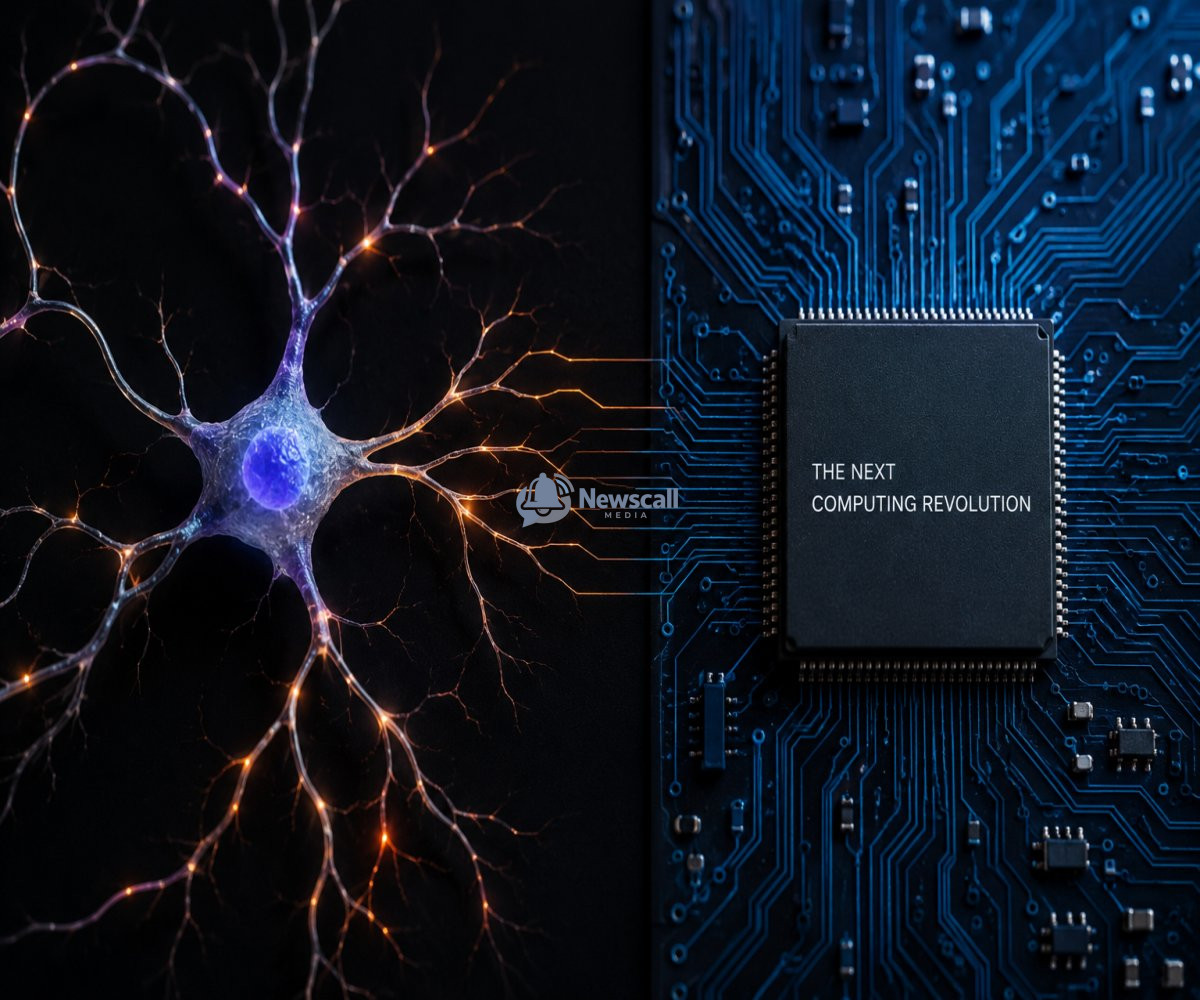
Researchers around the world are developing a new field known as biological computing. Instead of relying solely on traditional computer chips, they are experimenting with tiny clusters of laboratory-grown human brain cells, called organoids.
These organoids are not miniature brains.
They cannot think, feel emotions, or possess consciousness.
They are simply collections of neurons grown from stem cells under carefully controlled laboratory conditions.
What makes them remarkable is how they process information.
Unlike a conventional computer, which follows programmed instructions step by step, neurons naturally communicate, form connections, and adapt based on experience.
In other words, they learn.
Scientists believe these natural learning abilities could eventually solve certain problems far more efficiently than today's most advanced computers.
One of the biggest motivations is energy.
Training large artificial intelligence models requires enormous amounts of electricity and powerful data centers.
The human brain, by comparison, performs astonishingly complex tasks while consuming about the same amount of power as a small light bulb.
Imagine computers capable of learning while using only a tiny fraction of today's energy.
That possibility has captured the attention of researchers worldwide.
Early experiments have already produced fascinating results.
Scientists have demonstrated that groups of neurons can respond to electrical signals, recognize simple patterns, and even improve their performance through repeated interaction.
Although these achievements remain modest, they suggest that living neural networks may one day complement traditional computing systems.
This does not mean your next laptop will contain a tiny brain.
Biological computers are unlikely to replace silicon chips anytime soon.
Instead, experts believe they could work alongside conventional processors, tackling specialized tasks such as advanced pattern recognition, medical research, robotics, and next-generation artificial intelligence.
The technology also raises important ethical questions.
Because human cells are involved, researchers are carefully considering how these systems should be developed and regulated.
Scientists emphasize that today's brain organoids are extremely simple and nowhere near capable of awareness or conscious thought.
Even so, responsible research remains essential as the field advances.
The potential applications extend far beyond faster computers.
Biological computing could transform how researchers study neurological diseases such as Alzheimer's and Parkinson's.
Instead of relying only on computer simulations, scientists may be able to observe how living neural networks respond to treatments in real time, accelerating the search for new medicines.
It could also inspire entirely new forms of artificial intelligence.
Rather than programming every instruction, future machines might learn more like humans do—through experience, adaptation, and interaction with their environment.
That would mark one of the biggest shifts in computing since the invention of the microprocessor.
For decades, humanity has relied on silicon to power the digital age.
Now, researchers are beginning to explore a future where biology and technology work together.
It is still early.
Many scientific and engineering challenges remain.
But history has shown that the biggest technological revolutions often begin with ideas that sound impossible.
Computers built from human brain cells may be one of them.
The future of computing may not simply be faster machines.
It may be machines that learn from life itself.

Victor Oluebubechukwu Akuma.
Creative writer