

Why Humans Can't Regrow Lost Limbs — The Evolutionary Mystery Scientists Still Can't Explain
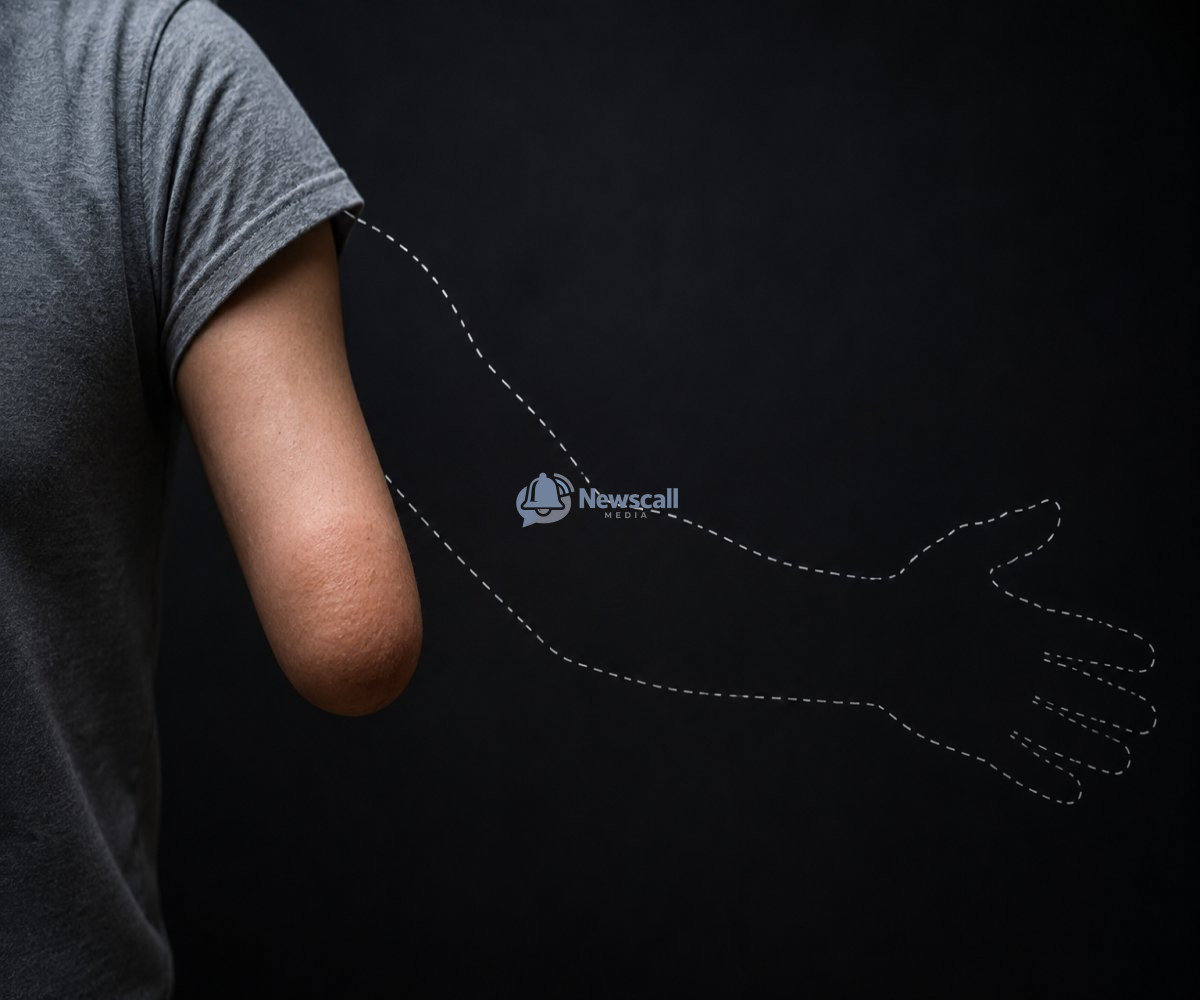
Imagine losing an arm today and growing a new one a few months later.
It sounds like science fiction.
Yet for some animals, it's completely normal.
A salamander can regenerate an entire limb. A starfish can regrow lost arms. Some species can even regenerate parts of their heart, spinal cord, eyes, and brain.
Humans, on the other hand, can barely regenerate a fingertip under the right conditions.
The question is simple.
If nature already knows how to regenerate limbs, why can't we?
The answer remains one of the greatest mysteries in biology.
For years, scientists assumed humans simply lacked the necessary biological machinery.
They were wrong.
The strange truth is that humans possess many of the same genes involved in regeneration.
In fact, when a salamander begins regrowing a lost limb, many of the biological pathways activated are surprisingly similar to those found in the human body.
The instructions exist.
Something else is preventing us from using them.
When a salamander loses a limb, the cells near the wound undergo an extraordinary transformation.
Instead of forming a scar, they return to a more flexible state, almost like stem cells.
These cells gather into a structure called a blastema, which acts like a biological construction site.
From there, the body begins rebuilding bone, muscle, nerves, blood vessels, and skin.
The limb doesn't merely heal.
It is rebuilt.
Humans take a completely different approach.
When we are injured, our bodies prioritize speed over perfection.
The goal is to close the wound as quickly as possible to prevent infection and blood loss.
This rapid response leads to scar formation.
A scar is essentially the body's emergency repair system.
It's fast.
It's effective.
But it comes at a cost.
Once scar tissue forms, the opportunity for large-scale regeneration largely disappears.
This raises an even more fascinating question.
Why would evolution favor scarring over regeneration?
One theory suggests that our ancestors benefited more from surviving injuries quickly than from slowly rebuilding lost body parts.
In dangerous environments filled with predators, disease, and infection, speed mattered.
A fast repair process may have offered a better chance of survival than a perfect one.
Over millions of years, evolution may have optimized humans for healing rather than rebuilding.
But scientists still aren't completely convinced.
The puzzle becomes even stranger when you consider that human embryos possess remarkable regenerative abilities.
Early in development, human tissues can repair themselves with little or no scarring.
Some of those abilities are gradually lost before birth.
Some researchers believe the secret to regeneration isn't missing.
It's dormant.
Hidden somewhere within our biology.
This possibility has fueled a growing field of regenerative medicine.
Scientists around the world are studying salamanders, zebrafish, and other regenerative species in hopes of unlocking the mechanisms behind their abilities.
The dream is ambitious.
Not merely treating injuries.
Not merely replacing damaged tissues.
But eventually teaching the human body to regenerate what was lost.
Imagine a future where damaged organs repair themselves.
Where spinal cord injuries become reversible.
Where severe wounds heal without scars.
Where lost limbs can be regrown.
What once sounded impossible is now being seriously investigated in laboratories.
Yet despite decades of research, one question remains unanswered.
Nature has already solved the problem of regeneration.
The blueprint exists.
The genes exist.
The biological machinery exists.
So why can't humans do it?
Scientists still don't know.
And that's what makes it one of the most fascinating mysteries in all of biology.
The greatest discoveries aren't always about finding something new.
Sometimes they're about understanding something we once had and somehow lost.

Victor Oluebubechukwu Akuma.
Creative writer