Why the Next Internet May No Longer Be Dominated by Big Tech Platforms
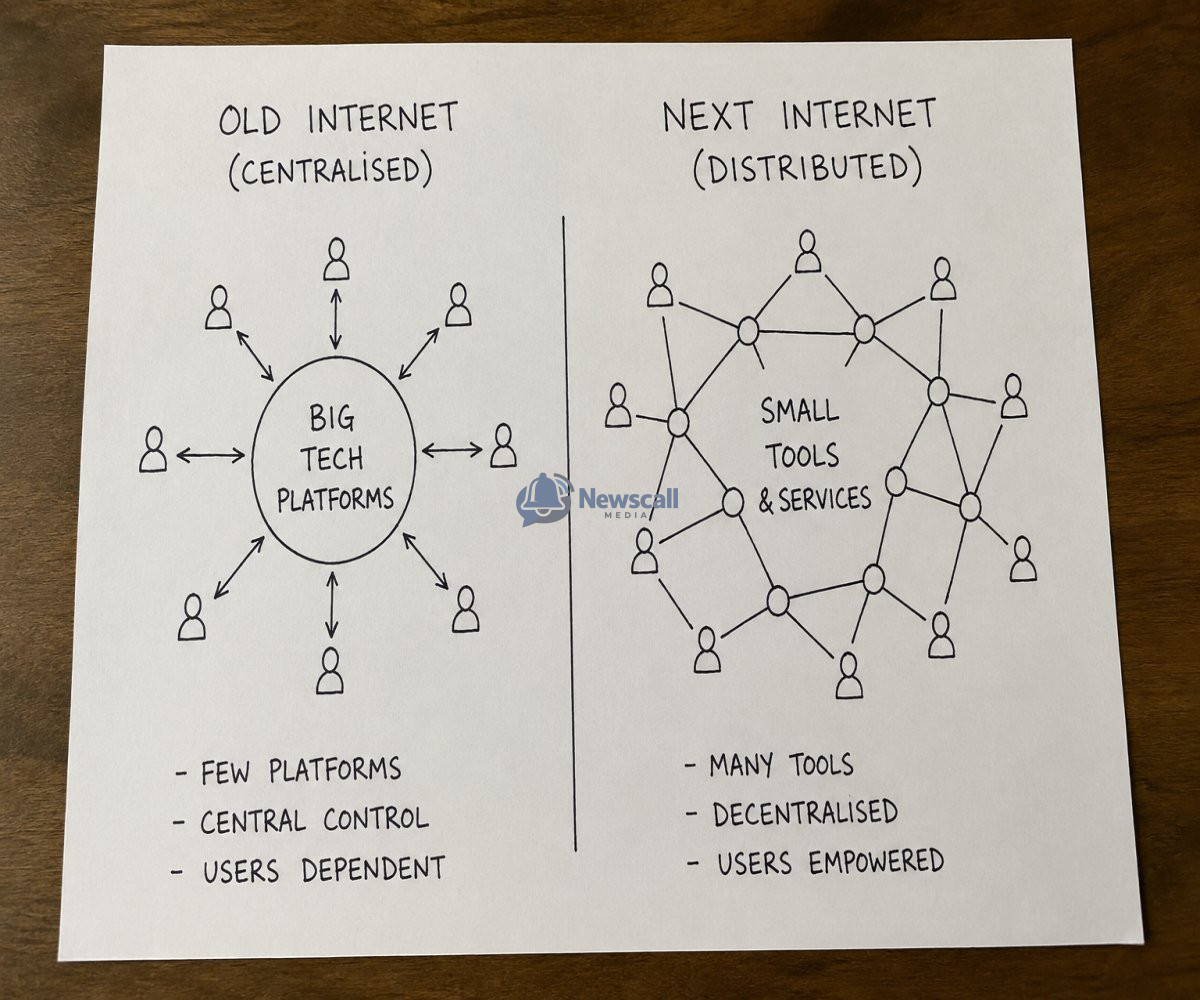
For over a decade, the structure of the internet has been shaped by a small group of dominant technology companies controlling search, social media, messaging, and digital distribution. However, recent shifts in artificial intelligence, software development, and user behavior suggest that this centralized model may be gradually weakening.
Across the tech industry, there is growing evidence that the next phase of the internet will be defined less by a few large platforms and more by a fragmented ecosystem of smaller, specialized tools and services.
One of the key drivers of this change is the rapid advancement of artificial intelligence. Modern AI systems are reducing dependence on traditional platforms by enabling users to generate content, retrieve information, build applications, and automate tasks without relying on centralized services. As these capabilities become more widely accessible, the role of large platforms as intermediaries is diminishing.
At the same time, a growing number of developers are building micro-tools and lightweight applications that focus on solving specific problems rather than serving broad, all-in-one functions. These products are often faster to develop, easier to distribute, and more directly aligned with user needs in niche areas.
Distribution models are also evolving. Instead of relying heavily on app stores or algorithm-driven feeds, many tools are now accessed directly through the web, APIs, or integrated AI environments. This shift reduces the gatekeeping power traditionally held by major platforms over visibility and user acquisition.
Industry observers note that these combined trends are gradually reshaping the balance of power in the digital ecosystem. While large tech companies remain influential, their control over user experience and software distribution is becoming less absolute.
If these developments continue, the future internet is likely to be defined by a distributed network of specialized services, AI-mediated interactions, and independent software tools rather than a small number of dominant platforms.
The result may not be the end of Big Tech, but a significant reduction in its ability to define how the internet is accessed, used, and experienced.

Victor Oluebubechukwu Akuma.
Creative writer