

2027: Tinubu’s Cabinet in Turmoil as Ministers Plot Exit for Governorship Ambitions
Fresh political permutations ahead of the 2027 general elections are beginning to reshape Nigeria’s political landscape, with indications that several serving ministers in President Bola Tinubu’s cabinet may soon step aside to pursue governorship and other elective positions in their home states.
Findings suggest that at least four ministers are currently at various stages of political consultation and mobilisation, particularly in states where incumbent governors are expected to complete their constitutionally permitted two-term tenure by 2027. The development is already generating quiet tension within the federal cabinet as the electoral timetable draws closer.
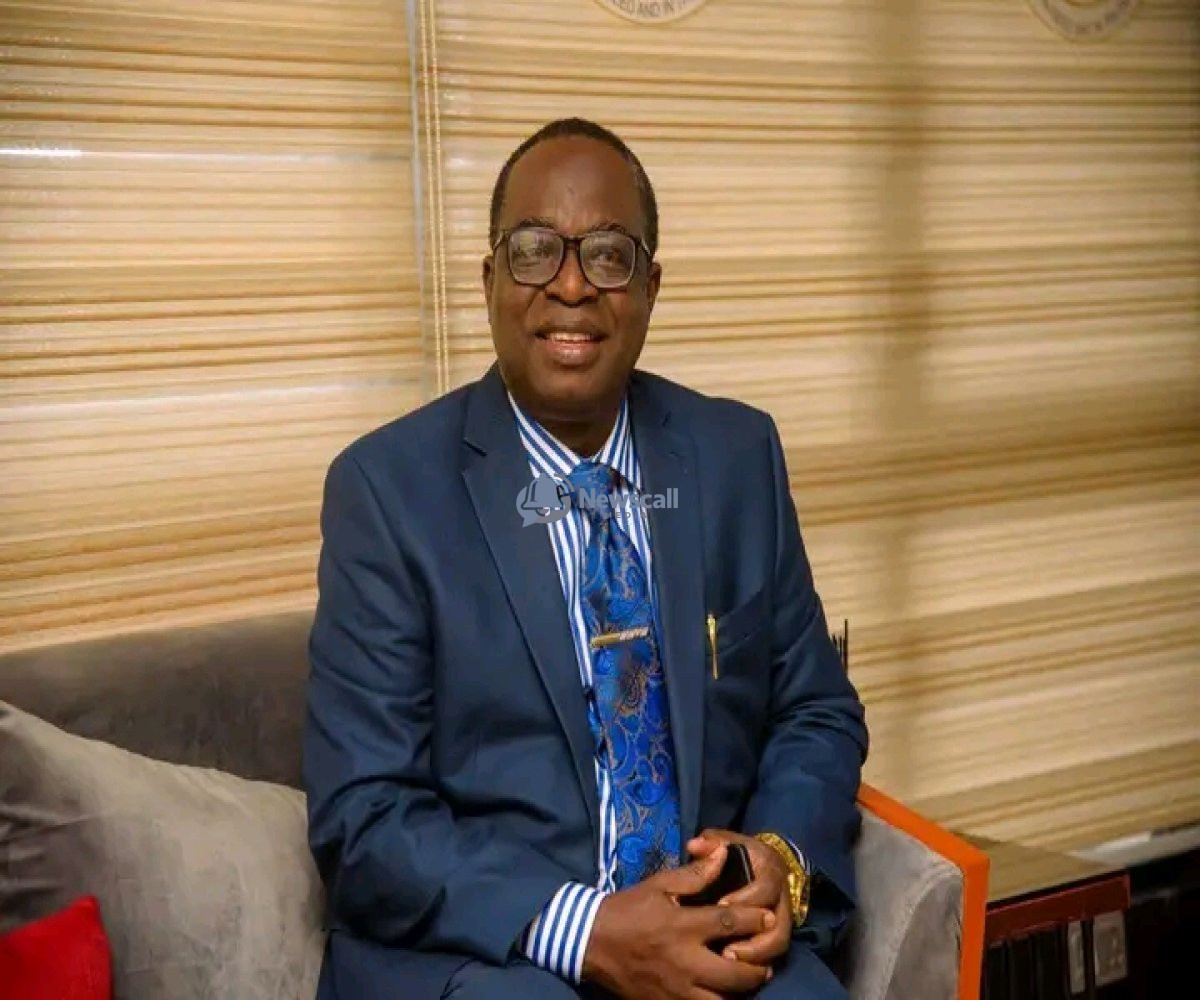
Among the cabinet members reportedly considering resignation are the Minister of Power, Adebayo Adelabu; the Minister of Health and Social Welfare, Muhammad Pate; the Minister of Foreign Affairs, Yusuf Tuggar; and the Minister of State for Labour, Nkeiruka Onyejeocha.
Political observers say their ambitions are closely tied to the electoral calendar released by the Independent National Electoral Commission, which fixed party primaries between April 22 and May 20 ahead of the 2027 general elections.
Under Nigeria’s electoral framework, political appointees seeking elective office are required to resign before participating in party primaries either as candidates or delegates, a provision reinforced under the Electoral Act 2026, which bars appointees from voting or being voted for in party nomination processes while still in office.
The Minister of Power, Adebayo Adelabu, is widely tipped as a frontline contender for the 2027 governorship race in Oyo State under the platform of the All Progressives Congress.
Adelabu, a former Deputy Governor (Operations) of the Central Bank of Nigeria, previously contested the Oyo governorship elections in 2019 and 2023, losing both times to incumbent Governor Seyi Makinde of the Peoples Democratic Party.
Sources within his political camp suggest that Adelabu is preparing for another attempt in 2027, with expectations that he will resign from his ministerial position closer to the primaries.
His spokesperson, Femi Awogboro, confirmed that although the minister has not yet been directed to resign by President Bola Tinubu, consultations are ongoing.
According to him, only President Tinubu has the constitutional authority to formally request a minister’s resignation.
“As of now, the President has not told Adelabu to resign. He is still carrying out his duties, but he is definitely contesting for the Oyo governorship seat,” he said.
Awogboro added that Adelabu would comply with all constitutional and party requirements at the appropriate time, noting that several ministers in the current cabinet may also be preparing similar moves.
Bauchi governorship race: Tuggar, Pate in focus
In Bauchi State, two ministers — Muhammad Pate and Yusuf Tuggar — are reportedly positioning themselves for the 2027 governorship contest, setting the stage for a possible high-profile political contest within the ruling APC structure.
Pate, who hails from Misau Local Government Area, has a long-standing interest in Bauchi politics, having previously contested for the governorship in 2015, 2019, and 2023 under different political platforms, including the Peoples Redemption Party and the APC.
Recent political engagements, especially youth empowerment and health-related initiatives in Bauchi State, have intensified speculation that he may return to the race in 2027.
A coordinator of his media support group, Ibrahim Abdulhamid, said stakeholders recently visited the minister in Abuja to persuade him to re-enter the contest.
He stated that although the move has not been officially declared, growing pressure from supporters has influenced his decision to participate.
Similarly, Yusuf Tuggar, the Minister of Foreign Affairs, is also believed to be preparing for a governorship bid in Bauchi State. Tuggar, who hails from Gamawa Local Government Area, has previously contested the position and maintained a steady political presence in the state.
His Special Adviser on Media and Communications Strategy, Alkasim Abdulkadir, confirmed his ambition, noting that the minister intends to contest the governorship seat but will comply with all electoral guidelines regarding resignation timelines.
A political associate, Ahmad Tilde, expressed confidence in Tuggar’s chances, arguing that he enjoys strong grassroots support across Bauchi State, though he acknowledged that formal declarations are yet to be made.
The Minister of State for Labour, Nkeiruka Onyejeocha, is also reportedly considering a return to the National Assembly, where she previously served for 16 years between 2007 and 2023 as a member of the House of Representatives representing the Isuikwuato/Umunneochi constituency of Abia State.
Sources close to her indicate that she is weighing the option of re-entering legislative politics, although she has yet to publicly confirm her intention.
Attempts to obtain her official reaction were unsuccessful as she neither responded to calls nor text messages at the time of filing the report.
The anticipated resignations are guided by Nigeria’s electoral laws, which require all political appointees to vacate office before engaging in partisan primaries or electoral contests.
The provision is intended to prevent the misuse of public office for political advantage during election cycles and to ensure a level playing field among aspirants.
The timetable released by the Independent National Electoral Commission has further intensified political planning across party structures nationwide, with early consultations already underway at federal and state levels.
INEC denies resignation deadline report
Amid growing speculation, the electoral commission has dismissed reports circulating on social media that it fixed March 26, 2026, as a deadline for political appointees to resign.
In a statement issued via its official channels, the commission described the information as false and misleading, urging the public to disregard it and rely only on verified communications.
Officials of the All Progressives Congress in several states have also clarified that while consultations are ongoing, no formal declaration processes have begun.
Party spokesperson Olawale Sadare noted that aspirants are currently expected to focus on consultations and grassroots engagement until official primaries are opened.
He added that the party would provide equal opportunities for all contenders once the electoral process formally begins.
In contrast, Governor Seyi Makinde of Oyo State has taken a more open approach to political succession planning.
Makinde recently directed political appointees in his administration who have ambitions for elective offices to openly declare their intentions and begin consultations ahead of 2027.
He further instructed them to remain within the platform of the PDP and assured them of his support, provided they remain loyal to the party and committed to governance responsibilities.
The governor’s directive has been interpreted as an attempt to reduce internal uncertainty and promote transparency among his political appointees as the election season approaches.
With less than two years to the primaries, Nigeria’s political space is already witnessing early manoeuvring that could significantly reshape both federal and state-level leadership structures. As ministers weigh resignation and governorship ambitions, attention is now shifting to how President Bola Tinubu’s cabinet will adjust to a likely wave of political departures in the months ahead.

Anozie Chiemerie Emmanuel
Writer