

CATL Battery Breakthrough China’s CATL Unveils Four-Minute Charging Battery, Redefining the Future of Global Mobility
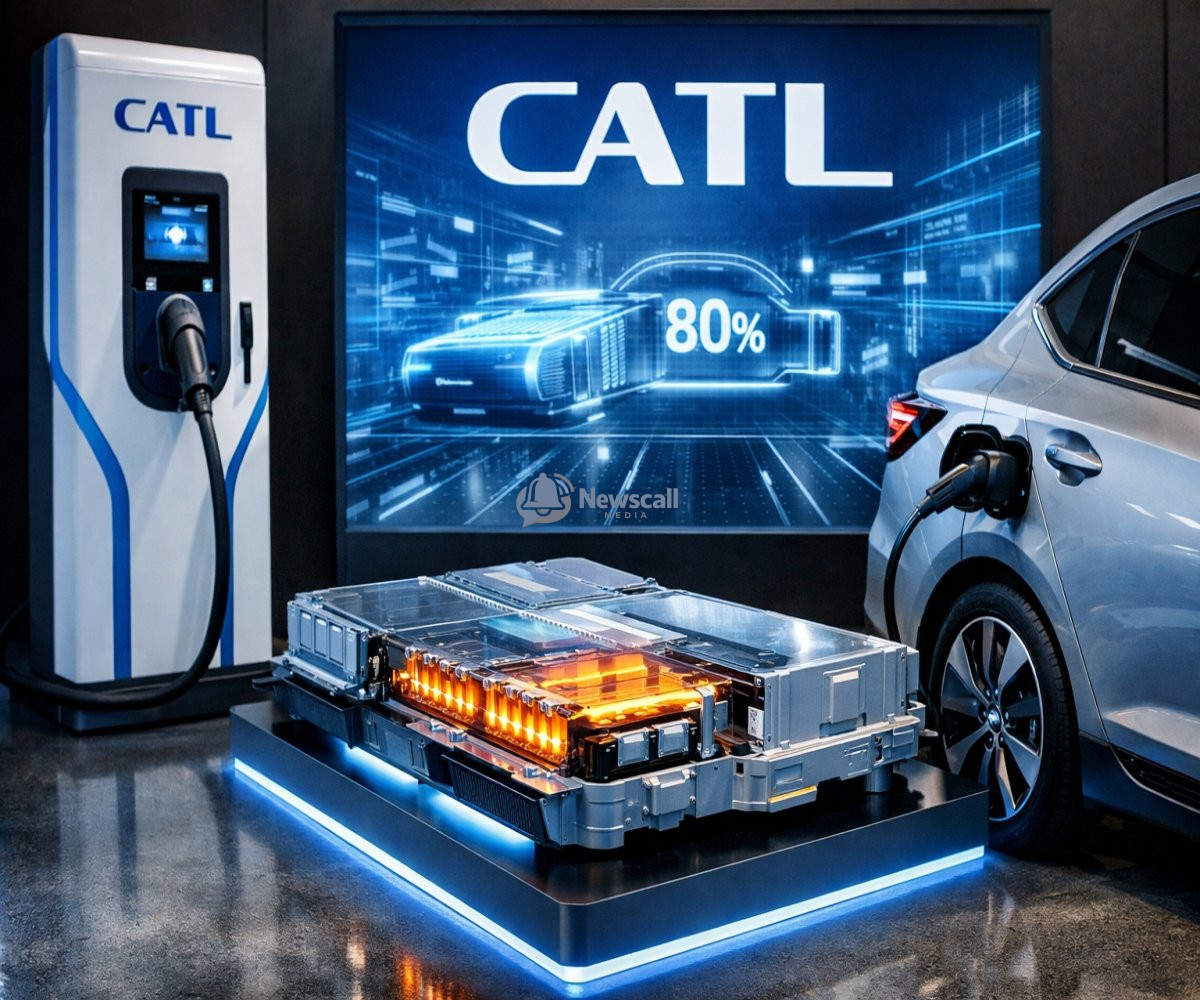
China’s Contemporary Amperex Technology Co. Limited (CATL), the world’s largest battery manufacturer, has once again seized global attention with a breakthrough that could transform the electric vehicle industry. At its 2026 Tech Day, CATL unveiled a new generation of batteries promising unprecedented speed, range, and durability — innovations that may accelerate the decline of fossil fuel dependence and reshape the geopolitics of energy.
The headline announcement was the Shenxing superfast charging battery, capable of reaching 80% charge in under four minutes. For an industry long constrained by charging times, this development represents a leap forward. Engineers say the battery can achieve near-full charge in just seven minutes under normal conditions, and even in extreme cold — at minus 30 degrees Celsius — it reaches 98% charge in nine minutes. Crucially, it maintains 90% capacity after 1,000 ultra-fast charging cycles, addressing concerns about long-term durability.
CATL also introduced the Qilin Condensed Battery, a product that pushes the boundaries of energy density. With 350 Wh/kg and 760 Wh/L, the battery offers a driving range of up to 1,500 kilometres for sedans and 1,000 kilometres for SUVs. Built with aviation-grade materials, it is lighter and stronger than conventional packs, enabling vehicles to travel further while consuming less energy. Analysts say this could mark the beginning of a new era in long-haul electric transport, where range anxiety becomes a relic of the past.
The company’s third-generation Qilin battery also drew attention, offering more than 1,000 kilometres of range while being 255 kilograms lighter than comparable lithium iron phosphate (LFP) packs. Meanwhile, the Freevoy hybrid battery blends LFP and nickel cobalt manganese (NCM) chemistries, delivering 600 kilometres of pure electric range in extended-range vehicles and supporting megawatt-class performance with peak power of 1,500 kW.
A Turning Point for the EV Industry
CATL’s innovations arrive at a critical moment. Global demand for electric vehicles is surging, driven by climate commitments and consumer appetite for cleaner transport. Yet charging infrastructure and battery limitations remain obstacles. By drastically reducing charging times and extending ranges, CATL’s new technologies could make EVs not only practical but preferable to combustion engines.
Industry experts suggest the implications go beyond transport. Faster charging and longer ranges could accelerate the electrification of logistics, aviation, and even shipping. For governments, the shift promises reduced reliance on oil imports, a strategic advantage in a world where energy security is increasingly fragile.
Geopolitical Ripples
The timing of CATL’s announcement is significant. Oil prices have surged past $100 per barrel amid escalating tensions in the Middle East, underscoring the volatility of fossil fuel markets. For countries like Nigeria, heavily reliant on crude exports, such swings bring both opportunity and risk. CATL’s breakthroughs highlight a future where oil’s dominance may wane, replaced by electrons powering economies.
China, through CATL, is positioning itself as a global energy power, rivaling OPEC in influence. Just as oil shaped geopolitics in the 20th century, batteries may define the 21st. Europe, grappling with Russian aggression and energy insecurity, will view CATL’s advances not only as technological marvels but as strategic lifelines.
The Road Ahead
For consumers, the promise is simple: electric cars that charge in minutes and travel thousands of kilometres on a single charge. For policymakers, the challenge is to build infrastructure and regulatory frameworks that match the pace of innovation. And for competitors, CATL’s dominance raises urgent questions about supply chains, technological sovereignty, and industrial strategy.
As the applause fades from CATL’s Tech Day, one truth remains clear: the company has not merely unveiled new batteries; it has set the stage for a new chapter in global energy. In a world where oil markets swing with every geopolitical tremor, CATL’s vision offers a glimpse of stability — a future where mobility is fast, clean, and boundless.

OKORO WILSON EGWU
“Independent journalist delivering sharp, reporting on global conflicts, humanitarian crises, and international diplomacy. Known for transforming complex world events into...