

NATO Jets Confront Russian Bombers, Baltic Skies on Edge as NATO Shadows Russian Bombers in High-Stakes Standoff
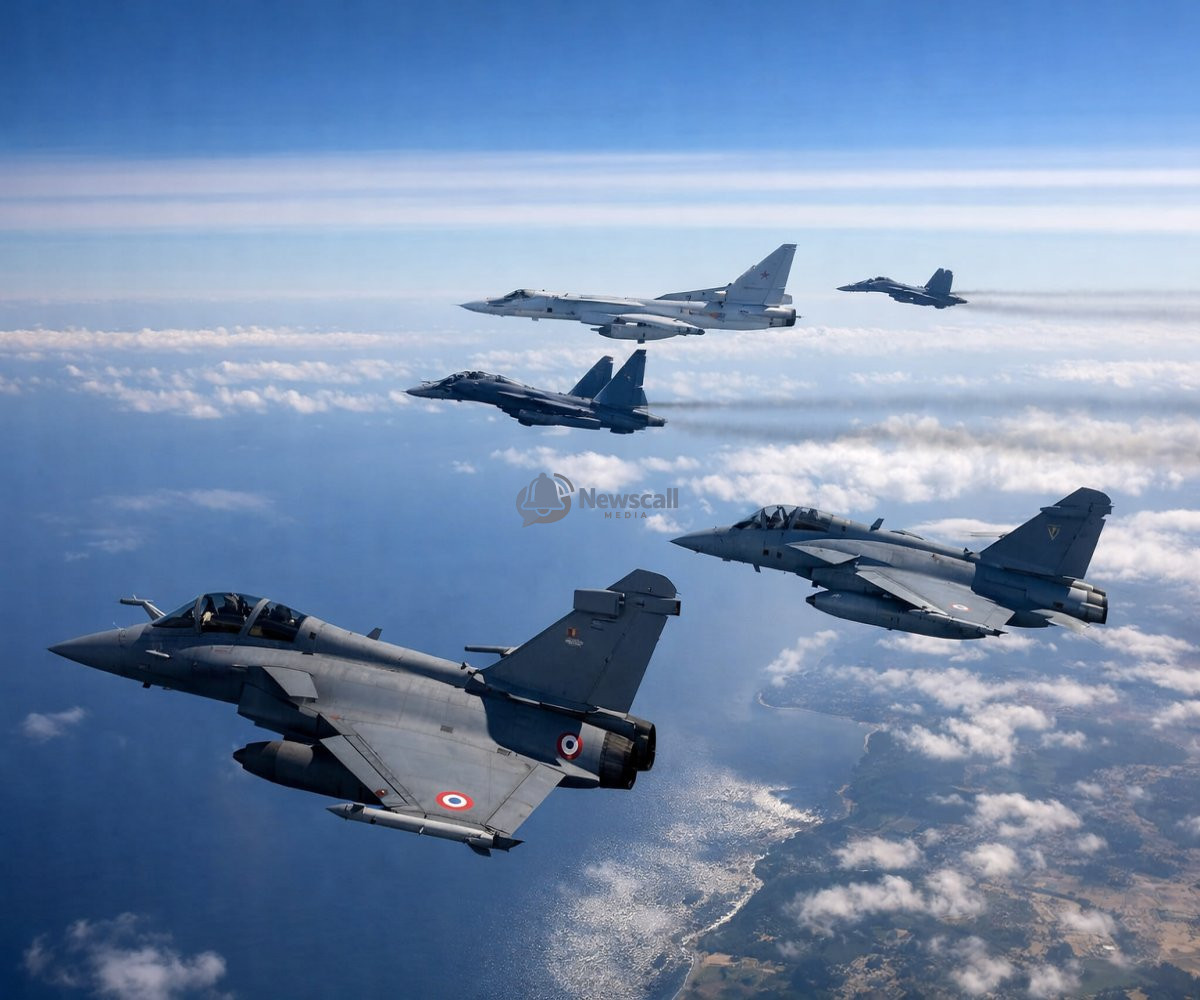
The Baltic Sea, long regarded as Europe’s restless frontier, became the stage for a tense aerial encounter on April 21, 2026. At Lithuania’s Šiauliai Air Base, French Rafale pilots scrambled at dawn after radar detected Russian bombers approaching without flight plans or active transponders.
Two Tu-22M3 supersonic bombers, escorted by Su-30 and Su-35 fighters, carved a silent path across the northern skies. NATO jets shadowed the formation for nearly four hours, weaving through clouds in a display of deterrence and vigilance.
Moscow insisted the mission was routine training over neutral waters. NATO officials, however, interpreted the manoeuvre as a calculated show of force — a reminder of Russia’s enduring reach and appetite for intimidation. Lithuania confirmed that allied jets had scrambled four times in a single week, underscoring the frequency of such encounters.
The symbolism was striking. Swedish Gripens, Finnish F-18s, Polish F-16s, Danish F-35s, Romanian fighters, and French Rafales flew side by side — a coalition of wings spanning the continent. Each manoeuvre carried a message: Europe stands united in defence of its skies.
Yet beneath the choreography lies danger. Analysts warn that the Baltic has become a crucible of risk, where routine drills blur into brinkmanship. One miscalculation, one misread signal, could ignite a confrontation no side desires.
For now, the incident ended without shots fired. But the image lingers: NATO jets slicing through northern skies, Russian bombers looming in formation, and the fragile line between peace and provocation stretched ever thinner.

OKORO WILSON EGWU
“Independent journalist delivering sharp, reporting on global conflicts, humanitarian crises, and international diplomacy. Known for transforming complex world events into...