

Michael Polansky Is Using Living Human Skin To Train An AI Model
What if you could train an AI not just on text, images, or code—but on something that is actually alive?
That's the strange experiment happening inside Outer Biosciences, an AI-and-biology startup founded and led by Michael Polansky.
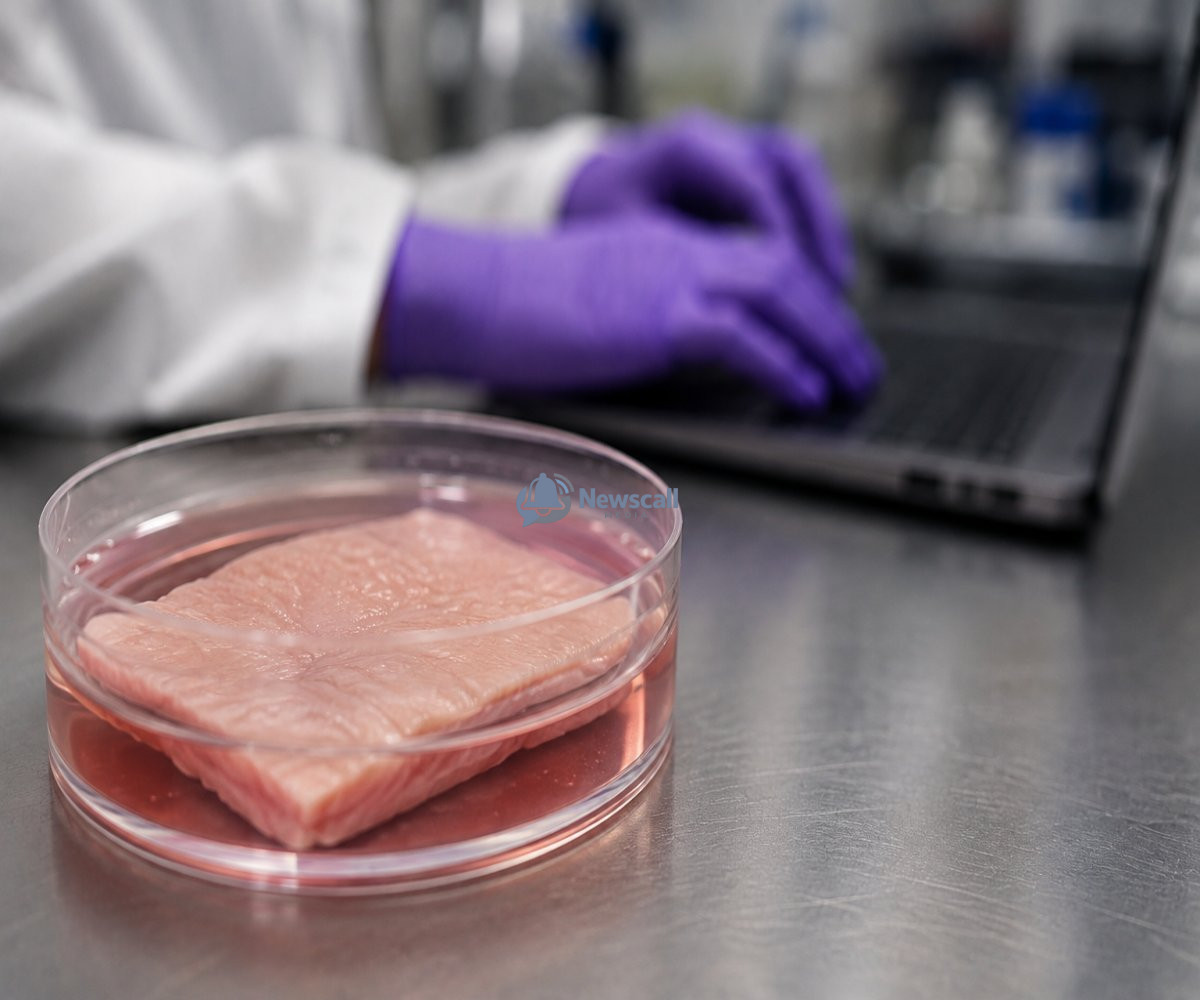
The company has developed a system that can keep donated human skin tissue alive outside the body for up to about a month. It then uses that living tissue to test chemical compounds and feeds the resulting biological data into an AI system that learns which compounds might produce useful effects in skin.
It sounds like science fiction.
But the idea is surprisingly practical.
For decades, scientists have relied on things such as animal models, cell cultures, and lab-grown tissues to understand how potential treatments and ingredients might behave.
The problem is that none of these perfectly reproduces what happens inside a living human body.
Outer Biosciences is trying to close part of that gap by using actual human tissue.
The company obtains skin that would otherwise be discarded after surgery, primarily through tissue banks and suppliers operating under documented donor consent and institutional-review oversight. The samples are de-identified before reaching the company.
Once the tissue arrives, the company uses a proprietary system to supply nutrients and remove metabolic waste, allowing the skin to remain viable far longer than conventional skin samples.
And that extra time is crucial.
Some changes in skin biology don't happen immediately.
Collagen remodeling, pigmentation changes, inflammation, and barrier repair can take weeks to develop. Conventional tissue samples that remain useful for only a few days aren't necessarily ideal for studying those longer processes.
Outer Biosciences says its system can keep the tissue viable for around 30 days while preserving much of its original biological state.
That gives the company something unusual:
time.
Researchers can expose the living tissue to a compound, observe what happens, measure the biological response, and continue observing it over an extended period.
One example involves UVB exposure.
Researchers can induce UV-related damage in the tissue and then track the biological response over the following weeks. The goal isn't simply to see whether something happens immediately, but to understand how the tissue responds over time.
This is where the AI comes in.
The system works more like a feedback loop than a traditional AI training process.
First, the model predicts which previously untested chemical compounds might have a desirable effect on a particular skin function.
Researchers then test those compounds using the living-tissue system.
The biological results are measured.
Those results—whether the AI prediction was right or wrong—are fed back into the system.
The model can then use the new information to make better predictions about what to test next.
In other words, the AI isn't simply learning from a giant database of existing information.
It's helping decide what experiment should happen next, and then learning from the outcome.
That could dramatically change how certain ingredients are discovered.
According to Polansky, Outer Biosciences initially relied on a much more traditional approach, mining scientific literature and working with researchers to identify promising compounds.
That process produced only a handful of leads over roughly 18 months.
With the AI-driven approach, Polansky says the company is now generating a new candidate roughly every six weeks, with six active leads and several dozen additional hits recorded.
And there's a huge reason the company believes this approach could be valuable.
The number of well-studied skin-active ingredients is surprisingly small.
Polansky estimates that there are only around 120 to 130 approved active ingredients across the FDA's categories of over-the-counter skin drugs, with the number rising to roughly 200 when research-backed cosmetic ingredients are included.
That leaves a massive chemical universe that hasn't been thoroughly explored for cosmetic applications.
AI could potentially help researchers search that universe much faster.
But Outer Biosciences isn't trying to become the next giant skincare brand.
Instead, the company plans to discover promising ingredients and then license or sell them to beauty and pharmaceutical companies that can turn them into finished products.
Some of its current candidates could eventually make their way into products such as creams or serums, although discovery is only one part of that journey.
There is still safety testing, formulation, manufacturing, and commercialization to deal with.
And this is where the story becomes bigger than skincare.
Outer Biosciences is essentially building a new kind of scientific feedback loop.
AI makes a prediction.
Biology tests the prediction.
The resulting data improves the AI.
Then the AI makes another prediction.
Repeat.
That idea could potentially extend far beyond cosmetics.
The company is already collaborating with a pharmaceutical partner studying why certain cancer drugs can cause severe skin rashes.
Other companies are pursuing related ideas using lab-grown human tissues, organoids, and organ-on-a-chip systems.
But Outer Biosciences is betting on something particularly interesting: real human tissue that remains alive for weeks.
That could provide researchers with biological information that is difficult to obtain from conventional experiments.
There's another interesting advantage.
The company's AI doesn't require the enormous computing infrastructure associated with frontier language models.
Polansky says Outer Biosciences currently runs its AI work on-premises because the company doesn't want its biological data sitting in the cloud.
That data could ultimately become one of the company's most valuable assets.
Every experiment produces information that didn't previously exist.
Every successful prediction adds another piece to the model.
Every failed prediction also teaches the system something.
And unlike information scraped from the internet, this biological data is being generated specifically by the company.
That's potentially a powerful competitive advantage.
But it also highlights an important limitation.
Outer Biosciences isn't creating a digital copy of a human being.
Keeping a piece of skin alive outside the body doesn't reproduce the entire human body, with its blood circulation, nervous system, hormones, immune interactions, and countless other biological processes.
The company's system is designed to answer specific questions about skin biology.
And even when the AI discovers a promising compound, that doesn't automatically mean the ingredient will work in a real person.
There is still a long road between a promising laboratory result and a commercially successful product.
That's why the most interesting part of this story isn't that someone has created “AI skin.”
They haven't.
The interesting part is that AI is increasingly becoming connected to physical experiments.
For years, the AI revolution was largely digital.
Models learned from text.
They generated images.
They wrote software.
They analyzed data.
Now researchers are increasingly connecting AI systems to laboratories where the models can propose experiments, receive biological results, and use those results to improve future predictions.
That could eventually turn scientific discovery into something much more iterative and automated.
Instead of researchers manually testing thousands of possibilities one by one, AI could help narrow the search, identify the most promising candidates, and continuously learn from experimental results.
The machine doesn't replace the scientist.
It changes the scientist's workflow.
And that may be the bigger story behind what Michael Polansky and Outer Biosciences are building.
The future of AI might not just be models that know more.
It could be models that experiment, learn from reality, and get better because of what happens in the physical world.
This time, the training data isn't sitting on the internet.
It's alive.

Victor Oluebubechukwu Akuma.
Creative writer