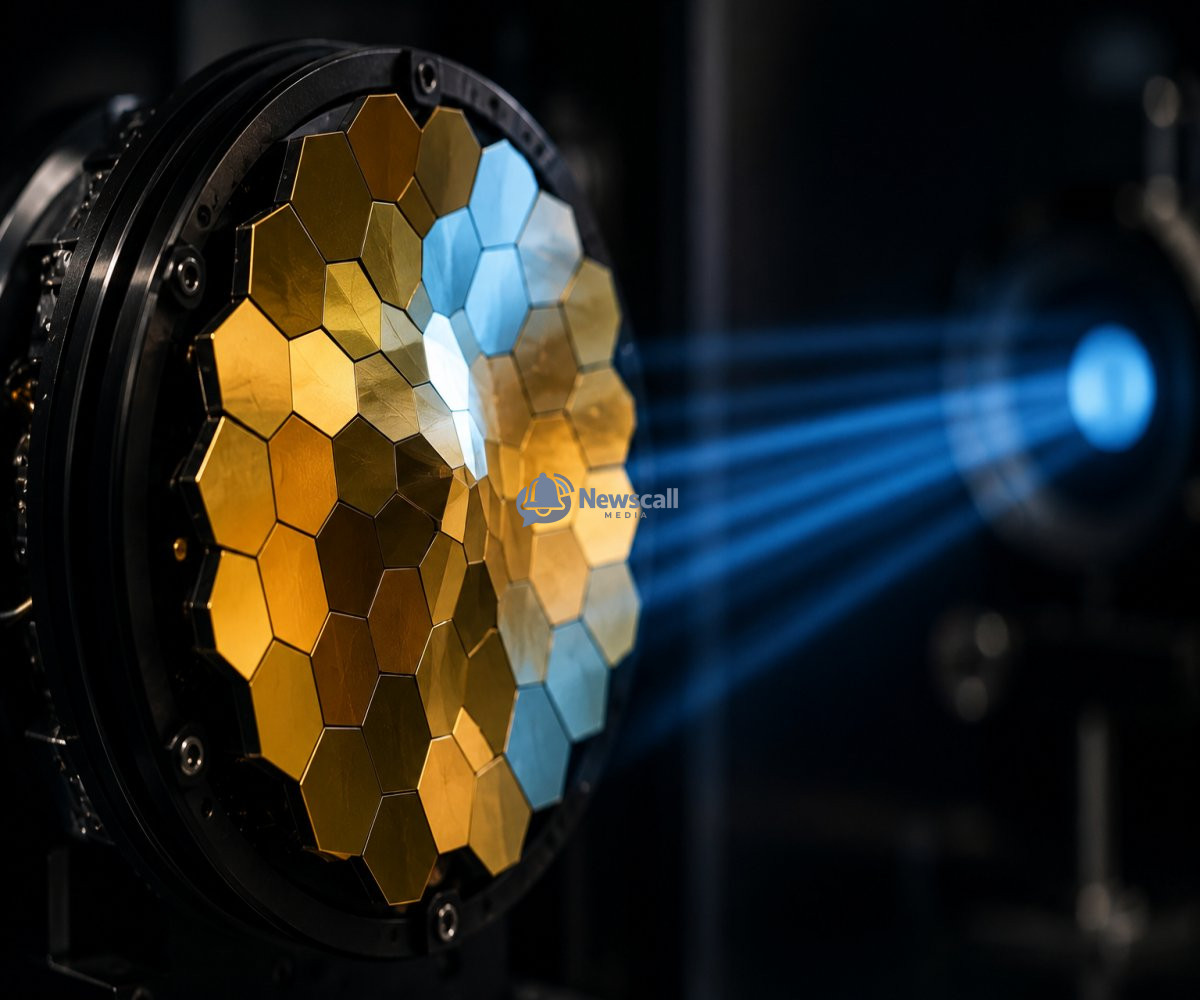


NASA's New Dark Energy Telescope Has A Surprising Second Mission: Hunting Killer Asteroids
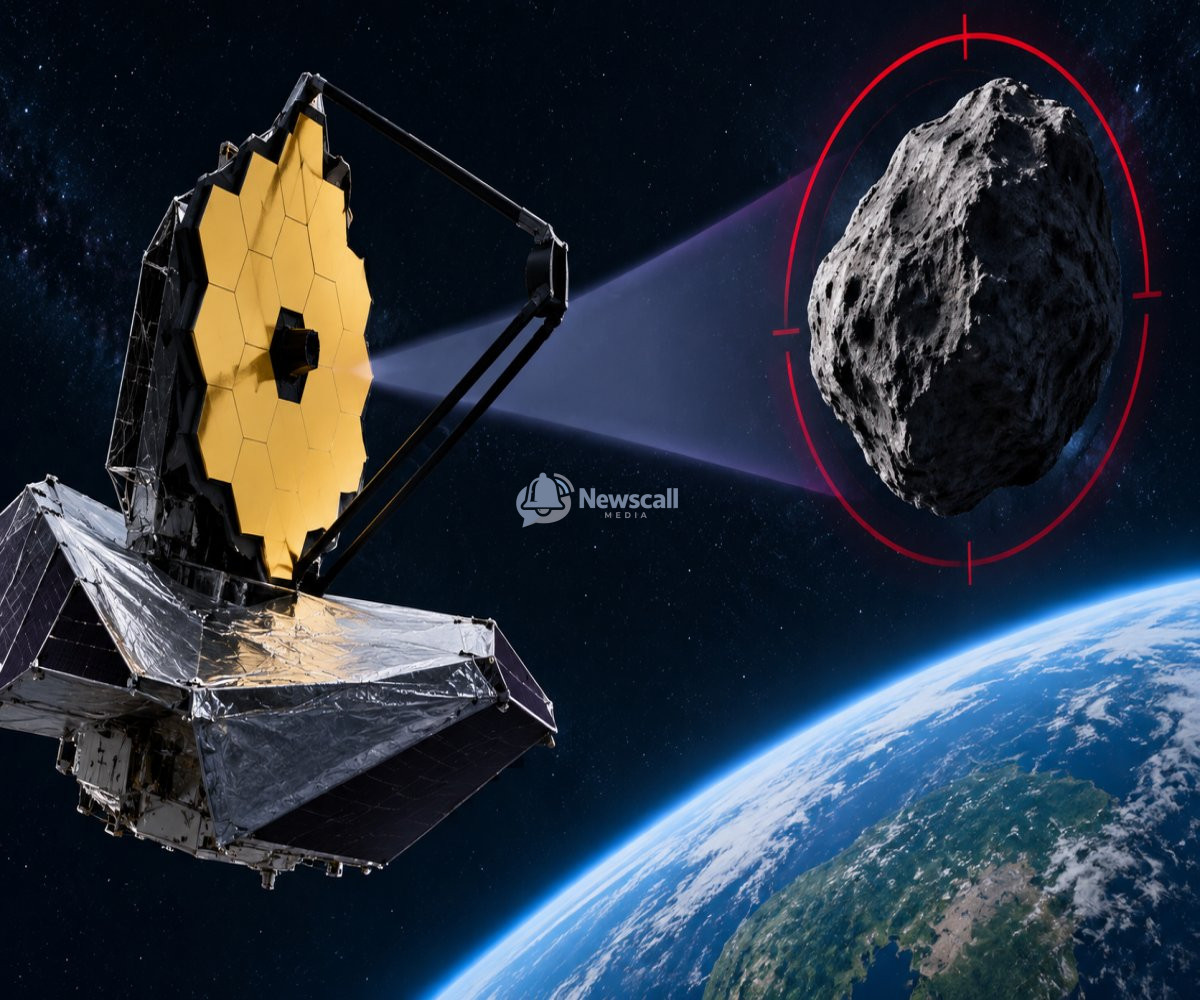
NASA's newest space telescope has just gained an unexpected second mission—and it could one day help protect Earth.
The Nancy Grace Roman Space Telescope was designed to investigate one of the universe's greatest mysteries: dark energy, the invisible force believed to be driving the accelerating expansion of the universe. But scientists have now revealed that the same telescope could also become a powerful tool for detecting potentially hazardous asteroids before they threaten our planet.
It's a remarkable example of how one groundbreaking technology can solve multiple problems at once.
The Roman Space Telescope is one of NASA's most ambitious scientific missions in years. Equipped with an enormous field of view and incredibly sensitive infrared instruments, it will survey vast regions of the universe that previous telescopes could only examine in small sections.
Its primary objective is to help scientists understand dark energy, a mysterious phenomenon that appears to make up nearly 70% of the universe. Despite decades of research, astronomers still don't know exactly what dark energy is or why it exists.
But while looking deep into the cosmos, the telescope will also be watching much closer to home.
Researchers say its powerful imaging system can detect faint, fast-moving objects within our own Solar System—including asteroids that may have gone unnoticed by existing surveys.
Some of these objects could be classified as near-Earth asteroids, meaning their orbits bring them relatively close to our planet.
Although the vast majority pose no danger, astronomers constantly search for the small percentage that could become a future threat.
Finding them early is everything.
An asteroid discovered decades before a possible impact gives scientists time to calculate its orbit accurately and, if necessary, develop strategies to alter its course. Detecting one only months before impact would leave very few options.
That's why every new telescope capable of spotting hidden objects is considered an important addition to Earth's planetary defense efforts.
The Roman Space Telescope wasn't built specifically for asteroid hunting, but its advanced capabilities make it exceptionally well suited for the task.
Its enormous field of view allows it to scan large sections of space quickly, while its infrared sensors can identify objects that are difficult to detect using visible light alone.
This combination could reveal asteroids that current observatories either miss or struggle to track.
The discovery highlights an important pattern in scientific innovation.
Many of history's greatest technologies end up doing much more than their creators originally intended.
The Global Positioning System was developed for military navigation before transforming transportation and smartphones.
The World Wide Web was created to help scientists share information before becoming the foundation of the modern internet.
Even Wi-Fi owes part of its success to research that wasn't originally aimed at improving wireless networking.
Now the Roman Space Telescope may join that growing list.
Built to answer one of astronomy's biggest questions, it could also strengthen humanity's ability to detect dangerous objects approaching Earth.
That doesn't mean people should panic.
Hollywood has made asteroid impacts seem like common events, but in reality, large impacts are extremely rare. Space agencies around the world continuously monitor thousands of known near-Earth objects, and there is currently no known large asteroid on a collision course with Earth.
The goal isn't fear.
It's preparedness.
Planetary defense is about identifying risks long before they become emergencies. Every improvement in detection technology gives scientists more time to study potentially hazardous objects and determine whether any action is necessary.
The Roman Space Telescope could significantly expand that capability.
Beyond asteroid detection, the mission is expected to revolutionize astronomy in several other ways.
It will search for distant exoplanets, map billions of galaxies, investigate the evolution of the universe, and provide enormous amounts of data that researchers will analyze for years after launch.
The possibility of discovering previously unknown asteroids is simply an unexpected bonus.
It's also a reminder that scientific research often delivers benefits no one initially anticipated.
A telescope built to answer questions about the farthest reaches of the universe may ultimately help protect life on Earth.
That is the beauty of exploration.
When scientists build powerful new tools, they rarely solve just one problem.
They open doors to discoveries we never knew we were looking for.
NASA's newest telescope is proof that sometimes the technologies designed to help us understand the universe also become the ones that help safeguard our future.

Victor Oluebubechukwu Akuma.
Creative writer