
The Invisible Technology That Keeps Every Airplane From Colliding Mid-Air
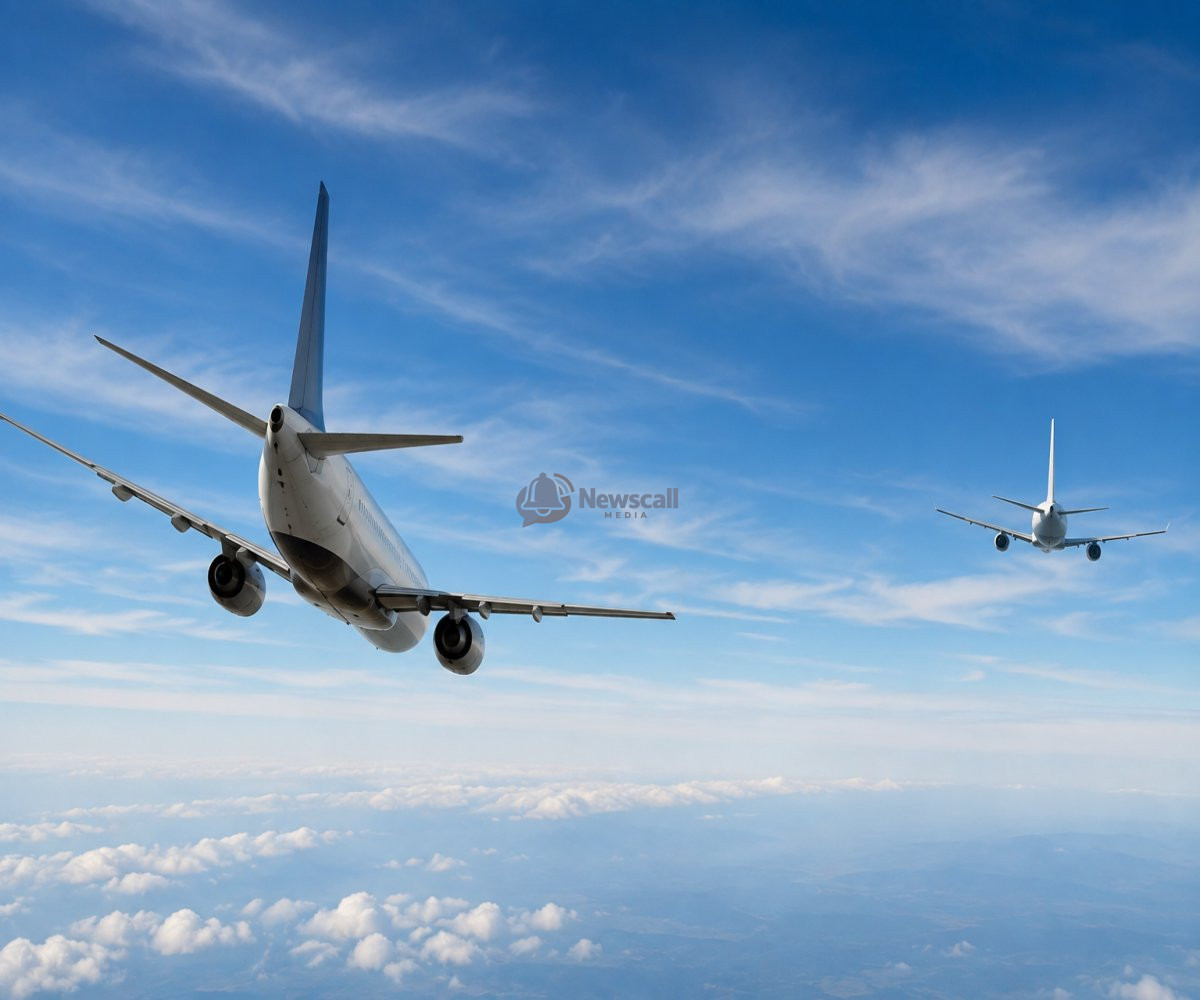
Every day, more than 100,000 flights take off and land around the world.
At any given moment, thousands of aircraft are sharing the same skies, often crossing paths at different altitudes and speeds. To many passengers, it's almost unbelievable that so many airplanes can fly simultaneously without colliding.
While air traffic controllers play a vital role in keeping aircraft safely separated, there is another layer of protection that works quietly in the background.
Most passengers have never heard of it.
It's called the Traffic Collision Avoidance System, or TCAS, and it has become one of the most important safety technologies ever installed on commercial aircraft.
Unlike radar systems on the ground, TCAS doesn't rely on air traffic controllers to detect nearby aircraft.
Instead, every equipped airplane constantly communicates with other aircraft through onboard transponders. By exchanging signals, TCAS can determine the position, altitude, direction, and speed of nearby planes in real time.
Think of it as a private conversation taking place between aircraft.
Each plane is continually asking, "Who's nearby?" and receiving instant answers.
Using this information, the system calculates whether another aircraft could become a collision risk.
If another airplane comes too close, TCAS first alerts the pilots with a Traffic Advisory.
This warning simply tells the crew to pay attention because another aircraft is nearby.
If the system determines that a collision is becoming possible, it immediately issues a Resolution Advisory.
This is where the technology becomes truly remarkable.
Rather than merely sounding an alarm, TCAS tells pilots exactly what to do.
One aircraft may receive an instruction to climb.
The other may be instructed to descend.
These commands are carefully coordinated so that both aircraft perform complementary maneuvers instead of reacting in the same direction.
The result is a safe separation that happens within seconds.
Even more impressive, the two aircraft don't need permission from air traffic control before following these instructions.
International aviation rules require pilots to obey TCAS Resolution Advisories immediately because the system is specifically designed to prevent mid-air collisions during critical moments.
This coordinated decision-making has saved countless lives.
The importance of TCAS became painfully clear after several tragic mid-air collisions during the twentieth century demonstrated that relying solely on human communication and ground radar wasn't enough.
Those accidents prompted aviation authorities and engineers to develop an independent onboard safety system capable of detecting threats and providing immediate guidance.
Since its widespread adoption, TCAS has dramatically improved aviation safety.
Today, it is considered standard equipment on most large commercial aircraft around the world.
The technology works continuously during flight, even when passengers have no idea it's operating.
In many cases, pilots never need to interact with it because it quietly monitors surrounding traffic without detecting any danger.
Only when necessary does it step in.
TCAS is also a remarkable example of engineering design.
The system must process huge amounts of information in real time while avoiding unnecessary warnings.
If it alerted pilots too often, they could become distracted or begin ignoring the system.
If it reacted too late, lives could be at risk.
Engineers therefore designed sophisticated algorithms that balance caution with accuracy, ensuring alerts are issued only when genuinely needed.
The system doesn't replace pilots or air traffic controllers.
Instead, it adds another independent layer of protection.
Modern aviation safety is built on this philosophy.
Rather than relying on a single safeguard, aircraft use multiple overlapping systems that back each other up.
Pilots monitor instruments.
Air traffic controllers manage aircraft spacing.
Ground radar tracks flights.
Weather systems provide storm information.
Navigation computers calculate precise routes.
TCAS stands alongside these technologies, constantly watching for one specific danger: another aircraft getting too close.
Its success reflects a broader lesson about innovation.
Some of the world's most important technologies are almost invisible.
Passengers notice comfortable seats, larger windows, quieter engines, and faster Wi-Fi.
Few ever think about the complex systems silently protecting them throughout the journey.
Yet these hidden innovations often have the greatest impact.
Modern aviation is now one of the safest forms of transportation ever created, not because of one revolutionary invention, but because of hundreds of engineering breakthroughs working together behind the scenes.
TCAS is one of those breakthroughs.
As aviation continues to evolve, newer technologies are making aircraft even safer.
Advanced satellite navigation, improved weather prediction, artificial intelligence, and next-generation surveillance systems are gradually enhancing how aircraft navigate crowded skies.
But despite these advances, TCAS remains one of the industry's most trusted safety systems.
Every day, it quietly monitors the skies, exchanges information with nearby aircraft, calculates thousands of possible flight paths, and stands ready to act if danger appears.
Most passengers will never hear its voice.
Most flights will never require its guidance.
And that's exactly the point.
The greatest engineering achievements are often the ones you never notice.
Every safe landing is a reminder that behind the scenes, remarkable technologies are constantly working together to make air travel safer than ever before.
The next time you look out of an airplane window and spot another aircraft in the distance, remember this:
Long before either pilot becomes concerned, an invisible technology is already making sure both flights reach their destinations safely.

Victor Oluebubechukwu Akuma.
Creative writer