

"China’s Nuclear Carrier Unveiled: Type 004 Signals a New Era of Global Naval Dominance”
A Supercarrier of Unprecedented Scale
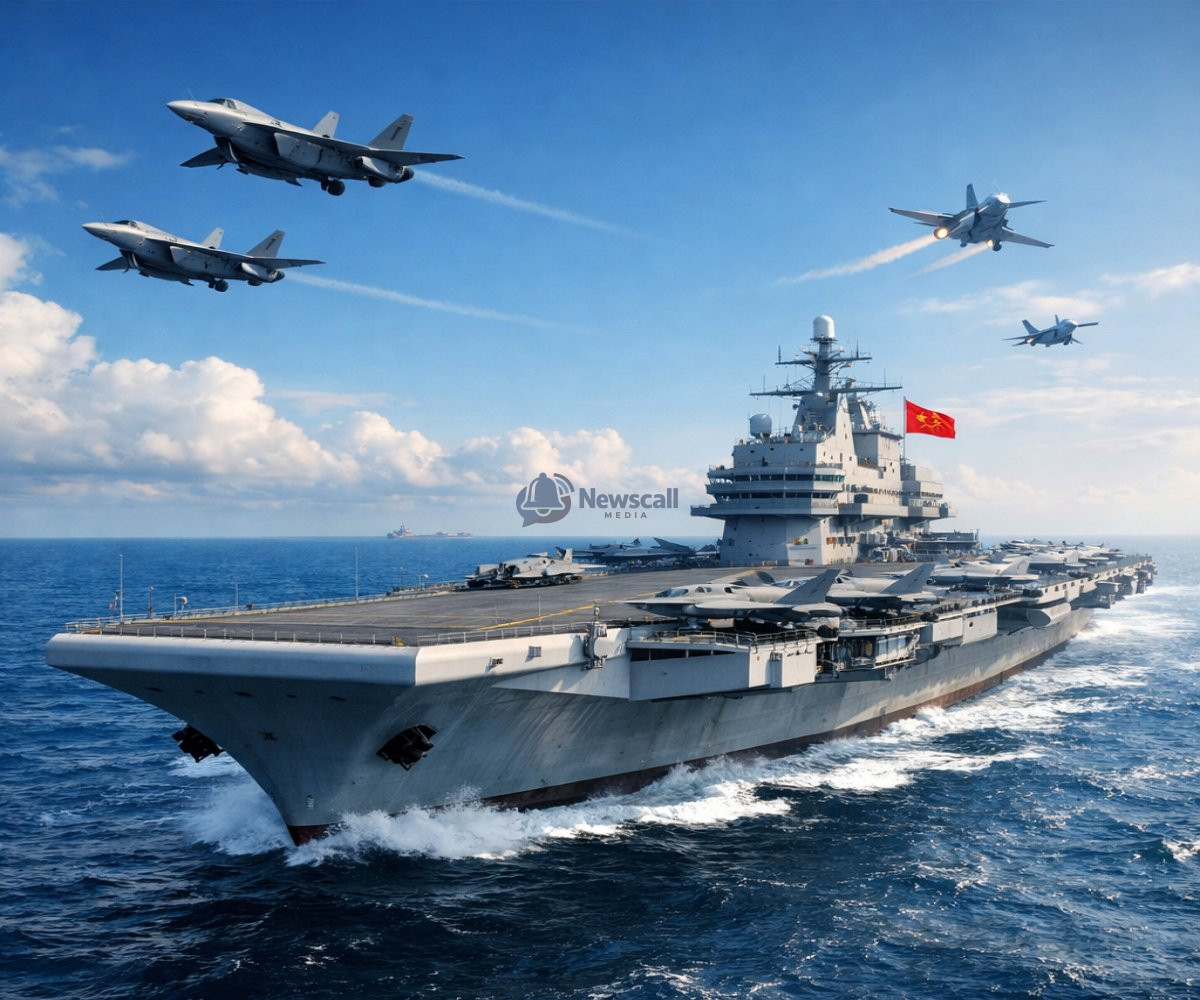
China’s Type 004 nuclear-powered aircraft carrier, now under construction at the Dalian Shipyard, represents the most ambitious leap in the People’s Liberation Army Navy (PLAN) to date. With an estimated displacement of 110,000–120,000 tons, the vessel will surpass the U.S. Navy’s Gerald R. Ford-class carriers in size and capacity. Analysts project the Type 004 will host an air wing of up to 105 aircraft, including J-35 stealth fighters, J-15T multirole jets, and KJ-600 airborne early warning platforms.
This scale is not symbolic—it is operationally transformative. Nuclear propulsion grants the carrier unlimited range and endurance, enabling Beijing to sustain deployments across the Pacific, Indian Ocean, and potentially even the Atlantic without reliance on refueling tankers.
Strategic Implications
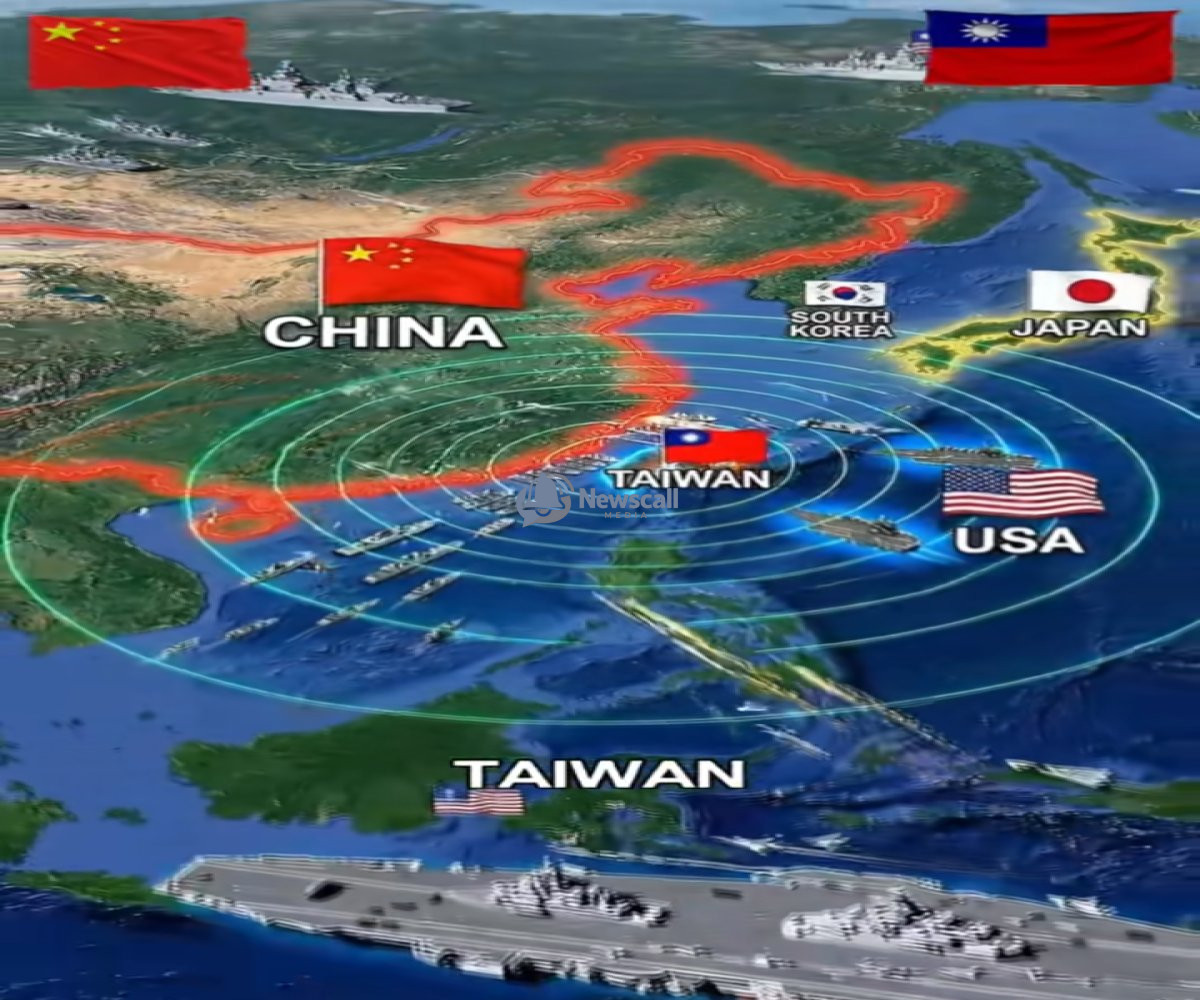
The Pentagon’s 2026 China Military Power Report warns that Beijing aims to expand its carrier fleet to nine by 2035, tripling its current strength. The Type 004 is the spearhead of this expansion, part of the largest carrier build-up since World War II.
For Washington, Tokyo, and New Delhi, the implications are stark. The Type 004’s endurance and sortie generation capacity could allow China to challenge U.S. maritime dominance in the Indo-Pacific, sustain long-range strike operations, and enforce air superiority over contested waters such as the South China Sea.
A Technological Leap
China’s transition from conventionally powered carriers (Liaoning, Shandong, and Fujian) to nuclear propulsion is a generational leap. Nuclear reactors onboard the Type 004 will provide the immense power needed to operate advanced electromagnetic catapults, radar systems, and directed-energy weapons. This positions the PLAN at the cutting edge of naval warfare technology.
Satellite imagery has already revealed reactor compartments and heavy radiation shielding integrated into the hull, confirming the nuclear design. Sea trials are projected between 2028 and 2029, with full operational deployment expected around 2030.
Global Naval Balance
The unveiling of the Type 004 is more than a milestone in Chinese shipbuilding—it is a strategic message. For the first time, Beijing is poised to field a carrier that can match or surpass U.S. supercarriers in displacement, endurance, and air wing capacity.
This development accelerates the U.S.–China rivalry at sea, raising questions about freedom of navigation, deterrence, and the future of alliances in the Indo-Pacific. It also underscores the urgency for regional powers to modernize their fleets and strengthen collective security frameworks.
Conclusion
The Type 004 nuclear carrier is not merely a ship—it is a statement of intent. It signals China’s determination to transform from a regional naval power into a global maritime force capable of projecting dominance across oceans.
As the hull takes shape in Dalian, the world watches with apprehension. The balance of naval power is shifting, and with it, the strategic calculus of the 21st century.

OKORO WILSON EGWU
“Independent journalist delivering sharp, reporting on global conflicts, humanitarian crises, and international diplomacy. Known for transforming complex world events into...