

The Bridges That Breathe: Engineering Against the Wind
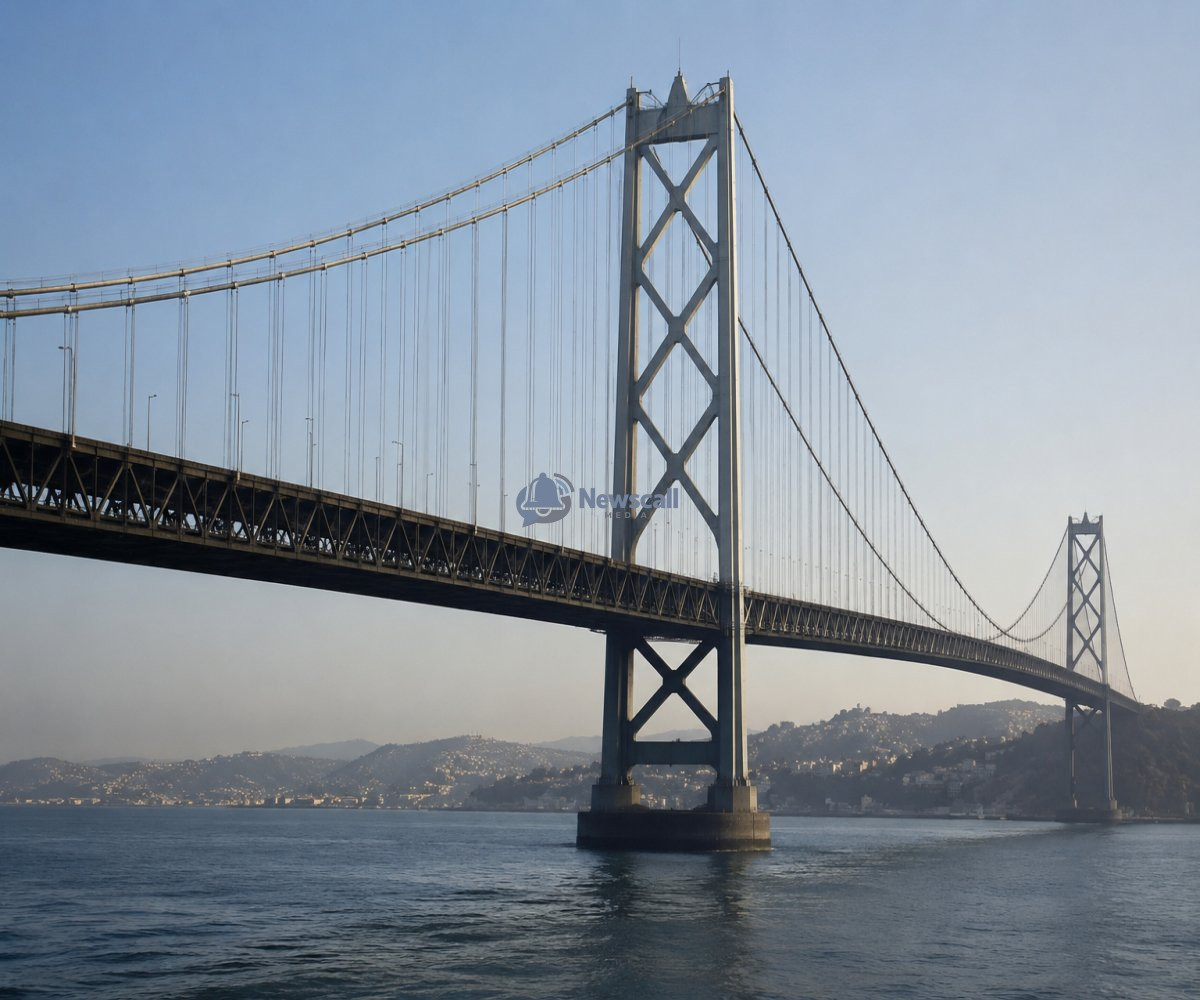
Bridges appear to be the definition of strength.
They stand firm against gravity, carry thousands of vehicles every day, and endure decades of rain, heat, and heavy loads. At first glance, it seems logical to assume that the strongest bridge is the one that moves the least.
In reality, the opposite is often true.
Some of the world's greatest bridges are designed to move.
Not because they're weak.
But because they're strong enough to bend.
Wind is one of the greatest challenges in bridge engineering. Unlike the weight of vehicles, which engineers can predict with remarkable accuracy, wind behaves differently. It changes speed, shifts direction, and creates invisible forces that can push, pull, twist, and vibrate massive structures.
If a bridge were completely rigid, those forces would build up over time, increasing stress throughout the structure. Instead of resisting every gust, engineers allow bridges to flex slightly, absorbing and dissipating energy before it becomes dangerous.
In other words, bridges "breathe."
This lesson was learned through failure.
In 1940, the Tacoma Narrows Bridge in the United States collapsed just months after opening. Strong winds caused the bridge to oscillate violently until the structure ultimately failed.
The disaster became one of the most influential events in engineering history.
It revealed that designing for weight alone wasn't enough. Engineers also had to understand how wind interacts with large structures.
Since then, bridge design has evolved dramatically.
Modern suspension and cable-stayed bridges are carefully shaped to reduce wind resistance. Their decks often feature streamlined profiles that allow air to flow smoothly around them instead of creating powerful vortices.
Before construction even begins, engineers place scale models inside wind tunnels to study how bridges respond to different wind conditions. They simulate storms, changing wind directions, and extreme weather to identify potential weaknesses long before the first beam is installed.
Some bridges even contain massive dampers—heavy mechanical devices hidden inside the structure that counter unwanted movement. As the bridge sways, these systems move in the opposite direction, reducing vibrations and improving stability.
Expansion joints provide another remarkable example of invisible engineering.
Steel and concrete expand during hot weather and contract when temperatures fall. Without room for this movement, enormous internal stresses could develop, leading to cracks or structural damage.
Those small gaps you feel while driving across a bridge aren't construction flaws.
They're carefully engineered features that allow the bridge to expand, contract, and move safely throughout the year.
The same principle applies to the bridge's supporting cables.
They aren't pulled as tightly as possible.
Instead, they're designed with precise tension that allows the structure to respond naturally to changing loads, wind, and temperature without compromising safety.
Perhaps the most fascinating part is that this movement is often measurable.
Large suspension bridges can sway several meters during powerful storms without being in danger. While the motion may seem alarming to someone standing on the bridge, it's actually evidence that the structure is behaving exactly as engineers intended.
A bridge that never moves would often be a bridge at greater risk of failure.
This reveals an important truth about engineering.
Strength isn't always about resisting every force.
Sometimes, true strength comes from knowing when to adapt.
The world's greatest bridges don't fight the wind.
They work with it.
By allowing controlled movement instead of rigid resistance, engineers have created structures capable of standing for generations while quietly carrying millions of people across rivers, valleys, and oceans.
The next time you cross a bridge, remember this:
Beneath your feet is a structure that was designed not just to stand tall, but to breathe.

Victor Oluebubechukwu Akuma.
Creative writer