

Why Skyscrapers Don't Fall When the Wind Blows
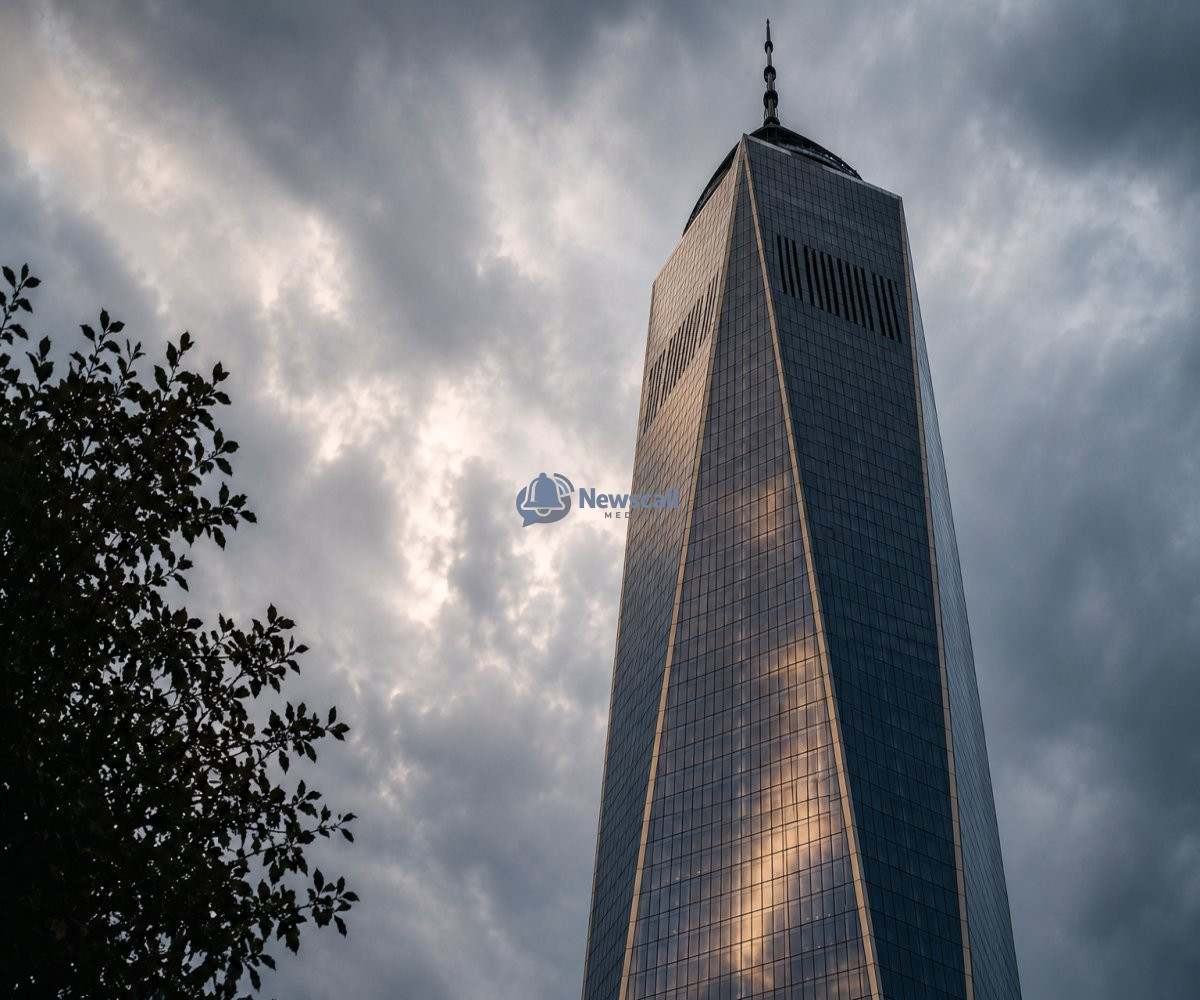
Stand at the base of a modern skyscraper and look up.
Thousands of tons of steel, concrete, and glass rise hundreds of meters into the sky. It feels immovable—like a mountain built by human hands.
But here's something that surprises most people:
Skyscrapers are designed to move.
Not because engineers expect them to fail.
Because they expect the wind to blow.
The higher a building rises, the stronger the wind becomes. At ground level, a gentle breeze may barely be noticeable. Hundreds of meters above the street, that same breeze can become a powerful force pushing relentlessly against the structure.
For a tall building, the challenge isn't simply carrying its own weight.
It's resisting millions of tiny pushes from the wind every single day.
One solution might seem obvious: make the building completely rigid.
Ironically, that would make it more dangerous.
A rigid skyscraper would absorb enormous stresses every time strong winds hit. Over time, these forces could weaken the structure and make it more vulnerable to damage.
Instead, engineers use a different approach.
They allow the building to sway.
The movement is incredibly small—usually only a few centimeters during normal conditions and perhaps a meter or two during powerful storms in the world's tallest buildings.
Most occupants never notice it.
But that gentle motion allows the building to absorb energy instead of resisting it completely.
Think of a tree during a storm.
Trees survive because they bend with the wind.
A completely rigid tree is more likely to snap.
Modern skyscrapers apply the same principle.
One of the most fascinating technologies used in supertall buildings is the tuned mass damper.
Hidden near the top of some skyscrapers is an enormous steel weight, sometimes weighing hundreds of tons. It hangs or rests on specially designed supports and moves independently from the building itself.
When strong winds push the skyscraper in one direction, the massive weight shifts in the opposite direction.
This counteracts the building's movement, reducing sway and making occupants more comfortable.
One of the world's most famous examples can be found inside Taipei 101.
Visitors can actually see the enormous golden sphere suspended between the upper floors—a giant mechanical pendulum quietly protecting one of the tallest buildings on Earth.
But dampers aren't the only secret.
The shape of a skyscraper plays a huge role in how it handles the wind.
Engineers spend months testing scale models inside wind tunnels before construction begins. By studying how air flows around different designs, they can reduce turbulence and prevent dangerous vibrations.
That's one reason many modern skyscrapers feature rounded corners, curved facades, or tapered tops.
These aren't just architectural choices.
They're engineering solutions.
The materials themselves also contribute.
Steel provides flexibility, allowing the structure to bend slightly without breaking, while reinforced concrete adds strength and stability. Together, they create buildings capable of withstanding decades of changing weather.
Even the foundations are extraordinary.
Many skyscrapers extend dozens of meters below ground, anchored to bedrock or supported by massive piles driven deep into the earth. What people see above the surface is only part of the engineering story.
Perhaps the greatest achievement is that all of this happens quietly.
Millions of people work, shop, and live inside skyscrapers every day without realizing the buildings around them are constantly responding to invisible forces.
They are flexing.
Adjusting.
Absorbing energy.
Remaining stable through engineering rather than brute strength.
The next time you stand beneath a towering skyscraper, remember this:
Its greatest strength isn't that it never moves.
It's that it knows exactly how to.

Victor Oluebubechukwu Akuma.
Creative writer