
The Greatest Engineering Achievement In Human History Isn't What You Think
Ask people to name humanity's greatest engineering achievement and you'll hear familiar answers.
The pyramids.
The Great Wall.
The internet.
Skyscrapers.
Space rockets.
All remarkable accomplishments.
Yet there is one engineering project so vast, so complex, and so essential that billions of people rely on it every day without giving it a second thought.
It isn't a building.
It isn't a machine.
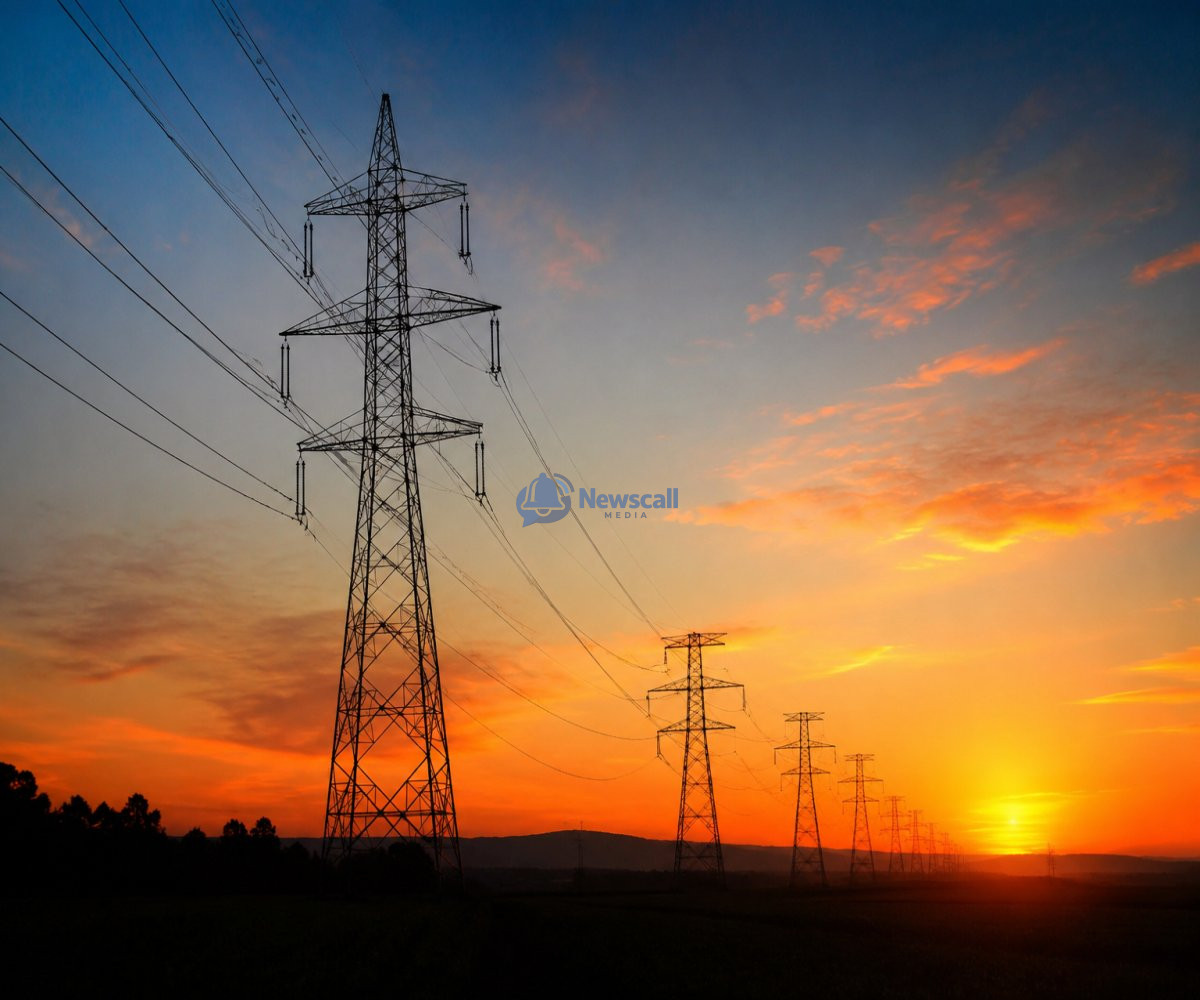
It's the electrical power grid.
The modern world runs on electricity.
That may sound obvious, but the scale of the system delivering that electricity is almost impossible to comprehend.
Every time you switch on a light, charge your phone, use Wi-Fi, watch television, refrigerate food, or power a computer, you're tapping into one of the largest engineered systems ever created.
The journey begins hundreds or even thousands of kilometers away.
Electricity generated at power plants must travel across massive networks of transmission lines, substations, transformers, monitoring systems, and distribution networks before reaching your home.
And it all has to happen instantly.
Unlike water, electricity cannot simply be stored in giant reservoirs and distributed later.
The grid must constantly balance supply and demand in real time.
Every second.
Every minute.
Every day.
If millions of people suddenly turn on air conditioners during a heat wave, the system must respond immediately.
If a power plant unexpectedly shuts down, electricity must be rerouted before outages spread.
It's a giant balancing act performed continuously across entire countries.
What makes the challenge even more remarkable is the precision involved.
In many power systems around the world, the electrical frequency must remain extremely close to either 50 or 60 hertz.
Even small deviations can damage equipment, disrupt operations, and threaten stability.
Imagine coordinating millions of devices, thousands of power stations, and countless kilometers of infrastructure while maintaining near-perfect synchronization.
That's what power grid engineers do every day.
The grid is also one of the most resilient systems humanity has ever built.
Lightning strikes transmission lines.
Storms damage infrastructure.
Equipment occasionally fails.
Yet most of the time, the lights stay on.
Automatic protection systems isolate problems before they cascade into larger failures.
Backup routes redirect electricity where it's needed.
Engineers continuously monitor the network to prevent disruptions.
Much of this happens without the public ever noticing.
Perhaps that's why the power grid rarely receives the recognition it deserves.
Its greatest success is its invisibility.
When it works, nobody thinks about it.
Only when it fails do people realize how dependent modern civilization has become on it.
Hospitals rely on it.
Factories rely on it.
Communication networks rely on it.
Water treatment facilities rely on it.
Financial systems rely on it.
Entire economies rely on it.
Remove electricity for a single day and modern life begins to slow.
Remove it for weeks and society changes dramatically.
The power grid doesn't just support civilization.
In many ways, it is civilization's backbone.
What's even more impressive is that engineers continue improving it.
Renewable energy sources are being integrated into existing networks.
Smart grids are making electricity distribution more efficient.
Advanced sensors and artificial intelligence are helping operators predict problems before they occur.
The system is evolving while continuing to serve billions of people simultaneously.
The greatest engineering achievement isn't always the most visible.
Sometimes it's the one quietly working in the background, making every other achievement possible.
The internet depends on it.
Modern medicine depends on it.
Industry depends on it.
Your daily life depends on it.
And that may be why the electrical power grid deserves a place among the greatest engineering achievements in human history.

Victor Oluebubechukwu Akuma.
Creative writer