

The Pressure Of Being SpaceX: When Success Becomes A Startup's Biggest Risk
In 2008, SpaceX was on the verge of collapse.
Three rocket launches had failed.
Money was running out.
Investors were nervous.
Employees were exhausted.
The company had enough funding for what was essentially one final attempt.
If the next launch failed, SpaceX might not survive.
Today, that story sounds almost impossible to believe.
SpaceX is now one of the most valuable private companies in the world.
Its rockets routinely carry astronauts into space.
Its Starlink satellites provide internet access across the globe.
Its launches dominate the commercial space industry.
And its founder, Elon Musk, is one of the most recognized figures on the planet.
From the outside, it looks like the startup dream.
A company that conquered impossible odds and changed an entire industry.
But success creates a problem few people talk about.
The higher a startup climbs, the more dangerous success becomes.
And no modern company illustrates this better than SpaceX.
For most startups, the biggest challenge is survival.
For SpaceX, survival is no longer the issue.
The challenge now is expectation.
Every successful startup begins by solving a problem.
SpaceX wanted to reduce the cost of reaching space.
At the time, launching rockets was incredibly expensive.
Many experts believed reusable rockets were unrealistic.
The common assumption was simple.
A rocket was like a disposable airplane.
You used it once and then threw it away.
Imagine buying a new passenger jet after every flight.
That would be absurd.
Yet that was essentially how the space industry operated.
SpaceX changed the equation.
By successfully landing and reusing rocket boosters, the company dramatically reduced launch costs.
What once seemed impossible became routine.
Rocket landings that captivated the world eventually became so common that people stopped being surprised.
This achievement transformed SpaceX from a risky startup into a global powerhouse.
But success created a new problem.
Now the world expects miracles.
A typical startup gets credit for solving one difficult problem.
SpaceX solved several.
As a result, people began expecting the company to solve every problem.
Launch rockets.
Build a global satellite internet network.
Carry astronauts.
Supply space stations.
Develop the most powerful rocket ever built.
Establish a human presence on Mars.
Revolutionize telecommunications.
Create the future of space travel.
For most organizations, accomplishing even one of these goals would define an entire generation.
For SpaceX, they became expectations.
And expectations can be dangerous.
The larger a company becomes, the less room it has for mistakes.
When a small startup experiences a setback, few people notice.
When SpaceX experiences a setback, the entire world watches.
A delayed launch becomes international news.
A failed test flight dominates headlines.
A technical issue sparks endless discussion online.
The spotlight never turns off.
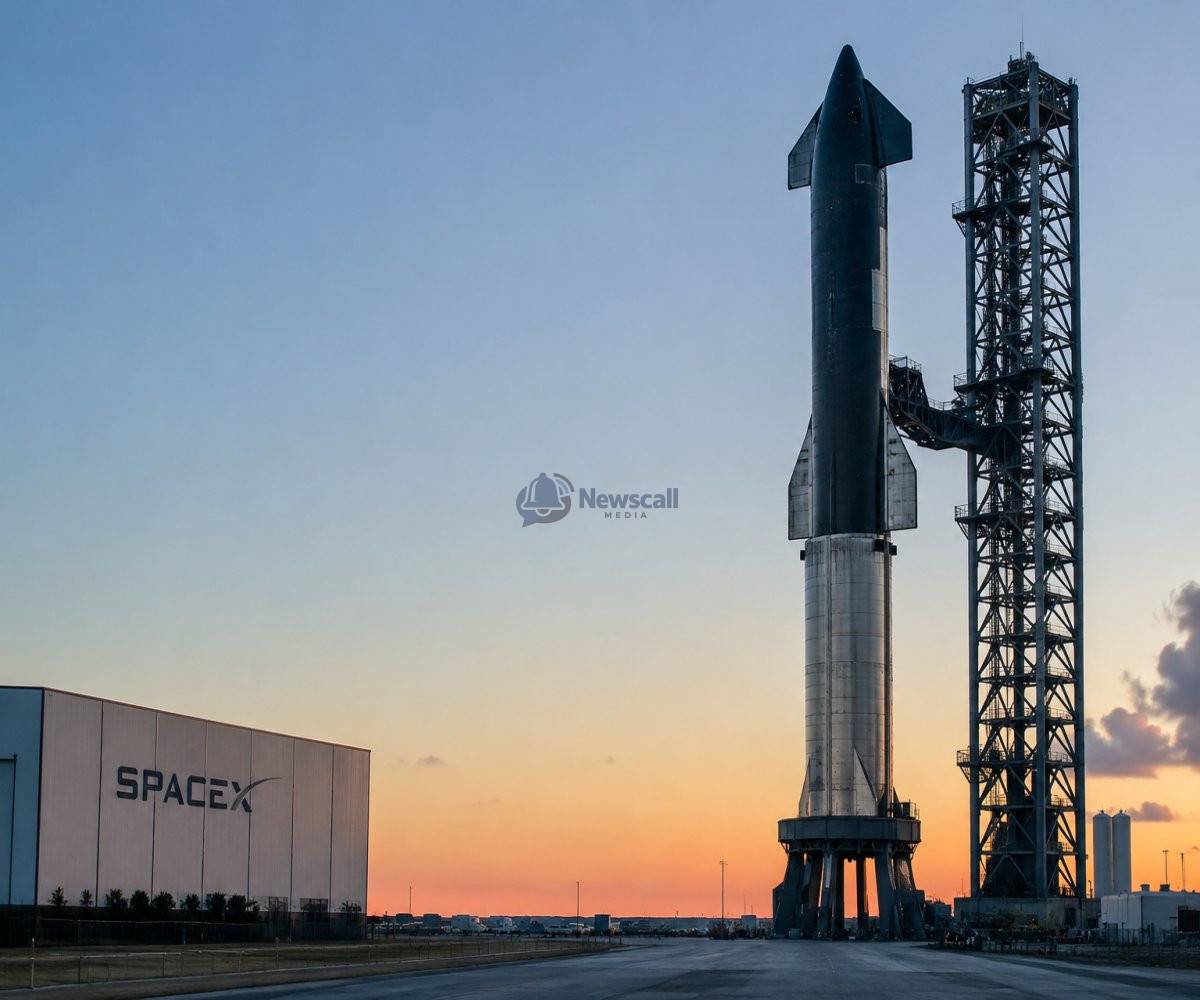
This pressure becomes especially visible in the development of Starship.
Starship is the largest and most powerful rocket ever built.
If successful, it could dramatically reduce the cost of deep-space exploration.
It could enable larger satellite deployments.
It could support lunar missions.
It could even become humanity's primary vehicle for reaching Mars.
But developing a machine of this scale is incredibly difficult.
Failures are expected.
Engineers learn from explosions.
Designs evolve through testing.
Aerospace history is filled with prototypes that failed before succeeding.
The challenge for SpaceX is that every test happens under global scrutiny.
Millions of people watch.
Investors analyze results.
Critics highlight failures.
Supporters celebrate progress.
Every launch becomes both an engineering experiment and a public spectacle.
Few startups face that level of attention.
Success also creates financial pressure.
As a company's valuation rises, expectations rise with it.
Investors don't simply evaluate what a company has accomplished.
They evaluate what it might accomplish next.
This creates a dangerous cycle.
The more successful a company becomes, the more future success becomes priced into its value.
At some point, extraordinary achievements become ordinary expectations.
Imagine launching rockets more frequently than entire countries.
A decade ago, that would have seemed unbelievable.
Today, many people simply expect SpaceX to continue doing it.
The company becomes a victim of its own success.
Achievements that would make headlines for any competitor become routine.
The bar keeps moving higher.
Competition presents another challenge.
SpaceX currently leads the commercial space industry in many areas.
But leadership attracts rivals.
Governments are investing heavily in space programs.
Private companies are building new launch vehicles.
Emerging startups are pursuing reusable rockets, satellite networks, and lunar technologies.
History shows that dominant companies rarely remain unchallenged forever.
Success paints a target on your back.
Every industry leader eventually faces competitors determined to replace them.
Perhaps the greatest risk, however, isn't technical or financial.
It's cultural.
Many companies become less innovative after achieving success.
Processes multiply.
Bureaucracy grows.
Decision-making slows.
Risk-taking decreases.
The qualities that helped build the company begin fading.
This phenomenon has affected countless organizations throughout history.
Former innovators became defenders of the status quo.
Former disruptors became the disrupted.
The challenge for SpaceX is avoiding that fate.
Can a company remain hungry after becoming one of the most valuable startups on Earth?
Can it continue taking risks when so much is already at stake?
Can it preserve the mindset of a startup while operating on a global scale?
Those questions may determine its future more than any single rocket launch.
Ironically, the greatest threat facing SpaceX today may not be a competitor, a technical challenge, or a lack of funding.
It may be the weight of its own success.
Because success changes the rules.
When SpaceX was struggling to survive, expectations were low.
People hoped it would succeed.
Now expectations are almost impossibly high.
People expect it to reshape humanity's future.
That is a much heavier burden.
The story of SpaceX is often told as a story of engineering brilliance.
And it is.
It's a story of reusable rockets, ambitious missions, and technological breakthroughs.
But it's also a story about what happens when a startup becomes so successful that the world begins expecting the impossible.
The journey from startup to industry leader is difficult.
Staying there may be even harder.
Because in business, as in spaceflight, reaching orbit is only half the challenge.
The real test is what comes next.

Victor Oluebubechukwu Akuma.
Creative writer