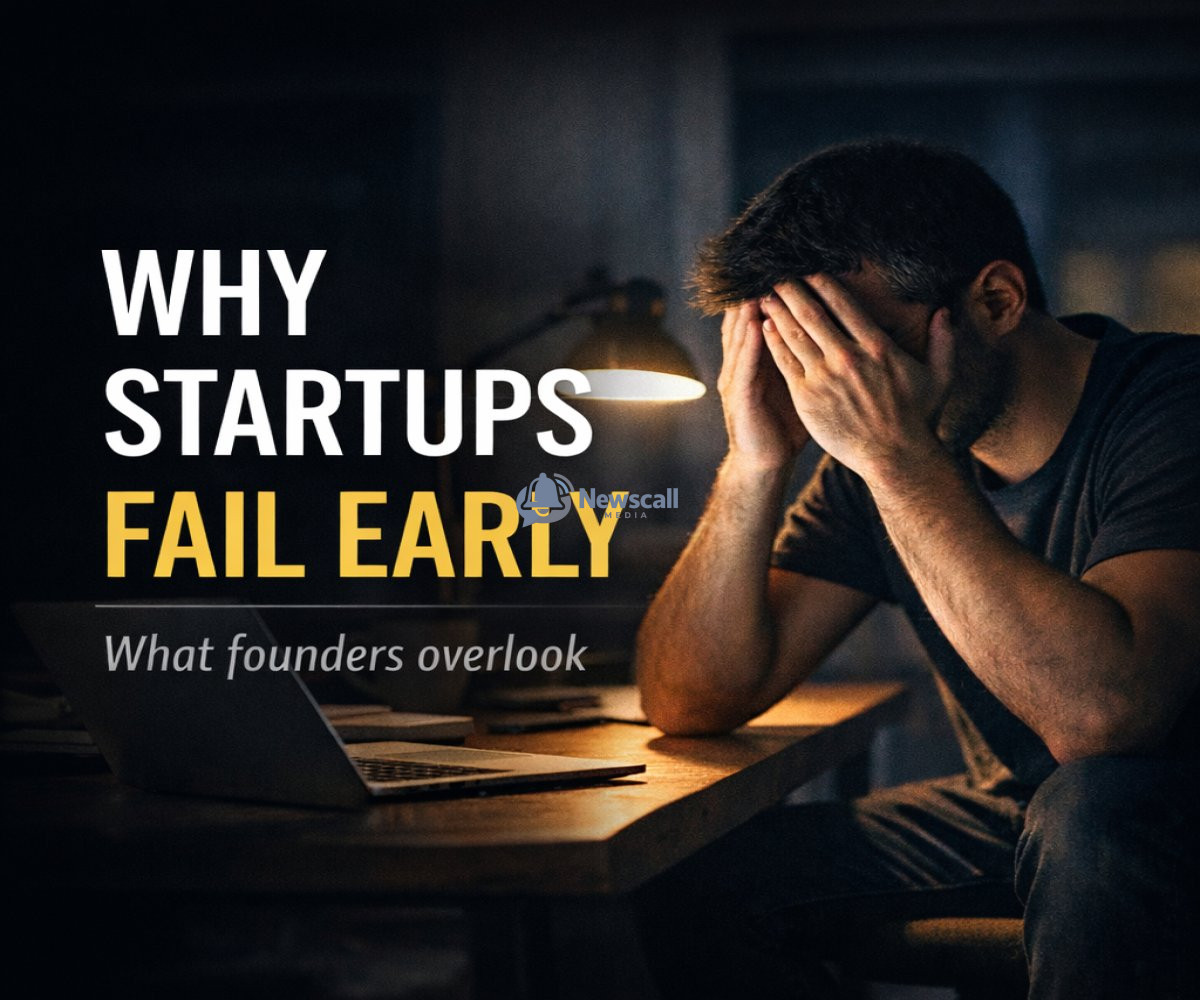


The Pressure to Succeed Early: When Young Founders Start Feeling Late Too Soon

There was a time when building a startup was seen as a long game.
You learned.
You experimented.
You failed quietly.
Then, over time, something worked.
That timeline is changing.
Today, success stories move faster — or at least, they appear to. A new founder raises funding at 20. Another sells a company before 25. Social feeds are filled with milestones that once took years, now compressed into months.
At first, it feels motivating.
But for many young founders, it creates something else.
A quiet, persistent feeling that they are already behind.
«│ “You haven’t even started late — but somehow, it already feels like you did.”»
The pressure doesn’t come from one place. It builds gradually, shaped by constant exposure to other people’s progress. Every announcement, every success story, every “we just launched” post adds to a growing sense of urgency.
And over time, that urgency becomes expectation.
It’s no longer just about building something meaningful. It’s about building it quickly. Reaching milestones early. Proving progress in visible ways.
But what’s often missing from that picture is context.
Most of what is seen publicly is the outcome — not the process.
The failed ideas that came before.
The months of uncertainty.
The pivots that didn’t get announced.
Without that context, success begins to look immediate, even when it isn’t.
And that’s where the pressure becomes dangerous.
Some founders begin to rush decisions. They launch before they’re ready. Scale before their foundation is stable. Prioritize visibility over sustainability — not because it’s the best strategy, but because slowing down feels like falling behind.
In reality, the opposite is often true.
The startups that last are rarely the fastest at the beginning. They are the ones that take time to understand what they’re building, who they’re building for, and how to grow without breaking what already works.
The environment is also shifting in ways that reinforce this.
Investors are becoming more selective. Growth alone is no longer enough. There’s increasing focus on fundamentals — revenue, retention, and real value. That shift quietly rewards founders who build carefully, not just quickly.
Which creates a contradiction.
The outside world celebrates speed.
But long-term success still depends on patience.
For young founders, navigating this requires more than ambition. It requires perspective — the ability to separate real progress from visible progress.
Because not every milestone needs to be immediate.
Not every journey needs to look fast.
And not every delay is a setback.
The idea of being “late” has less to do with time, and more to do with comparison. It exists when progress is measured against someone else’s timeline — a timeline that is often incomplete, curated, or simply different.
The truth is simpler.
Building something meaningful has never had a fixed schedule.
And starting early doesn’t mean rushing the process.
It means having the time to build it right.

Victor Oluebubechukwu Akuma.
Creative writer