

The Rise of Solo Founders: Can One Person Really Build a Startup?
Not long ago, building a startup was considered a team sport.
You needed co-founders, engineers, designers, marketers — a full structure before anything could even begin.
That idea is quietly changing.
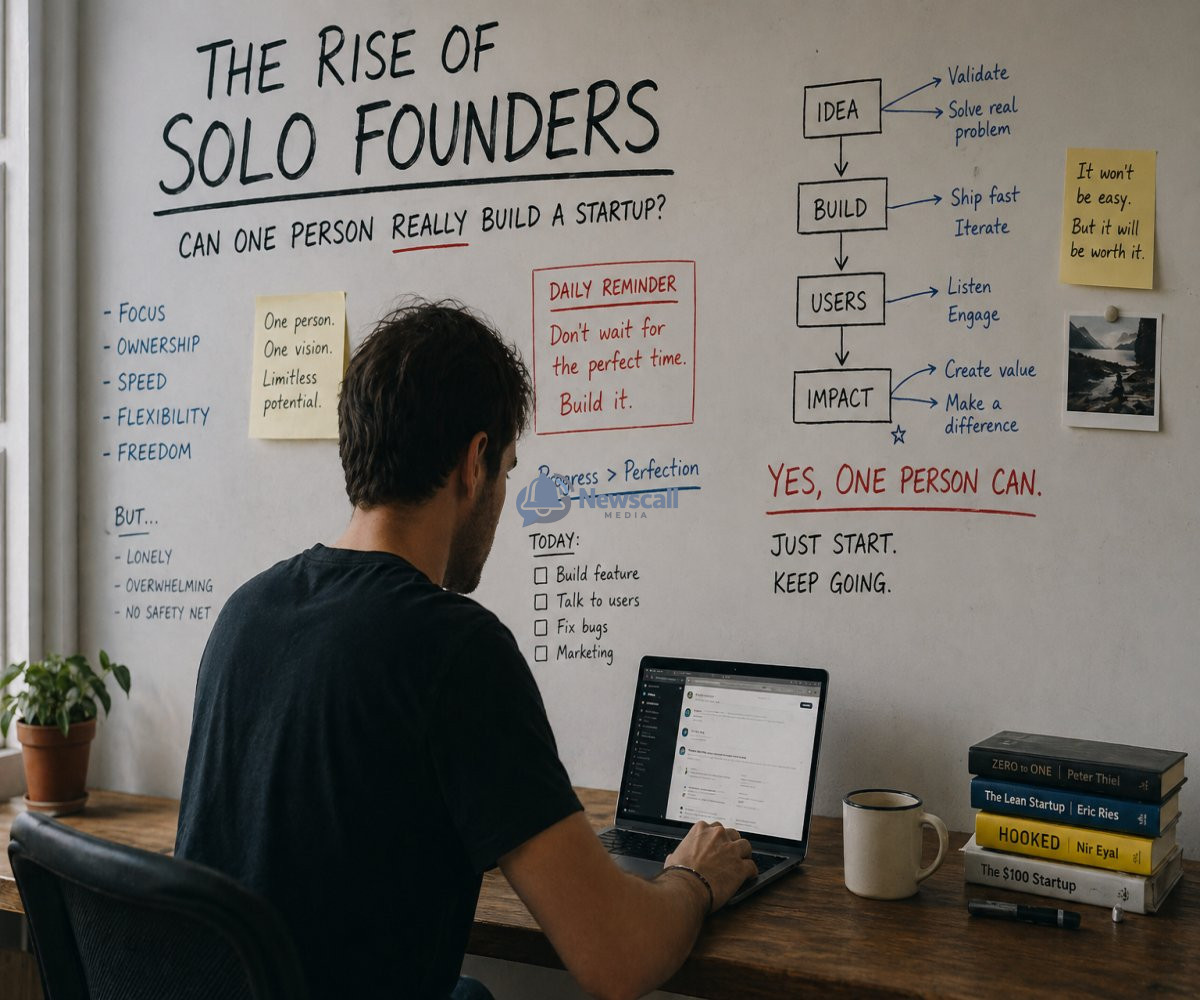
Across the startup world, a new pattern is emerging: founders building companies alone, or starting with minimal teams and expanding only when necessary. These are now being referred to as “solo founders.”
The shift is being driven by access.
Access to tools.
Access to AI.
Access to distribution channels that didn’t exist a decade ago.
Today, a single founder can design a product, write code, market it, and even handle customer feedback using automation and digital tools. What once required a full team can now be started — at least — by one person.
This is changing how startups begin.
Instead of waiting to assemble a team, many founders now launch first and build support later. The focus has moved from structure to speed, from planning to execution.
But the model also comes with limits.
Building alone means carrying full responsibility — product decisions, execution pressure, and strategic direction all rest on one person. Without early support systems, the risk of burnout and slow scaling increases.
Still, the appeal is strong.
For many young builders, solo founding represents control. No disagreements between co-founders. No delays in decision-making. No dependence on others to start.
And in a world where speed often matters, that independence is attractive.
Some of today’s fastest-growing startups actually began this way — with one person validating an idea before gradually expanding the team once traction was clear.
The pattern suggests something important:
Startups may no longer need to begin with teams.
But they still need teams to scale.
So the real question is not whether one person can build a startup.
It’s how far they can go before needing others to take it further.
Because while solo founders are rising, the complexity of growth has not disappeared.
It has simply been delayed.

Victor Oluebubechukwu Akuma.
Creative writer