

"Shadows of Division: Xenophobia Returns to South Africa’s Streets"
Pretoria and Johannesburg are once again gripped by fear and fury as a wave of xenophobic violence spreads through townships and city centers. African migrants are being hunted, schools stormed, and businesses shuttered—an ugly reminder of a crisis South Africa has never fully exorcised.
Escalation of Violence
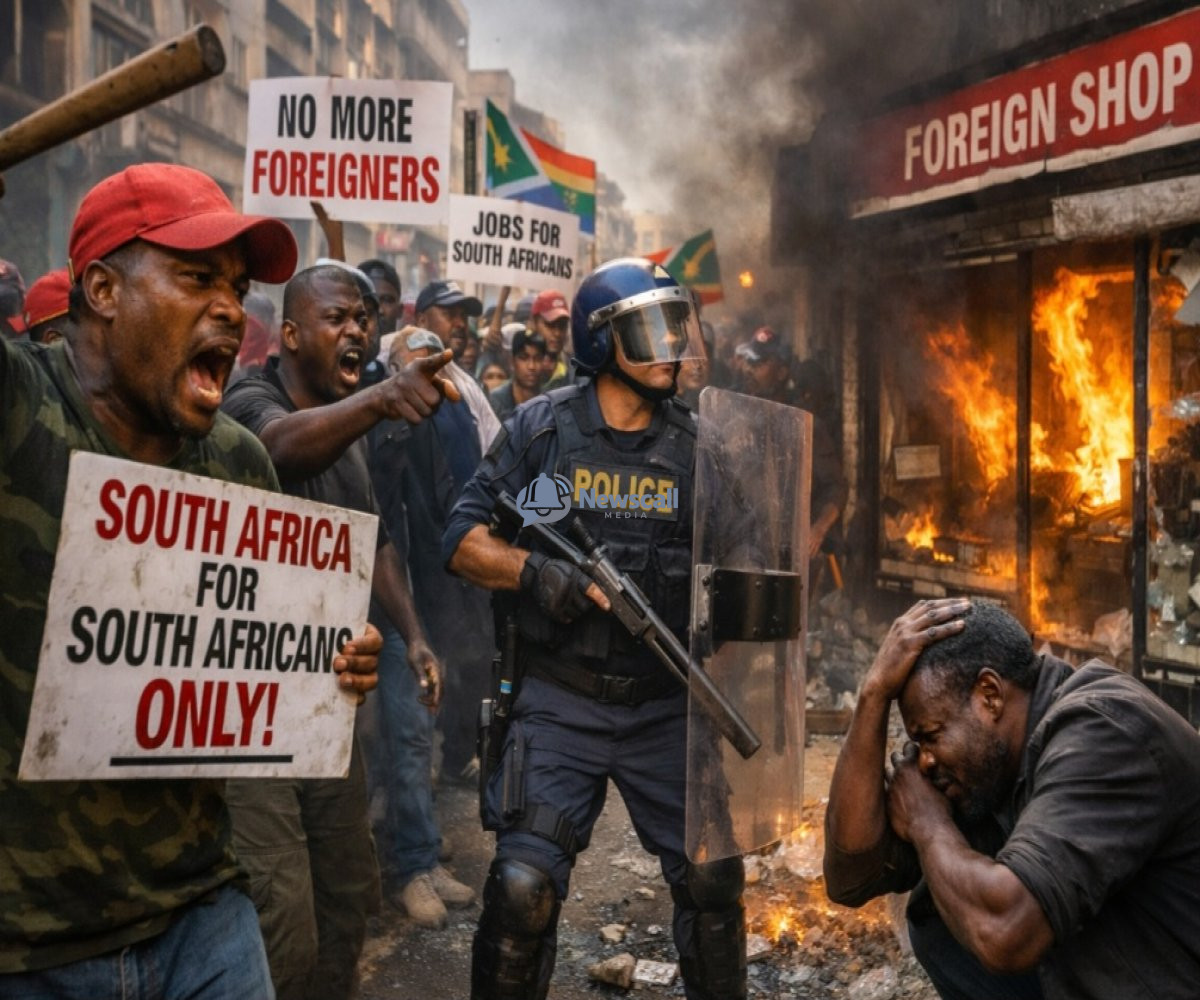
Over the past week, vigilante groups such as Operation Dudula have led anti‑immigration marches through Pretoria and Johannesburg, targeting foreign‑owned shops and even classrooms. Witnesses describe mobs forcing entry into schools, demanding the removal of “foreign children.”
Police have confirmed multiple assaults and arson attacks. In one of the most chilling incidents, an Ethiopian national was executed in broad daylight, while Nigerian traders were beaten and threatened with death if they reopened their stalls. The violence has prompted community leaders to urge migrants to stay indoors until calm returns.
Politics and the Weaponization of Anger
Analysts warn that xenophobia is being politically weaponized ahead of South Africa’s November 2026 local elections. With unemployment hovering near 33 percent, populist rhetoric blaming migrants for job scarcity has gained traction.
“Politicians are exploiting frustration,” says Dr. Nomsa Mthembu, a sociologist at the University of the Witwatersrand. “They’re turning economic pain into ethnic hostility. It’s a dangerous game that risks tearing communities apart.”
Operation Dudula, which began as a grassroots movement in Soweto, has evolved into a national network with political ambitions. Its leaders claim they are “defending South African jobs,” but rights groups accuse them of inciting violence and spreading misinformation about migrants.
Regional and Continental Fallout
The unrest has reverberated across Africa. Nigeria and Ghana have advised their citizens to close businesses and remain indoors. Nigeria’s foreign ministry has demanded swift prosecutions and a public condemnation of xenophobia from Pretoria.
The African Commission on Human and Peoples’ Rights issued a statement calling the attacks “a grave violation of human rights” and urging South Africa to dismantle vigilante groups. “The continent cannot afford to normalize hatred among Africans,” the Commission warned.
A Painful History Repeating
South Africa has faced waves of xenophobic violence before—most notably in 2008, 2015, and 2019, when dozens were killed and thousands displaced. Each time, promises of reform faded as economic hardship deepened.
Migrants from Zimbabwe, Mozambique, Malawi, and Nigeria continue to play vital roles in construction, retail, and healthcare. Yet they remain scapegoats for systemic failures—poverty, inequality, and corruption—that transcend nationality.
The Human Toll
In Johannesburg’s Yeoville district, a Nigerian shopkeeper named Chinedu Okeke described watching his store burn. “We came here to work, not to fight,” he said. “But every election season, they turn on us again.”
Community organizations are calling for dialogue and accountability, urging the government to prosecute perpetrators and launch public education campaigns against xenophobia.
Conclusion
The resurgence of xenophobic violence in South Africa is more than a domestic crisis—it is a continental wound reopening. As the nation approaches another election, its leaders face a stark choice: confront the politics of hate or allow fear to define its democracy.
Until that choice is made, the streets of Pretoria and Johannesburg will remain uneasy, and the dream of African unity will flicker in the shadow of division.

OKORO WILSON EGWU
“Independent journalist delivering sharp, reporting on global conflicts, humanitarian crises, and international diplomacy. Known for transforming complex world events into...