


The Science Behind Computer Chips
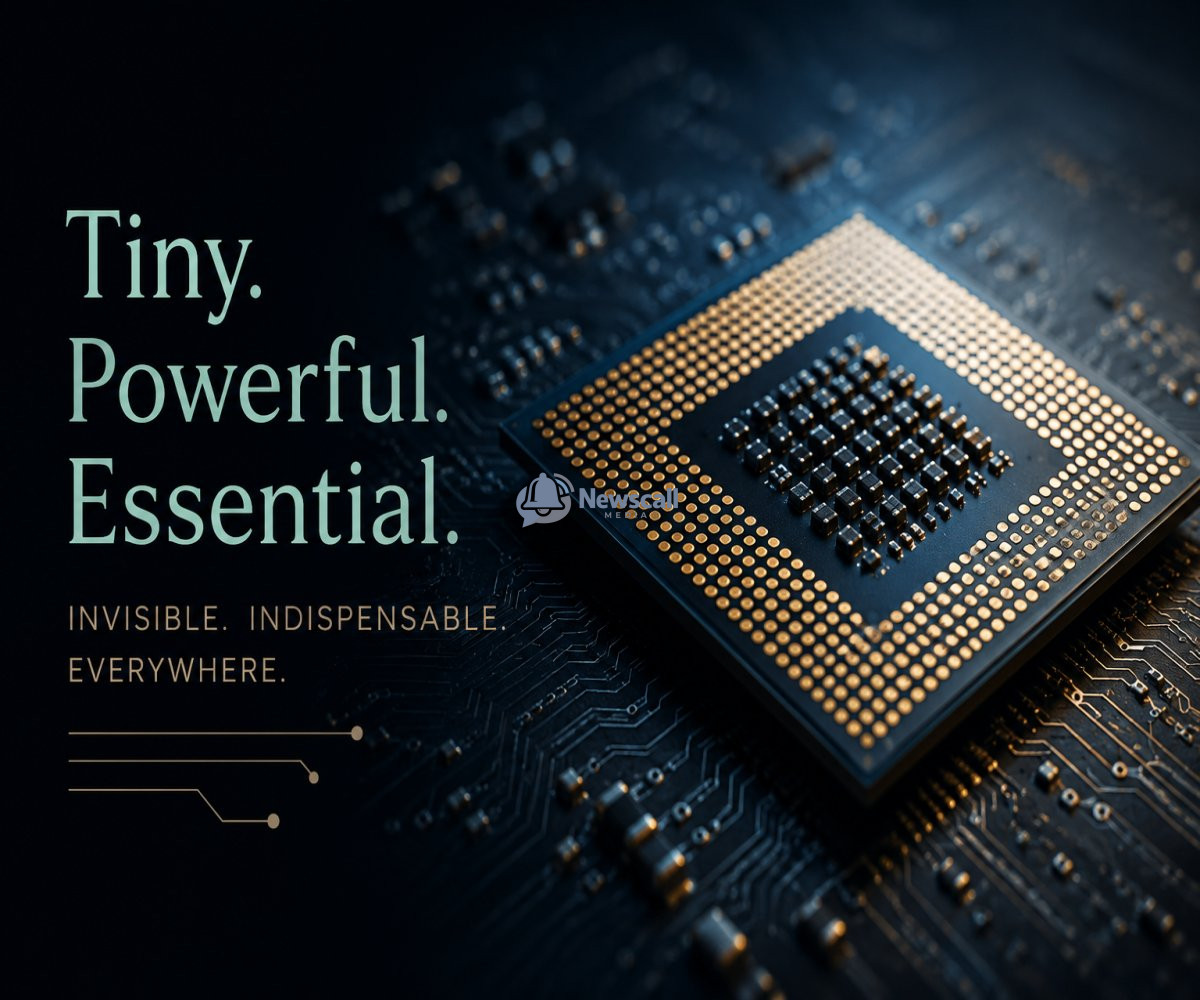
Every text message, video stream, online payment, and AI-generated response relies on a tiny piece of technology that most people never see: the computer chip. Often no larger than a fingernail, these microscopic devices power smartphones, laptops, cars, satellites, and even modern medical equipment. Without them, the digital world would simply not exist.
At their core, computer chips are designed to process information. They are made from semiconductors, materials that can either conduct or block electricity depending on specific conditions. Silicon, derived from ordinary sand, is the most commonly used semiconductor and forms the foundation of nearly every modern chip.
The secret behind a chip's power lies in billions of microscopic switches known as transistors. A transistor acts like a tiny gate that controls the flow of electricity. When electricity passes through, it represents a binary "1." When it does not, it represents a binary "0." By combining billions of these ones and zeros, chips can perform calculations, store information, display graphics, and run software.
Creating a computer chip is one of the most complex manufacturing processes ever developed. Engineers begin with a highly purified silicon wafer, a thin circular slice of silicon. Using a technique called photolithography, they project intricate patterns onto the wafer using ultraviolet light. These patterns create the microscopic circuits that eventually become transistors and other components.
The scale involved is almost impossible to imagine. Modern processors contain tens of billions of transistors packed into an area smaller than a postage stamp. Some of these transistors are measured in nanometers, a unit so small that thousands could fit across the width of a human hair.
As technology advances, manufacturers continuously strive to make transistors smaller. Smaller transistors allow more computing power to fit into the same space while consuming less energy. This trend, commonly associated with Moore's Law, has driven decades of technological progress, enabling devices to become faster, smarter, and more efficient.
Different types of chips serve different purposes. Central Processing Units (CPUs) handle general computing tasks and act as the brain of a computer. Graphics Processing Units (GPUs) specialize in handling visual data and have become essential for artificial intelligence. Memory chips store information, while specialized chips manage tasks ranging from wireless communication to vehicle navigation systems.
Today, computer chips have become one of the world's most strategically important technologies. Nations and corporations invest billions of dollars into semiconductor research because chips power everything from smartphones and cloud computing to defense systems and artificial intelligence. The global competition to design and manufacture advanced chips has become a race that could shape the future of technological leadership.
Perhaps the most remarkable aspect of computer chips is that they are built from one of Earth's most common materials: sand. Through decades of scientific innovation, engineers have transformed silicon into the foundation of modern civilization. Every click, search, message, and digital interaction depends on billions of microscopic transistors working together at incredible speeds.
In many ways, the story of computer chips is the story of modern technology itself—a tale of physics, engineering, and human ingenuity condensed into a device small enough to fit in the palm of your hand.

Victor Oluebubechukwu Akuma.
Creative writer