When Glass Became Stronger Than Steel
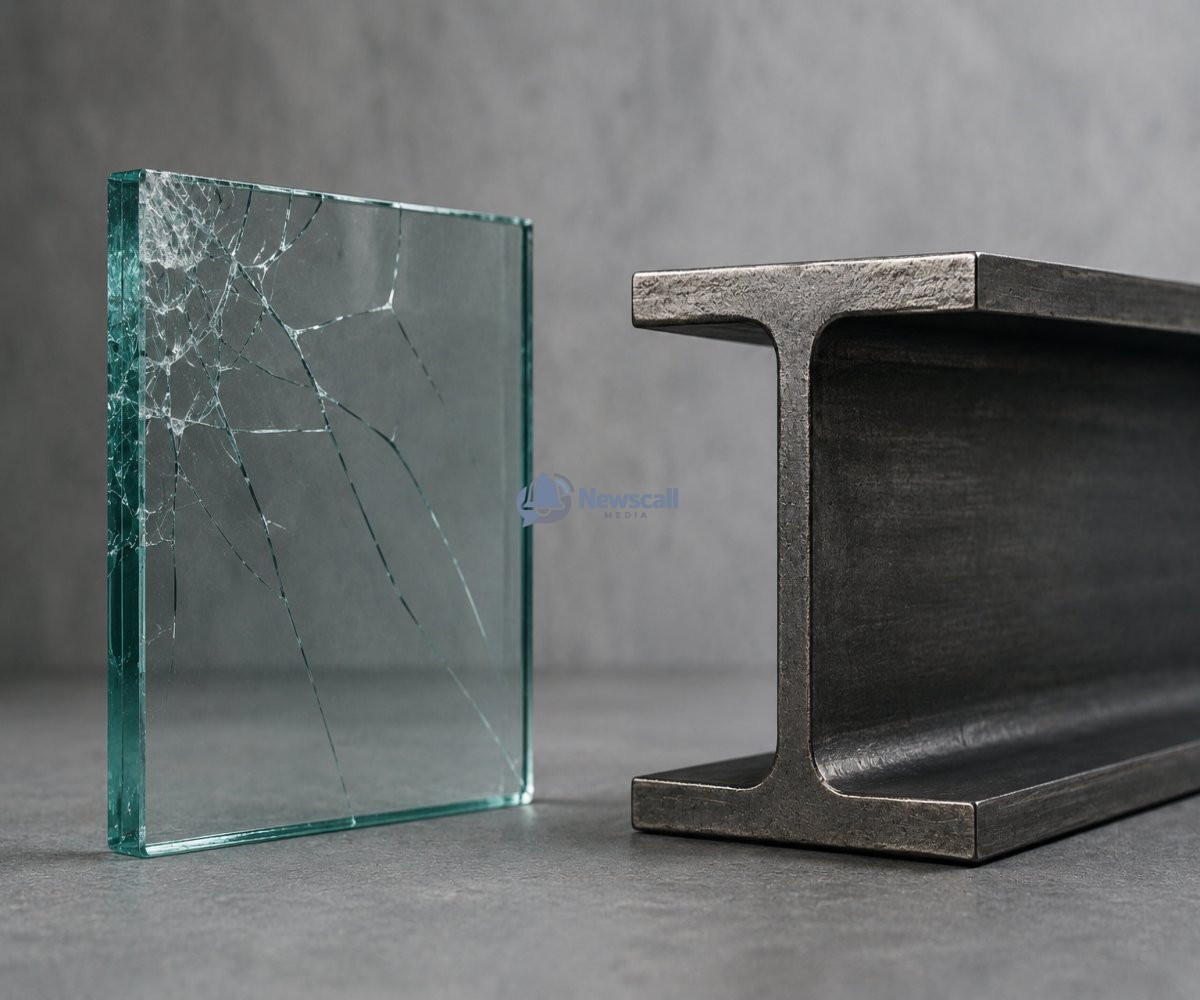
Glass has always seemed fragile.
Drop a drinking glass, and it shatters.
A stone can crack a window.
A single mistake during transport can turn an entire sheet of glass into thousands of tiny fragments.
For centuries, glass was associated with beauty, transparency, and fragility.
Strength belonged to steel.
Or so we thought.
Today, engineers have developed forms of glass so strong that, in certain applications, they can outperform steel. This remarkable transformation has redefined what one of humanity's oldest materials is capable of achieving.
The story begins with an important lesson in materials science.
Strength doesn't always mean hardness.
A material can be extremely hard but still break easily if it's brittle. The real challenge is creating something that can resist both force and fracture.
For decades, scientists searched for ways to make glass tougher without sacrificing its transparency.
The breakthrough came through a process known as tempering.
Instead of changing what glass is made of, engineers changed how it cools.
By rapidly cooling the outer surface while the interior remains hot, permanent compressive stresses are created on the surface. Since cracks usually begin at the surface, these stresses make it much more difficult for cracks to form and spread.
The result is tempered glass.
Compared to ordinary glass, it is several times stronger and far more resistant to impact.
Even when it finally breaks, it shatters into small, blunt pieces instead of dangerous razor-sharp shards, making it much safer for everyday use.
But engineers didn't stop there.
Another innovation, chemically strengthened glass, pushed the limits even further.
Instead of using temperature alone, manufacturers immerse the glass in a bath of molten potassium salts.
Larger potassium ions replace smaller sodium ions near the surface, creating powerful compressive forces that dramatically increase strength.
This process gave rise to ultra-durable glass used in smartphones, tablets, smartwatches, and countless electronic devices.
Every time you accidentally drop your phone and the screen survives, you're benefiting from decades of research in materials engineering.
Perhaps the most famous example is Gorilla Glass.
Designed to be thin, lightweight, and highly resistant to scratches and impacts, it protects billions of devices around the world.
Without these advances, modern smartphones would be far more fragile than they are today.
Glass has also become an essential structural material.
Walk into a modern airport, shopping mall, or skyscraper, and you'll likely see enormous glass walls stretching from floor to ceiling.
These aren't ordinary windows.
They're carefully engineered laminated panels made by bonding multiple layers of glass with strong polymer films.
Even if one layer cracks, the others remain intact, preserving the structure and protecting the people inside.
Some bridges now feature glass walkways capable of supporting hundreds of visitors at once.
Observation decks use thick laminated glass floors that allow people to stand hundreds of meters above the ground with confidence.
In these situations, glass isn't simply decorative.
It's carrying real loads.
Scientists are also developing entirely new types of glass.
Some experimental glasses are designed to heal microscopic damage before cracks can spread.
Others combine exceptional strength with remarkable flexibility.
Researchers continue exploring transparent materials that could one day be used in advanced vehicles, spacecraft, and next-generation architecture.
So, has glass truly become stronger than steel?
The answer depends on what you're measuring.
Steel remains superior in many areas, especially when it comes to handling heavy structural loads and repeated deformation.
However, certain modern glasses possess greater surface strength, exceptional scratch resistance, and impressive compressive performance that exceed many common steels in specific applications.
Rather than replacing steel, glass has evolved into a complementary engineering material, capable of doing things steel never could.
It lets sunlight illuminate entire skyscrapers.
It protects the devices we carry every day.
It enables breathtaking architectural designs that once seemed impossible.
The greatest innovations don't always come from inventing entirely new materials.
Sometimes they come from looking at an ancient material and asking one simple question:
"What if it could do more?"
That's exactly how glass became one of the most extraordinary engineering materials of the modern age.

Victor Oluebubechukwu Akuma.
Creative writer