Adobe Enters a New Era After 18 Years as AI Pressure Mounts
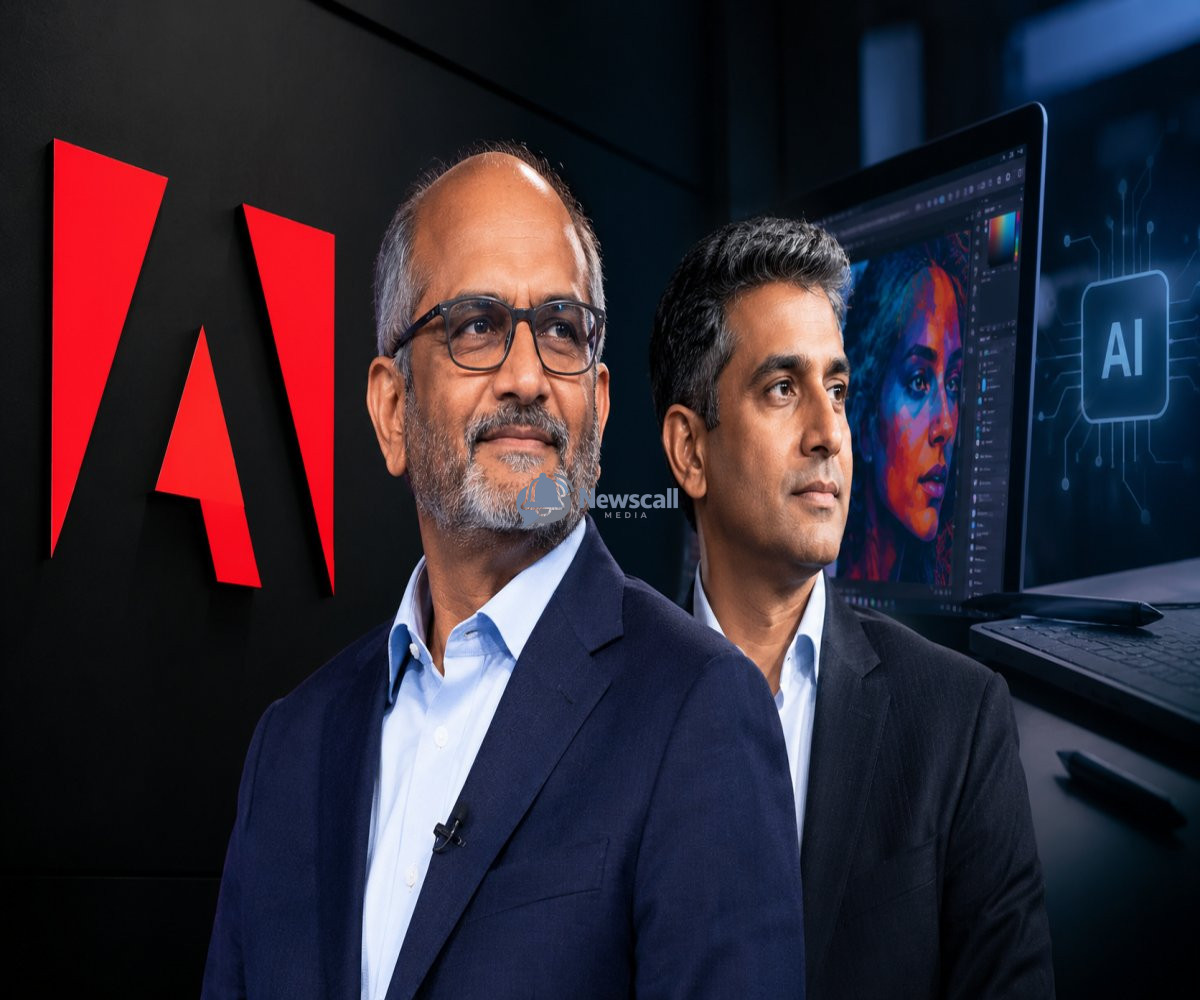
For nearly two decades, Shantanu Narayen was the person at the center of Adobe's transformation from a traditional software company into one of the world's most important creative technology platforms.
Now, that era is coming to an end.
Adobe has announced that Anil Chakravarthy will become its new president and CEO on December 1, 2026, replacing Narayen after more than 18 years in the role. Narayen will move into the position of executive chair and remain closely involved in the company during the transition.
The timing is difficult to ignore.
Adobe is changing leadership at a moment when artificial intelligence is fundamentally changing the creative-software industry. Tools that once required years of professional training can now generate images, edit video, design layouts and perform increasingly sophisticated creative tasks through simple instructions.
For a company whose products have defined digital creativity for decades, that isn't just another technological shift.
It is a challenge to the foundation of its business.
Narayen became Adobe's CEO in December 2007. Under his leadership, the company went through one of the biggest transformations in its history, most notably moving its core software business from traditional packaged products toward a subscription-based model.
Adobe grew from roughly 3,000 employees when Narayen became CEO to more than 30,000, while annual revenue expanded from less than $1 billion to more than $25 billion, according to Narayen's own account when he announced his planned transition in March.
That transformation helped turn products such as Photoshop, Illustrator and Acrobat into recurring software services used by millions of people and businesses.
But the world that Adobe dominated is changing.
Generative AI has dramatically lowered the barrier to producing visual content. A person who may never have opened Photoshop can now describe an image and have an AI system create it. AI can remove objects, extend images, generate video, rewrite text, alter designs and increasingly perform tasks that once required multiple creative applications.
At the same time, Adobe faces competition from companies such as Canva and Figma, which have built simpler, more collaborative and increasingly AI-powered approaches to design. Reuters reported that Adobe's shares had fallen about 18% in 2026 as investors worried about the impact of AI-driven competition on its business.
Yet Adobe isn't standing still.
The company has spent years integrating AI into its products through Firefly and other AI-powered features. In March, Adobe announce itd a partnership with NVIDIA to develop next-generation Firefly models and AI-powered creative and marketing workflows.
It has also been pushing beyond traditional creative software.
Adobe's newer AI systems increasingly aim to automate entire workflows rather than simply add an AI button to an existing application. Its CX Enterprise platform, for example, is designed around agentic AI that can perform tasks across customer-experience workflows, while Adobe Brand Visibility was created to help companies understand how they appear across AI-powered search and discovery systems.
That makes the choice of Chakravarthy particularly interesting.
He isn't coming into the job as an outsider who needs to learn Adobe's AI strategy from scratch.
Chakravarthy joined Adobe in 2020 after previously serving as CEO of enterprise cloud-data company Informatica. At Adobe, he has led its Digital Experience business and worldwide field operations, and he has been involved in products including GenStudio, Adobe CX Enterprise and Brand Visibility. Adobe says his work has helped turn its customer-experience business into a major AI-driven platform.
He therefore represents something important about Adobe's next chapter.
The company isn't abandoning its software heritage.
It is trying to rebuild that heritage around AI.
Chakravarthy himself described his incoming role as an opportunity to lead Adobe into an era of "agentic software" for creativity, productivity and customer experience.
That could be the real story behind this leadership change.
For years, Adobe's advantage came from owning some of the most powerful tools used by professional creators. The future may depend on whether those tools can evolve into intelligent systems that don't simply wait for users to operate them, but actively help them accomplish entire projects.
Imagine the difference.
Photoshop gave you the tools to manipulate an image.
An AI-native Photoshop could understand what you're trying to accomplish and execute much of the process for you.
Premiere gave you the tools to edit video.
An AI-native video workflow could understand a story, identify the best footage, create versions for different platforms and handle much of the repetitive production work.
That is a much bigger change than simply adding generative AI to existing applications.
It changes what creative software itself means.
And Adobe has to make that transition without destroying the thing that made its products valuable in the first place: professional control, precision and trust.
That balance may define Chakravarthy's tenure.
The leadership transition also comes with another significant change. David Wadhwani, who led Adobe's Creative Cloud business, is departing the company. His exit adds another layer of uncertainty around the direction of Adobe's creative business at a time when AI is rapidly changing how people create.
Still, Narayen's departure isn't a complete break.
He will remain as executive chair, and Adobe says he will work closely with Chakravarthy to ensure a smooth transition and support the company's transformation.
That matters because Adobe isn't simply searching for a new CEO.
It is preparing for a different technological era.
The first great transformation of Narayen's tenure was moving software from something people bought once into something they continuously subscribed to.
His successor now faces another transformation: turning software that people operate into software that increasingly works alongside them.
AI has already changed the creative industry.
Now it is forcing Adobe to change with it.
After 18 years, Shantanu Narayen is stepping away from the CEO role. But the more important question isn't who replaces him.
It is whether Adobe can remain the company that defines creativity when the tools themselves are beginning to think.

Victor Oluebubechukwu Akuma.
Creative writer