

Court Slams N110bn Lawmakers’ Luxury Spending, Declares National Assembly Vehicle, Allowance Budget Illegal.

Court Slams N110bn Lawmakers’ Luxury Spending, Declares National Assembly Vehicle, Allowance Budget Illegal.
In a landmark judgment that could redefine public accountability in Nigeria, the Federal High Court in Lagos has delivered a stinging rebuke to the National Assembly over its controversial N110bn spending plan on luxury vehicles and lawmakers’ allowances, declaring the expenditure unlawful, unconstitutional and a betrayal of public trust amid worsening economic hardship across the country.
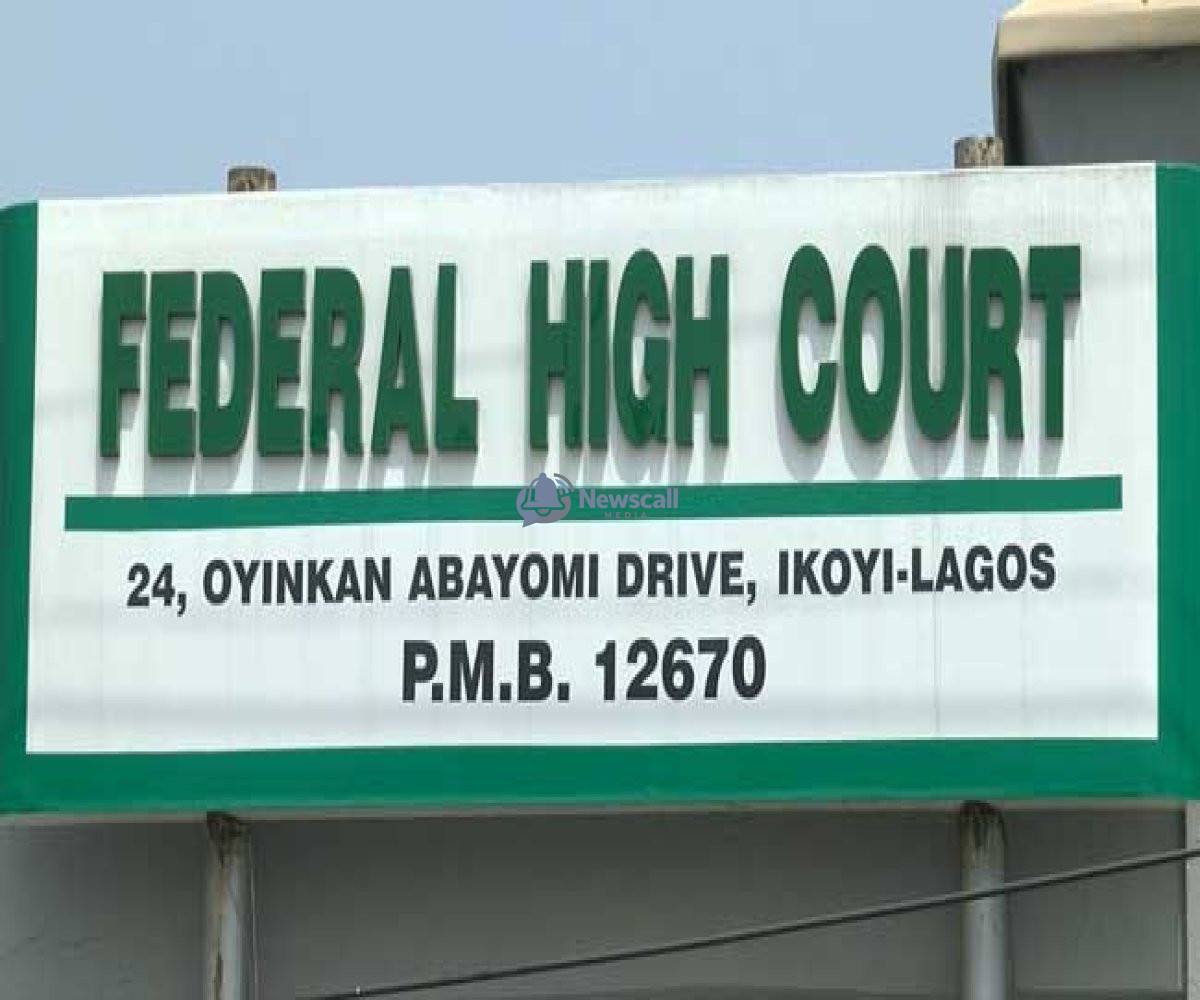
Justice Yellim Bogoro, in a far-reaching judgment delivered on May 6, 2026, ruled that the proposed N40bn earmarked for the purchase of 465 vehicles for senators and members of the House of Representatives, alongside N70bn in support allowances for newly elected lawmakers, violated the Public Procurement Act, constitutional provisions governing public office conduct and the fiduciary responsibilities owed to Nigerians.
The suit, marked FHC/L/CS/1606/2023, was instituted by the Socio-Economic Rights and Accountability Project against Senate President Godswill Akpabio and Speaker of the House of Representatives Tajudeen Abbas, who were sued on behalf of members of both chambers of the National Assembly.
In a judgment already being described by legal analysts and civil society organisations as historic, Justice Bogoro held that the scale of the expenditure, combined with the absence of evidence showing compliance with due process procedures, rendered the spending arbitrary and unlawful.
According to the certified true copy of the judgment obtained by SERAP, the court stated that the procurement process failed to meet statutory requirements guiding the use of public funds.
“Looking at the magnitude of the expenditure, coupled with the absence of demonstrable due process, leads me to conclude that the procurement is arbitrary, disproportionate and inconsistent with statutory procurement standards,” the judge ruled.
Justice Bogoro further condemned what she described as a glaring case of self-interest and conflict of interest, noting that lawmakers who approved the expenditure were also direct beneficiaries of it.
“The beneficiaries of the expenditure are the very officials approving it, and the expenditure confers direct pecuniary and material benefits. This, to my mind, constitutes a case of self-dealing and conflict of interest,” she held.
The court also took judicial notice of the severe economic hardship currently confronting millions of Nigerians and criticised the National Assembly for approving what it described as excessive and insensitive spending at a time when citizens are battling inflation, unemployment, insecurity and rising poverty.
“I have taken judicial notice of the economic realities in Nigeria and the widespread financial hardship affecting Nigerian citizens. In this context, the allocation of N110bn for the benefit of lawmakers demonstrates a failure to prioritise national interest,” Justice Bogoro stated.
In a significant aspect of the ruling, the court rejected the National Assembly’s argument that the doctrine of separation of powers insulated lawmakers from judicial scrutiny regarding their spending decisions.
“The doctrine of separation of powers does not operate as a shield for illegality. The court is concerned with the legality and constitutionality of legislative spending,” the judge declared.
Justice Bogoro also stressed that public office holders must not exploit their positions for personal enrichment, warning that public institutions must remain accountable to the people.
“Public office must not be used for personal enrichment. Public officers must act within constitutional boundaries and in good faith. I hold that the conduct complained of is inconsistent with the oath of office,” she added.
The legal battle began in August 2023 after reports surfaced that federal lawmakers planned to spend N40bn on 465 luxury bulletproof vehicles and another N70bn as support allowances for newly elected members despite Nigeria’s worsening economic crisis.
SERAP argued before the court that the planned expenditure violated Section 57(4) of the Public Procurement Act 2007, Paragraph 1 of the Fifth Schedule to the Constitution and the oath of office contained in the Seventh Schedule of the Constitution.
The organisation maintained that public officials are constitutionally obligated to act in the public interest and ensure prudent management of national resources.
In its defence, the National Assembly insisted that the expenditure had already been duly appropriated and implemented, arguing that the suit had therefore become academic. The lawmakers also challenged SERAP’s legal standing to institute the action and claimed the organisation failed to issue the required pre-action notice.
However, Justice Bogoro dismissed all preliminary objections raised by the defendants and upheld SERAP’s right to institute the suit, describing the matter as one of undeniable public importance.
“NGOs can institute actions to protect public interest. SERAP, being a public interest organisation committed to transparency and accountability, has demonstrated sufficient interest. I therefore hold that SERAP has locus standi to sue, as the matters are of undeniable public concern,” the judge ruled.
The court further held that the urgency and significance of the issues raised justified the action even without strict compliance with pre-action notice requirements.
On the substantive allegations, Justice Bogoro faulted the National Assembly for failing to provide credible evidence showing compliance with procurement procedures, competitive bidding requirements and value-for-money assessments as stipulated by law.
“The defendants have failed to provide any credible evidence of compliance with procurement procedure, competitive bidding and value-for-money assessment. The defendants have not rebutted the allegations specifically made, and as such they are deemed admitted,” she held.
The court subsequently declared that the planned expenditure breached the Public Procurement Act and violated the Code of Conduct for Public Officers.
“Where the exercise of legislative powers violates the Constitution or statutory provisions, the court not only has jurisdiction but a constitutional duty to intervene,” Justice Bogoro stated.
Reacting to the judgment, SERAP Deputy Director Kolawole Oluwadare described the ruling as a watershed moment in the fight for accountability and responsible governance in Nigeria.
“This landmark judgment is a major victory for transparency, accountability and responsible management of public resources in Nigeria,” Oluwadare said.
He noted that the judgment reaffirmed the principle that public office is a sacred trust and that public funds must only be used in ways that genuinely advance the public good.
“The judgment comes at a critical time when millions of Nigerians are facing severe economic hardship, poverty and insecurity. Every naira diverted to unlawful or wasteful spending is a naira denied to education, healthcare, social protection and security,” he added.
Senior Advocate of Nigeria and human rights lawyer, Femi Falana, also welcomed the decision, saying it exposed the widening disconnect between political office holders and ordinary Nigerians struggling to survive.
“SERAP deserves commendation for this legal victory. It has been confirmed that the decision of members of the executive and legislature to live in obscene opulence while the people are forced to live in poverty cannot be justified,” Falana stated.
He further called on the Revenue Mobilisation Allocation and Fiscal Commission to enforce Section 70 of the Constitution by properly regulating the salaries and allowances of lawmakers.
Falana also urged the National Assembly leadership to comply fully and immediately with the judgment.
In a follow-up letter dated June 6, 2026, addressed to Senate President Akpabio and Speaker Abbas, SERAP demanded immediate implementation of the court ruling.
“The immediate implementation of the judgment by the National Assembly will be a victory for the rule of law, transparency and accountability in the governance processes and management of public resources,” Oluwadare stated in the letter.
The Federal High Court ultimately granted three major reliefs sought by SERAP, including declarations that the N40bn vehicle procurement scheme and the N70bn support allowance violated constitutional and statutory provisions.
The court also ordered the National Assembly to ensure that all future spending and procurement processes strictly comply with due process, transparency, accountability and value-for-money principles.
The judgment is expected to intensify public debate over government spending priorities, legislative accountability and the widening gap between Nigeria’s political elite and millions of citizens grappling with economic hardship.

Anozie Chiemerie Emmanuel
Writer