

Grenada Pushes New Africa-Caribbean Alliance as PM Mitchell Praises Nigerians’ Role in Economy
Grenada Pushes New Africa-Caribbean Alliance as PM Mitchell Praises Nigerians’ Role in Economy
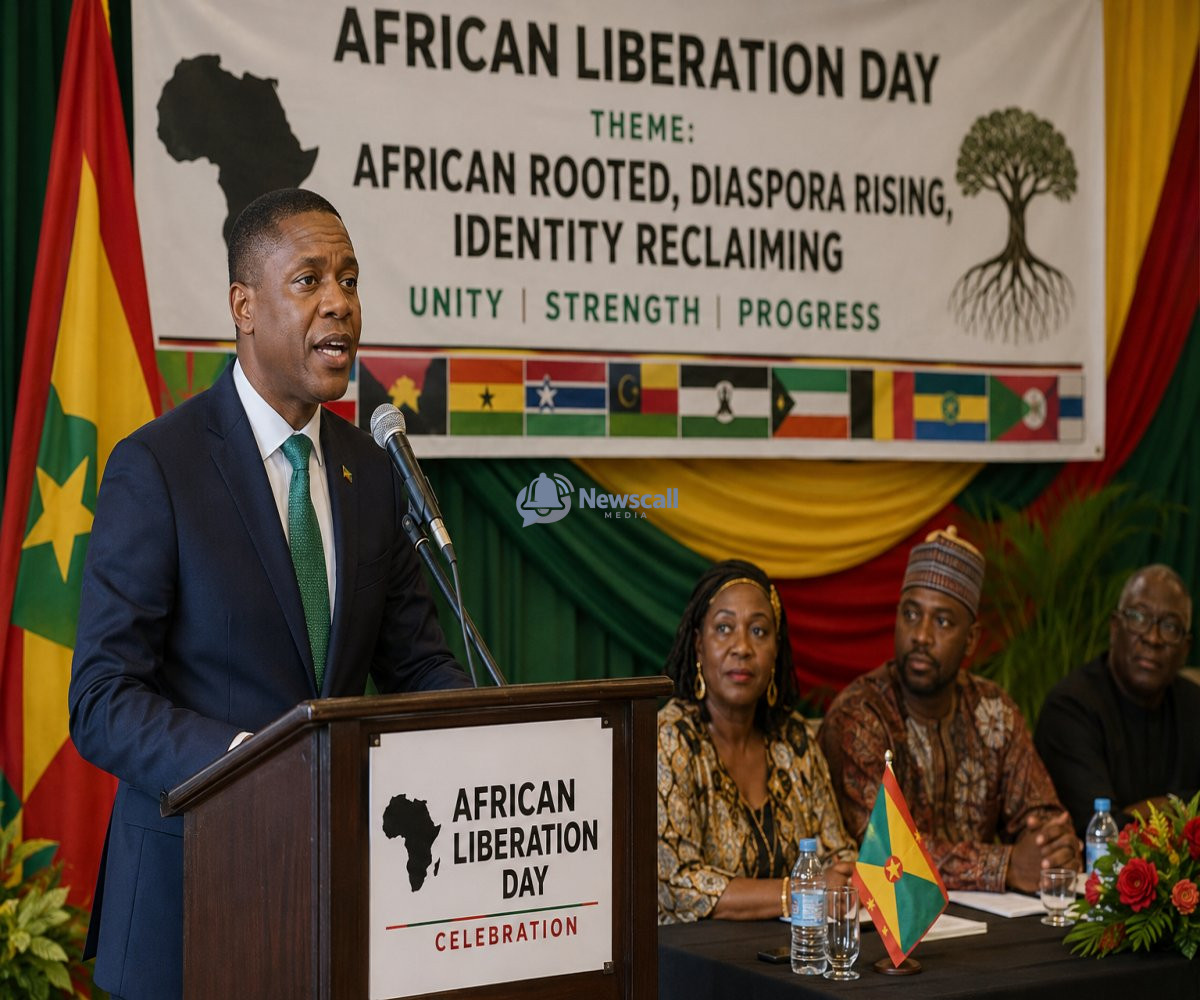
African Liberation Day celebrations in Grenada took an unexpected turn this week as Prime Minister Dickon Mitchell used the occasion not only to reflect on history, but to lay out an ambitious vision for deeper economic and diplomatic ties between Africa and the Caribbean.
Standing before a gathering filled with Africans, Caribbean nationals and members of the Nigerian community in Grenada, Mitchell spoke with unusual urgency about what he described as a long-overdue reconnection between two regions separated by centuries of slavery and colonialism.
The event, themed “African Rooted, Diaspora Rising, Identity Reclaiming,” became more than a cultural ceremony. It evolved into a political and economic statement about the future of Africa-Caribbean relations.
Mitchell said the relationship between Africa and the Caribbean must move beyond symbolism and emotional connections into practical partnerships capable of driving trade, investment and development.
“We are descendants of Africa and we must reclaim that,” the Grenadian leader declared.
His remarks drew attention because they came at a time when several Caribbean nations are increasingly seeking stronger economic partnerships outside traditional Western alliances. African countries, meanwhile, are also expanding trade diplomacy through initiatives such as the African Continental Free Trade Area (AfCFTA), which aims to boost economic integration across the continent.
Mitchell described the presence of Nigerians and other Africans at the gathering as evidence that the historical divide created during the transatlantic slave trade could now become a platform for reconnection.
“The Atlantic that was used for forced separation is now a deliberate bridge for reconnection,” he said.
In one of the strongest moments of his speech, the Prime Minister praised Nigerians living and working in Grenada, saying they had become important contributors to the country’s economy and social development.
“We value your contribution to our national life, and this gathering is testimony to the role that Nigerians play in the economy of Grenada,” Mitchell stated.
The comments arrive amid growing migration and business ties between African professionals and Caribbean economies, particularly in sectors such as education, healthcare, entrepreneurship and hospitality.
Mitchell stressed that Grenada, despite being a small island nation, was prepared to strengthen cooperation with African countries in commerce, innovation and diplomacy.
“We must deepen cooperation in trade and investment by expanding economic partnerships between our nations and creating opportunities for businesses and innovation,” he said.
He added, “Though Grenada may be small in size, we are not small in identity, courage and commitment to building a modern nation with Africa.”
The Prime Minister also used the occasion to reflect on the significance of African Liberation Day, celebrated annually on May 25 to commemorate the formation of the Organisation of African Unity in Addis Ababa in 1963, now known as the African Union.
According to him, political independence alone has not erased the deeper problems facing African nations and people of African descent globally. He pointed to economic inequality, underdevelopment and political instability as challenges that continue to affect many societies.
“For too long, our history was written by others. Our systems only received us as labour and not as people, as subjects and not agents of civilisation,” Mitchell said.
His remarks resonated with broader conversations across Africa and the Caribbean about reparations, cultural identity and economic self-determination. In recent years, Caribbean governments have intensified calls for reparatory justice from former colonial powers, while African leaders have increasingly advocated stronger diaspora engagement.
Mitchell urged Africans and members of the diaspora to take ownership of their history and future through deliberate cooperation.
“One step at a time, we must build the bridge between Africa and the Caribbean — one trade partnership at a time, one investment opportunity at a time, one diplomatic initiative at a time,” he added.
He also called for easier movement and stronger people-to-people engagement between both regions, saying many descendants of Africa in the Caribbean still feel emotionally connected to the continent despite geographical distance.
“We long for the day our brothers and sisters will visit regularly without feeling that Africa is distant or unreachable,” he said.
Also speaking during the event, Founder of the Esther Matthew Tonlagha Foundation, Dcn. Dr Esther Tonlagha, said stronger Africa-Caribbean cooperation could unlock new opportunities for economic growth, youth empowerment and sustainable development.
“At EMT Foundation, we have consistently prioritised three pillars: empowerment, access and sustainability,” Tonlagha said.
She stressed that leadership should be measured not by titles but by long-term impact on people and communities.
“As Africans, we are first of all brothers irrespective of the part of the world we find ourselves. We must remain committed to building a united front,” she stated.
Tonlagha further urged Africans globally to reclaim control of their own stories and narratives instead of allowing outsiders to define them.
“It is our responsibility to tell our own story. No one can do that better than us,” she added.
The growing conversation around Africa-Caribbean partnerships reflects a wider geopolitical shift. As global economic alliances continue to evolve, both regions are increasingly exploring ways to strengthen South-South cooperation, reduce dependency on traditional powers and create new opportunities through shared heritage and economic collaboration.
For Grenada, Mitchell’s message signals a desire to transform historical connections into strategic partnerships. For many Africans and Caribbean citizens listening at the event, it was also a reminder that identity, history and economic ambition are becoming deeply intertwined in a rapidly changing world.
Nwekwe Esther Amarachukwu
Public speaker,Research-driven writer covering politics and public affairs, committed to accuracy, and meaningful public discourse.