

The Race to Build Earthquake-Proof Buildings
For centuries, earthquakes have been among nature's most destructive forces.
Unlike storms or floods, they arrive with little warning. In a matter of seconds, powerful seismic waves can turn buildings into rubble, disrupt entire cities, and claim thousands of lives.
Yet engineers around the world are working toward an ambitious goal.
Buildings that can survive major earthquakes.
This challenge has become one of the most important races in modern engineering.
The stakes are enormous. More than a billion people live in regions vulnerable to seismic activity, including parts of Japan, China, Turkey, Indonesia, Mexico, the United States, and many other countries. As cities continue to grow, protecting lives and infrastructure has become increasingly critical.
Traditionally, engineers focused on making buildings stronger.
The logic seemed simple: stronger structures should resist greater forces.
However, earthquakes revealed a problem with that approach.
When seismic waves travel through the ground, extremely rigid buildings can absorb tremendous stress. If the forces exceed the structure's limits, catastrophic failure can occur.
Modern engineering takes a different approach.
Instead of simply resisting earthquakes, many buildings are now designed to move with them.
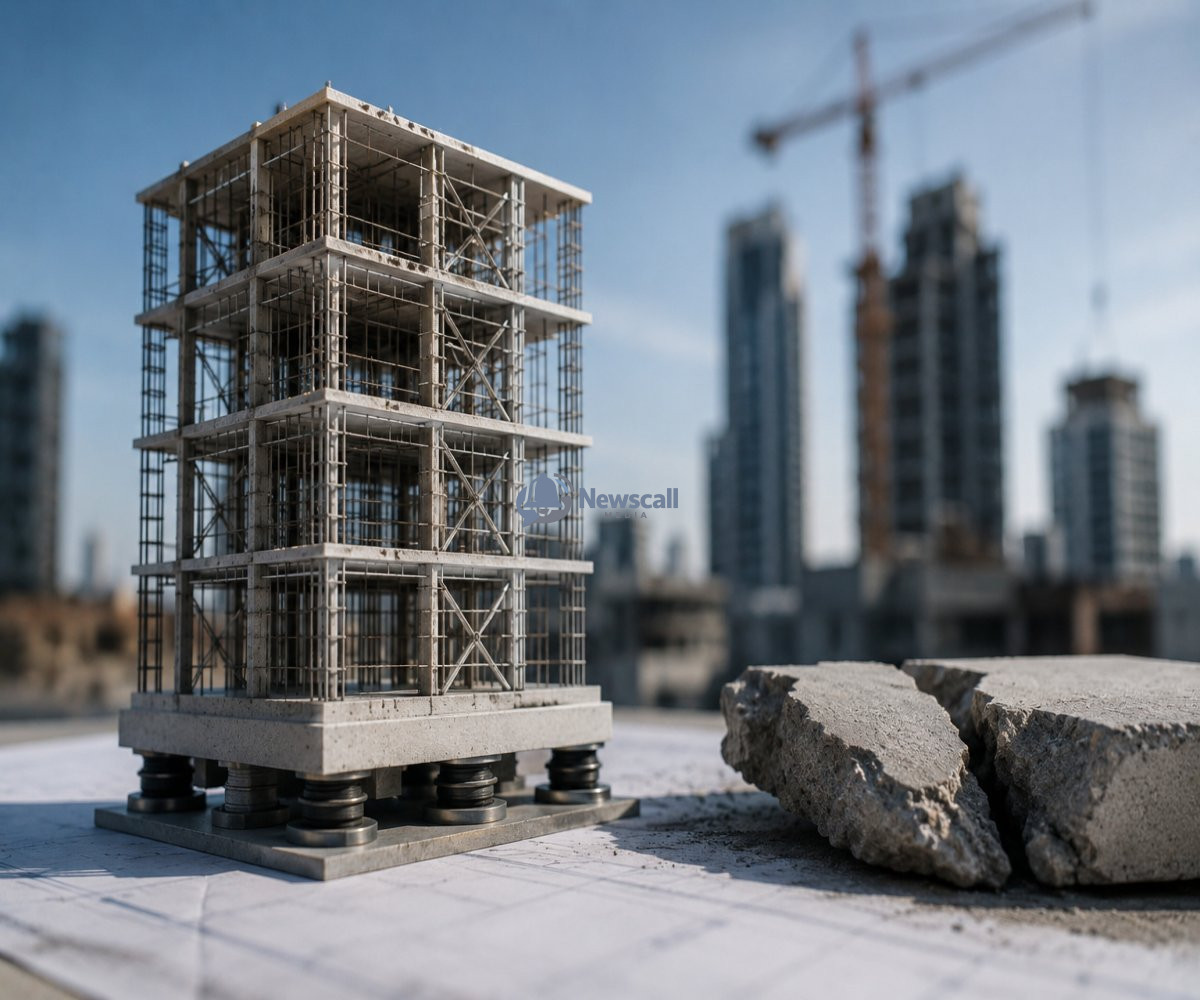
One of the most remarkable innovations is known as base isolation.
In these systems, buildings are placed on flexible bearings or shock-absorbing mechanisms that separate the structure from ground movement. When an earthquake occurs, the ground can move beneath the building while the structure experiences significantly less motion.
Some modern buildings appear almost to float above their foundations during seismic events.
Another breakthrough involves tuned mass dampers.
These are massive weights installed inside skyscrapers that move in opposition to building vibrations. By counteracting motion, they help stabilize structures during earthquakes and strong winds.
Several of the world's tallest buildings already rely on this technology.
Engineers are also developing advanced materials capable of improving earthquake resistance.
Flexible steel systems, energy-absorbing concrete, and innovative composite materials allow structures to bend without breaking. Instead of cracking under pressure, these materials help distribute forces more effectively throughout the building.
In recent years, researchers have even explored self-healing concrete capable of repairing small cracks before they become serious structural problems.
Artificial intelligence is beginning to play a role as well.
Modern sensors can monitor buildings continuously, collecting data about stress, vibration, and structural performance. AI systems can analyze this information to identify weaknesses and recommend maintenance before problems become dangerous.
Future buildings may be able to assess their own condition in real time.
The race is not limited to new construction.
Many older buildings were designed before modern seismic standards existed. Engineers are developing retrofit technologies that strengthen existing structures without requiring complete reconstruction.
This is especially important in densely populated cities where replacing entire neighborhoods is impractical.
Some of the most advanced earthquake engineering can be found in countries that have experienced devastating seismic events.
Japan, in particular, has become a global leader in earthquake-resistant construction. Decades of research, testing, and real-world experience have helped shape some of the world's most sophisticated building standards.
The results can be remarkable.
Structures designed using modern seismic engineering often remain standing after earthquakes that would have destroyed older buildings.
Despite this progress, the challenge remains far from solved.
Earthquakes vary enormously in strength, duration, depth, and location. Engineers must design for countless possible scenarios while balancing safety, cost, and practicality.
No building can be completely immune to nature's most powerful forces.
Yet every improvement matters.
Every new technology has the potential to save lives.
Every engineering breakthrough increases resilience.
Every innovation brings humanity one step closer to safer cities.
Throughout history, civilizations have adapted to the challenges posed by their environments. Today's engineers are continuing that tradition by developing structures capable of withstanding forces that once seemed unstoppable.
The race to build earthquake-proof buildings is not merely about construction.
It is about protecting communities, preserving economies, and ensuring that future cities remain standing when the ground beneath them begins to move.
And in a world where urban populations continue to grow, that race may become one of the most important engineering challenges of the century.

Victor Oluebubechukwu Akuma.
Creative writer