

OIL ABOVE $108: THE WORLD'S ENERGY ROUTES ARE BEING SQUEEZED FROM THREE DIRECTIONS
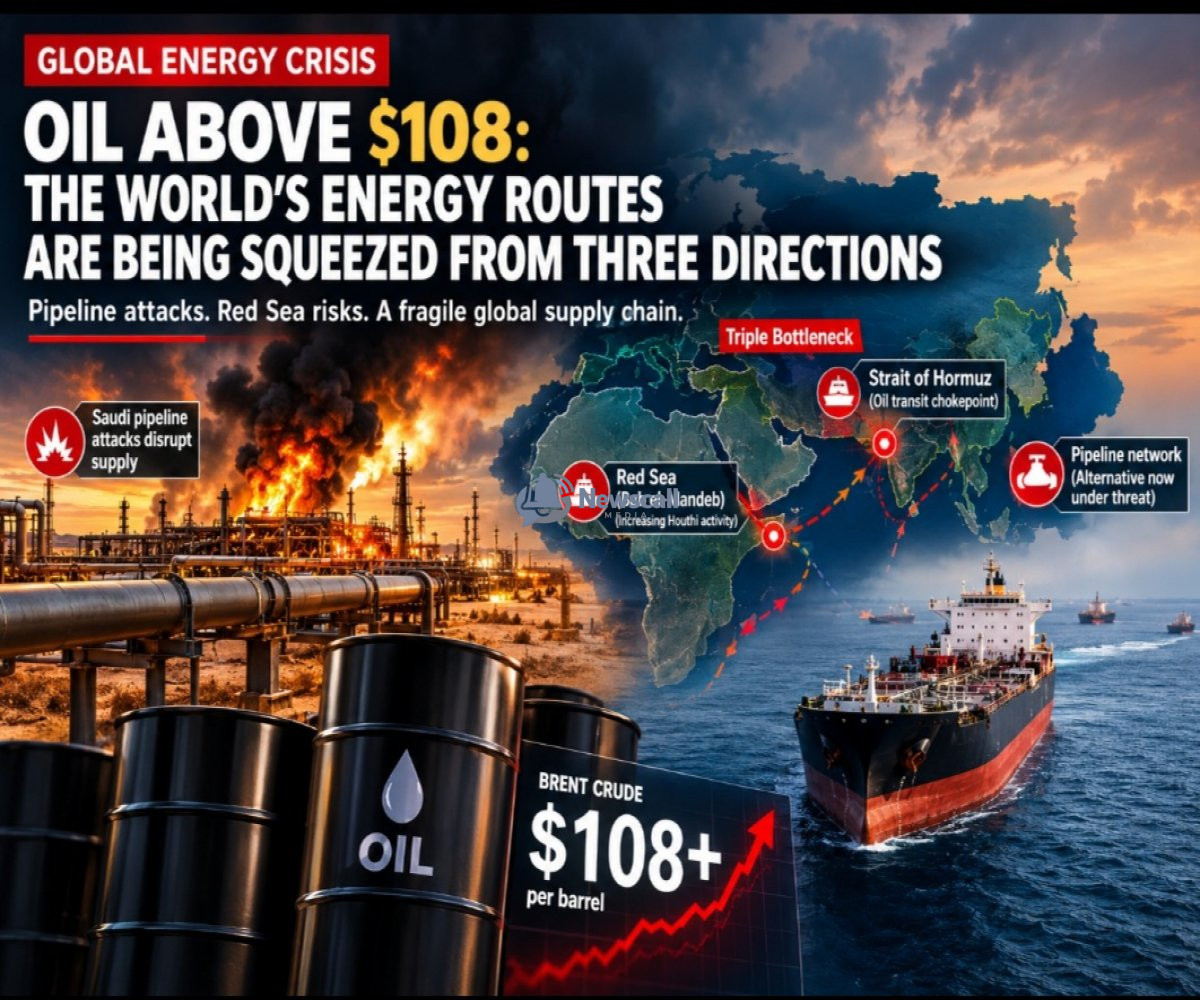
Global oil markets have moved back above $108 a barrel as attacks on Saudi energy infrastructure, renewed danger around the Strait of Hormuz and mounting pressure around the Bab el-Mandeb shipping route combine to create one of the most serious energy-security shocks of the year.
Brent crude rose above $108 on Monday after attacks disrupted Saudi Arabia's East-West pipeline, a major piece of infrastructure designed precisely to reduce the kingdom's dependence on the Strait of Hormuz. The pipeline can carry millions of barrels of crude a day from the Gulf to Saudi Arabia's Red Sea coast. Its temporary shutdown has therefore transformed what was already a difficult regional security crisis into a broader question about the world's ability to move oil when conventional routes become dangerous.
The significance goes beyond the price displayed on a trading screen.
The global energy system depends on a network of maritime passages, pipelines, ports and refineries that can appear almost invisible when they function normally. When several of those systems come under pressure simultaneously, however, the consequences can spread rapidly from the Middle East to Europe, Asia, Africa and North America.
The emerging problem can be described as a triple bottleneck.
The first is the Strait of Hormuz, the narrow waterway connecting the Persian Gulf with the Arabian Sea. It remains one of the world's most strategically important energy corridors. Attacks on shipping and continuing military confrontation have increased the risk and cost of moving energy through the waterway.
The second is the Bab el-Mandeb, the gateway between the Red Sea and the Gulf of Aden. Increasing Houthi activity has added another layer of uncertainty to a maritime route already disrupted by years of regional instability. The result is greater pressure on ships and operators attempting to move cargo between Asia, the Middle East and Europe.
The third is the pipeline network intended to provide an alternative to Hormuz.
Saudi Arabia's East-West pipeline should, in theory, provide precisely the kind of strategic redundancy that protects markets during a maritime crisis. Its disruption demonstrates the uncomfortable reality that alternatives are useful only when they remain operational.
That is why Monday's oil-price movement matters.
This is no longer simply a story about crude becoming more expensive. It is about the shrinking number of reliable routes through which energy can reach consumers.
For governments, the danger is inflation. Higher crude prices feed into transportation, electricity, manufacturing, food distribution and household costs. For central banks, the problem is particularly difficult because energy inflation can arrive at the same time as weaker economic activity.
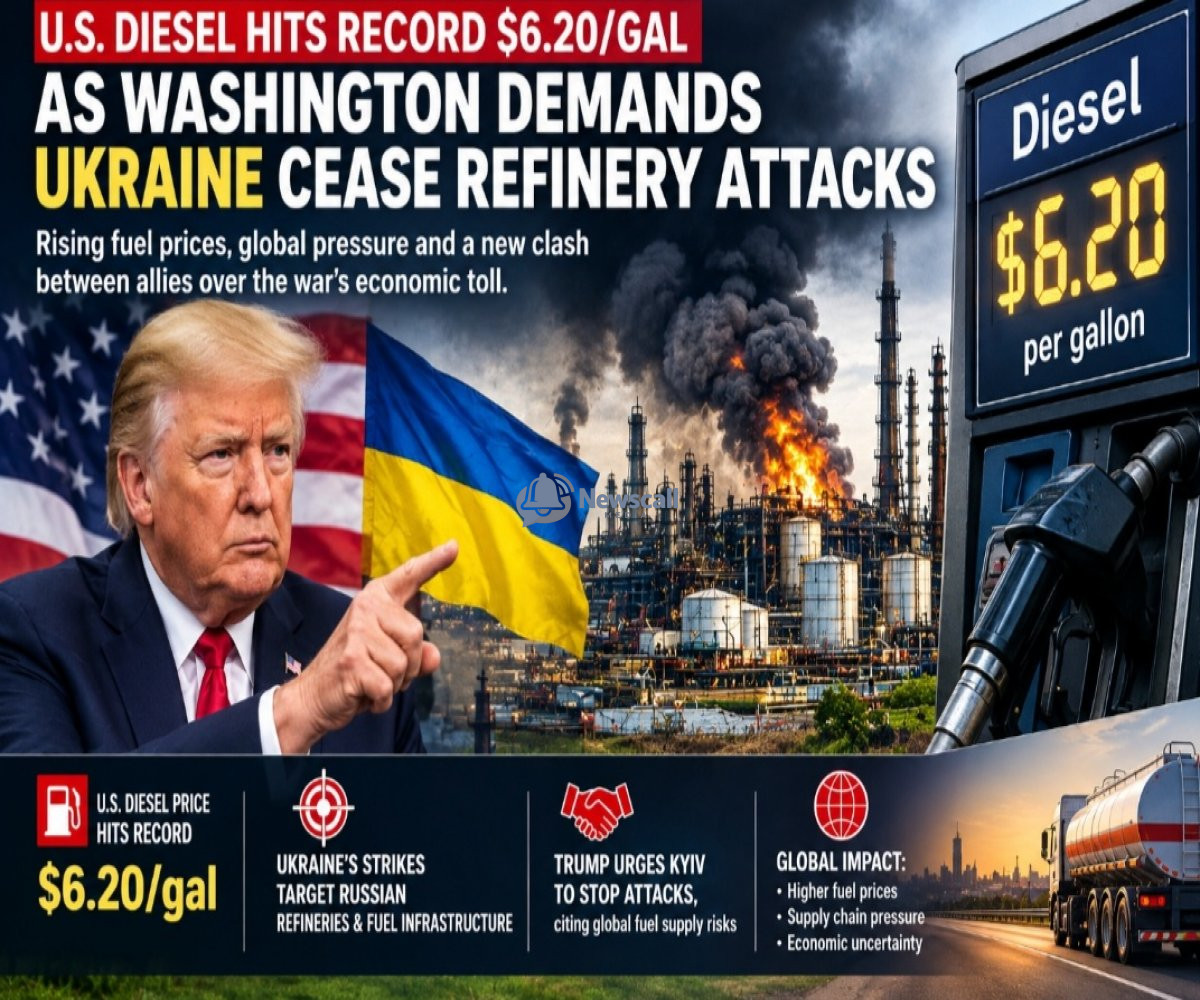
The United States is already experiencing record diesel prices, while European and Asian economies remain heavily exposed to imported energy.
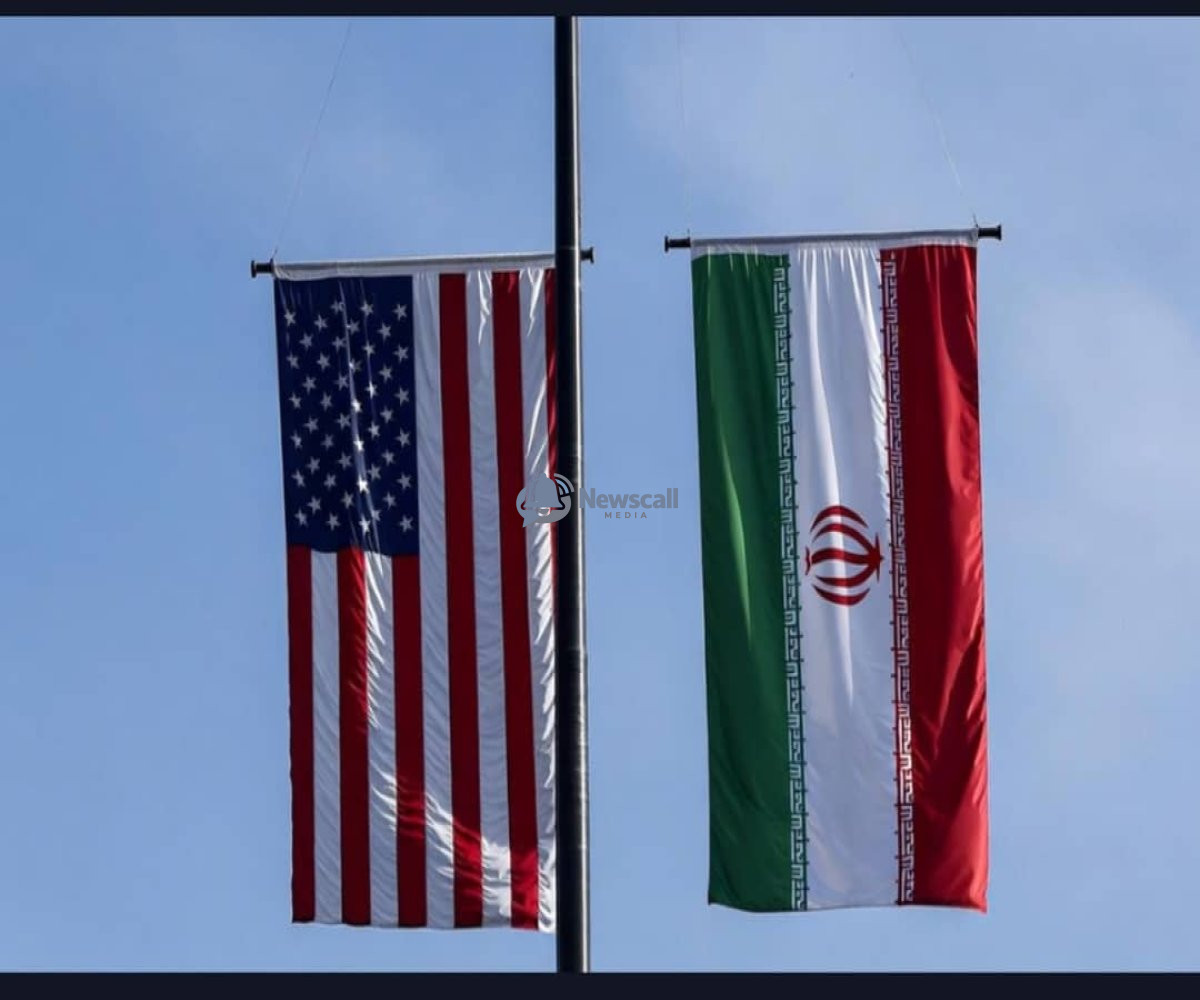
The geopolitical consequences could be equally significant. Gulf states have postponed planned talks with Iran over maritime security, while the conflict continues to place pressure on governments that are trying to balance economic interests with military and diplomatic calculations.
The central question is therefore no longer whether the energy market can withstand one disruption.
It is whether the global system can withstand several disruptions at once.
If shipping through Hormuz remains severely constrained, if Bab el-Mandeb becomes increasingly dangerous and if pipeline alternatives are repeatedly attacked, the world will have fewer options for replacing lost supply.
That is the real warning behind oil at $108.
The number matters. But the routes matter more.

OKORO WILSON EGWU
“Independent journalist delivering sharp, reporting on global conflicts, humanitarian crises, and international diplomacy. Known for transforming complex world events into...