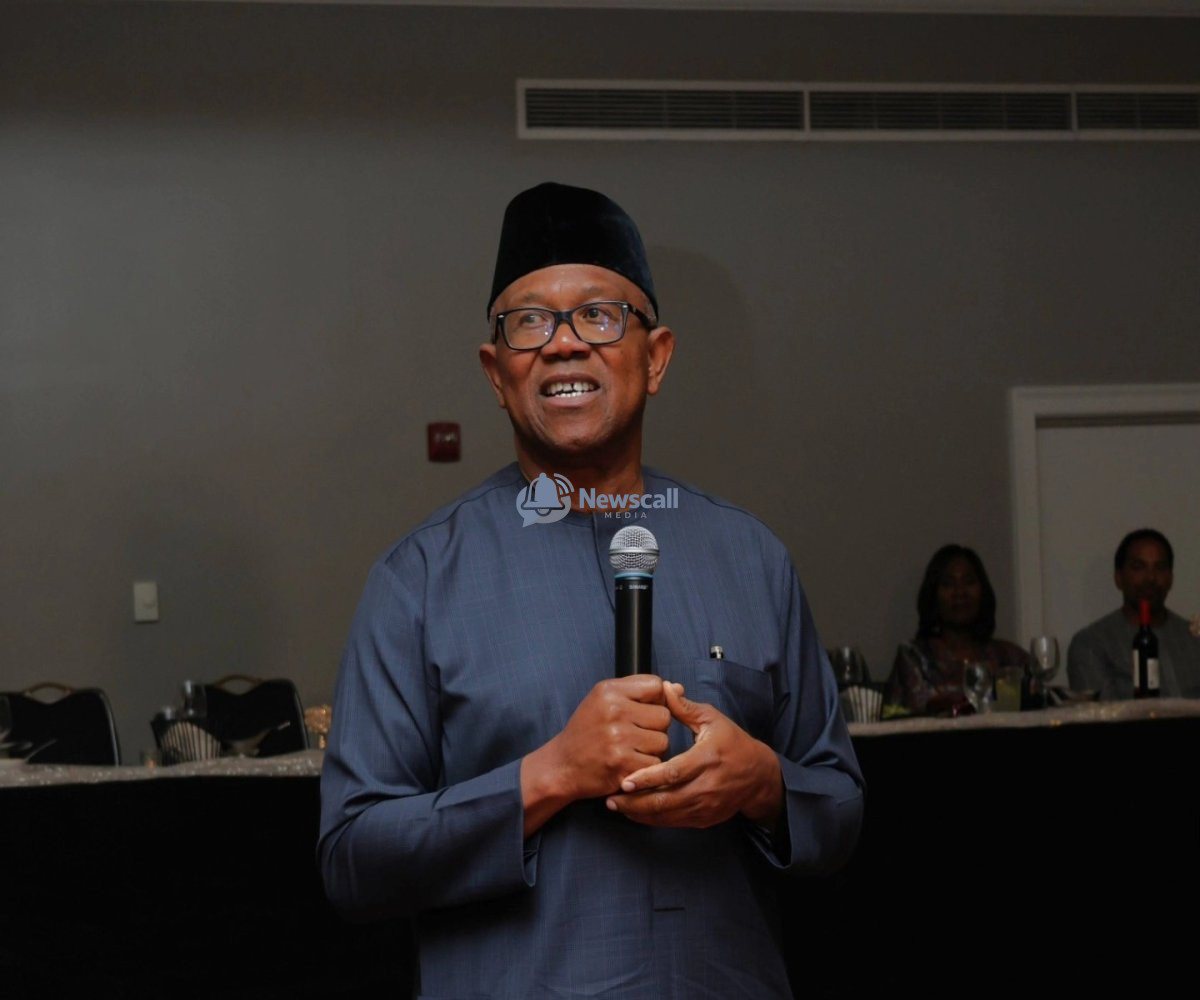


“Prove Your Integrity” — Hayatu-Deen Tells Atiku, Amaechi to Sign ADC Ethics Charter

Presidential aspirant of the African Democratic Congress, Mohammed Hayatu-Deen, has called on fellow contenders in the party’s presidential race, including former Vice President Atiku Abubakar and former Minister of Transportation Rotimi Amaechi, to publicly commit themselves to the ADC’s newly introduced Governance Principles and Code of Ethics, popularly known as The Orange Book.
Hayatu-Deen made the call on Friday while reflecting on the party’s ongoing screening exercise, which he described as one of the most important and defining political processes he has witnessed in Nigeria’s democratic journey. According to him, the screening exercise went beyond the routine evaluation of aspirants and instead focused heavily on issues of leadership ethics, accountability, and public service.
Speaking through statements shared on his official social media accounts, the economist and former Chairman of the Nigeria Economic Summit Group revealed that every presidential and governorship aspirant who appeared before the screening panel was handed a copy of The Orange Book and required to affirm their commitment to its principles before participating in the process.
Hayatu-Deen described the document as a groundbreaking political framework that seeks to redefine governance standards in Nigeria, noting that it may be the first time a major political party in the country has introduced a binding ethical code for aspirants and public office holders.
According to him, the initiative represents a deliberate attempt by the African Democratic Congress to promote a new political culture rooted in integrity, competence, transparency, and service to citizens.
“The Orange Book is not a slogan,” Hayatu-Deen stated. “It is a declaration that public office is not for self-enrichment, personal glory, or political entitlement, but for service to the Nigerian people.”
The ADC code outlines a number of standards expected from aspirants and elected officials under the party’s platform. These include commitments to honesty, accountability, merit-based leadership, fiscal discipline, transparency in governance, rejection of corruption, opposition to vote-buying and political godfatherism, and the prioritisation of public interest above personal ambition.
Hayatu-Deen explained that two key provisions in the document particularly resonated with him. The first states that, “Leadership is measured not by individual legacy, but by the enduring impact of completed, purposeful and people-centred action,” while the second declares, “I am a public servant, not a ruler of Nigerians.”
He stressed that such principles should not merely remain internal party declarations but should become national leadership standards embraced by politicians across party lines.
“These are not ordinary political declarations,” he said. “They are standards that every leader, irrespective of political party, should be willing to uphold.”
The presidential hopeful publicly pledged his personal commitment to both the spirit and the letter of the code and challenged other aspirants contesting for the ADC presidential ticket to openly state whether they are prepared to abide by the same ethical standards.
According to him, Nigerians deserve greater transparency from politicians seeking leadership positions, especially at a time when public trust in governance continues to decline.
“Because Nigerians deserve transparency from those who seek to lead them, I believe every aspirant seeking the mandate of our great party should publicly declare whether they are willing to uphold these standards,” he added.
Hayatu-Deen’s remarks come amid growing political realignments ahead of the 2027 general elections, as the ADC increasingly positions itself as a reform-oriented alternative to Nigeria’s dominant political parties.
In recent months, the party has attracted heightened attention from opposition figures and political stakeholders amid wider national conversations about governance failures, accountability, insecurity, economic hardship, and the future of opposition politics in Nigeria.
The former banker argued that Nigeria’s problems extend beyond economic challenges and insecurity, insisting that the country is also battling a deep crisis of leadership, public trust, and political values.
According to him, genuine national transformation can only occur when leaders embrace responsibility, competence, moral courage, and a culture of service rather than personal ambition and political entitlement.
“Nigeria needs a different political culture rooted in service, responsibility, competence and moral courage,” Hayatu-Deen said. “We must begin to change that.”
His comments have further intensified discussions surrounding the evolving political landscape ahead of the next election cycle, particularly as opposition parties seek to build credibility and present themselves as viable alternatives to the ruling establishment.

Anozie Chiemerie Emmanuel
Writer