SpaceX Prepares Starship for Its First Orbital Flight
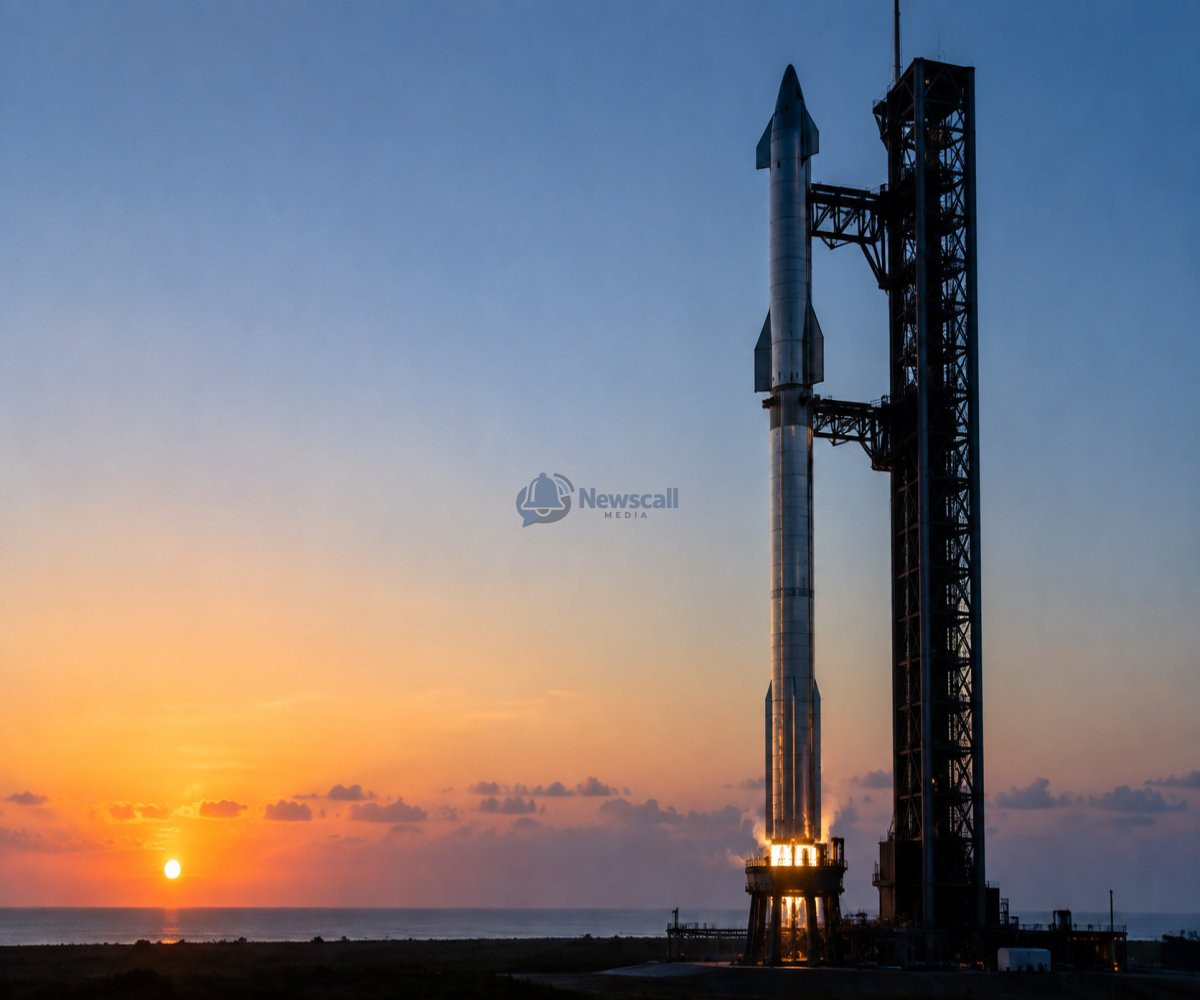
For years, Starship has been described as the rocket that could change what humanity does in space. On September 22, SpaceX is preparing to put that idea to one of its biggest tests yet.
The company is targeting Tuesday, September 22, for the 14th flight of its enormous Starship vehicle, with the mission designed to attempt something Starship has never achieved before: entering Earth orbit. The launch is still subject to regulatory approval, but if the schedule holds, it could mark one of the most important tests in the rocket's development.
Starship is not simply another launch vehicle. Designed as a fully reusable transportation system, it consists of two stages: the Super Heavy booster and the Starship spacecraft itself. Together, they form one of the largest and most powerful rocket systems ever developed, with ambitions extending far beyond launching satellites.
Previous Starship flights have reached space and tested increasingly complex systems, but none has completed an orbital mission. Flight 14 is intended to change that.
According to SpaceX's planned flight profile, the Starship upper stage will attempt an orbital insertion and spend several hours travelling around Earth at roughly 275 kilometres above the surface. The mission is expected to last close to 10 hours, with the spacecraft making several orbits before performing a controlled reentry and splashing down in the Pacific Ocean west of Chile.
But reaching orbit is only part of the experiment.
Flight 14 is also expected to deploy 26 Starlink V3 satellites, giving SpaceX an opportunity to test a new generation of its internet satellites from the vehicle it ultimately hopes will become its primary high-capacity launch platform.
The mission will also put the Super Heavy booster through another series of critical tests, including launch, stage separation, boostback and its planned landing sequence. Every part of the flight is effectively another piece of the puzzle SpaceX needs to solve before Starship can become a genuinely reusable orbital transportation system.
That distinction matters because SpaceX's ultimate goal is not simply to make Starship reach orbit once. The company's vision depends on making both stages reusable and eventually capable of flying again with dramatically shorter turnaround times.
That would represent a major change in the economics of spaceflight. Instead of treating rockets as expensive machines that are mostly discarded after a launch, SpaceX wants Starship to operate more like reusable transportation infrastructure, potentially carrying satellites, cargo and eventually people on a much larger scale.
Getting there, however, is extraordinarily difficult.
A successful orbital insertion would not mean Starship is finished. The vehicle would still need to demonstrate reliable reentry, controlled descent, safe recovery and eventually rapid reuse. SpaceX would also have to prove that the enormous system can operate consistently enough to support the high launch cadence envisioned for it.
That is why Flight 14 is more than another Starship test.
It is a test of whether Starship can cross one of the most important boundaries in its development: moving from a vehicle that can reach space to one that can actually operate in orbit.
On September 22, the world may get its clearest answer yet.
And if Starship does reach orbit, the significance will extend beyond a single successful launch. It would mark the beginning of a new phase for the rocket — one in which SpaceX can start testing what Starship was ultimately built to do.
The launch is targeted, not guaranteed. But for the first time, Starship is preparing to leave the test phase behind and attempt the journey around Earth it was designed for.

Victor Oluebubechukwu Akuma.
Creative writer